

 English

Theodore Roosevelt and the Path Between the Seas
Bully! That’s a word I love to use when something is absolutely splendid. And let me tell you, there's nothing more splendid than a grand idea that can change the world. My name is Theodore Roosevelt, and I had the great honor of being the President of the United States. Back in my day, at the start of the 20th century, the world felt enormous. Imagine you were the captain of a mighty ship in New York City, loaded with goods destined for San Francisco. To get there, you couldn't just sail west. Oh no! You had to embark on a terribly long journey south, all the way down past the entire continent of South America. You’d have to brave the stormy, treacherous waters near the icy tip of the continent, a place sailors feared. The trip could take more than two months and was filled with danger. I looked at the map and saw a tiny, narrow strip of land connecting North and South America—a country called Panama. An idea sparked in my mind like a flash of lightning. What if we could dig a great big ditch, a canal, right through that land? We could create a shortcut, a 'path between the seas'. It would directly connect the Atlantic and Pacific Oceans and make our world feel smaller, safer, and more connected. It was a colossal dream, one that many people thought was impossible. But I believed that with American spirit, courage, and hard work, we could make this dream a reality.
Building that canal was one of the hardest things anyone had ever tried to do. Panama was a land of thick, steamy jungles filled with strange animals and towering mountains of rock and dirt. The biggest challenge was a mountain range we had to dig through, which we called the Culebra Cut. To carve our path, we had to dig and blast our way right through it. It was like trying to bite through a giant cookie made of stone. On November 14th, 1906, I decided I had to see the work for myself. I became the first president to leave the country while in office. I climbed aboard a massive steam shovel, one of the incredible machines doing the digging. I felt the powerful engine rumble beneath me as it scooped up tons of earth with each bite. It was thrilling. But our biggest enemies weren't the mountains; they were tiny. I'm talking about mosquitoes. These little pests carried dreadful diseases called yellow fever and malaria, which made our workers very sick. We couldn't succeed until we solved this problem. That's when a brilliant man, Dr. William Gorgas, came to the rescue. He understood that the mosquitoes were the real culprits. He organized a massive cleanup, draining swamps and putting screens on windows to protect the workers. It was a brilliant plan that saved countless lives and allowed the work to continue. After digging the 'big ditch,' we faced another puzzle: Panama isn't flat. We had to figure out how to lift ships up and over the land. The solution was a set of enormous locks. Think of them as giant water elevators. A ship would sail into a chamber, the gates would close, and water would pour in, lifting the ship up, up, up. Then it would sail to the next lock until it was high enough to cross the land, and then other locks would lower it back down to the sea on the other side. It was pure genius.
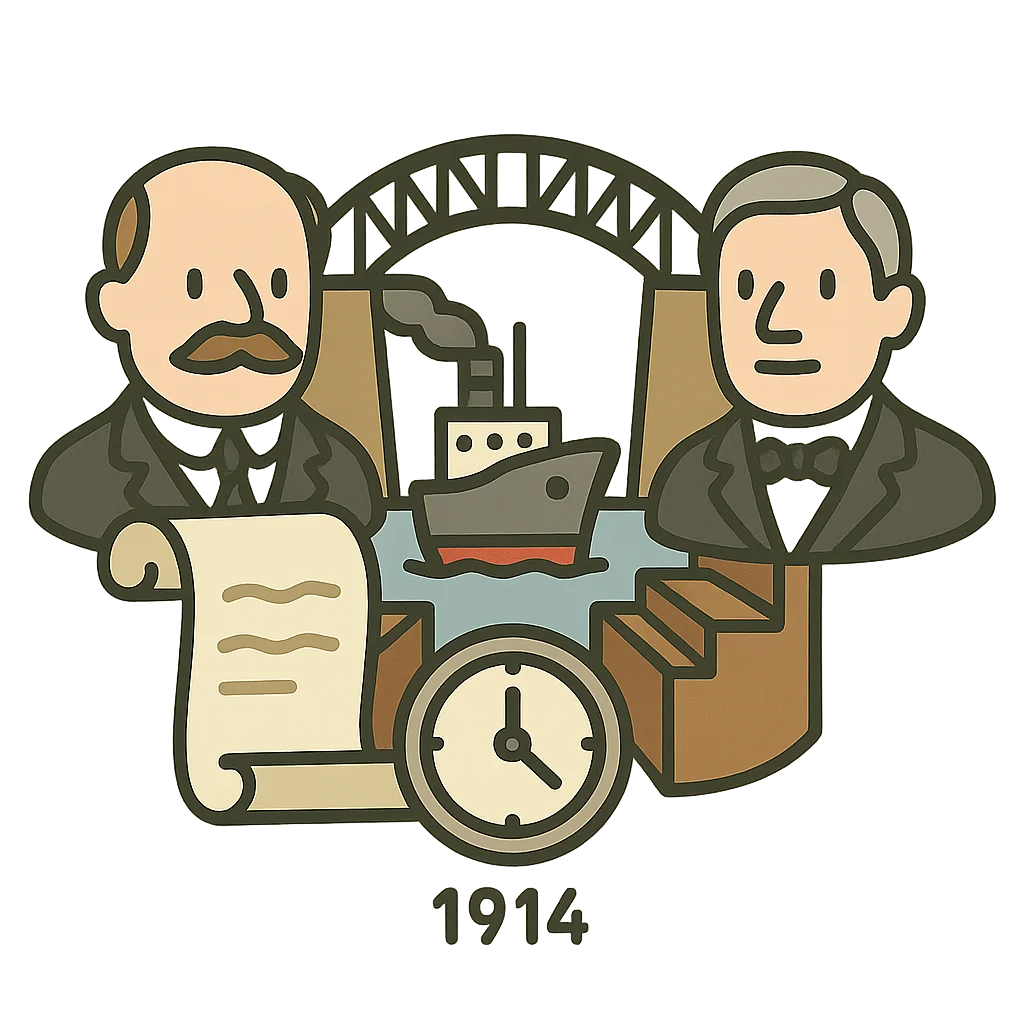
Years of sweat, struggle, and brilliant ideas finally paid off. Although I was no longer president by then, my heart swelled with pride on August 15th, 1914. That was the day the Panama Canal officially opened. I imagined the scene as the first ship, a steamboat named the SS Ancon, made the historic journey. It sailed gracefully from the Atlantic, was lifted by the mighty locks, cruised across a new man-made lake, and was gently lowered back into the Pacific. A journey that once took months now took only a matter of hours. The dream had come true. We had connected the two great oceans. The world had truly become a smaller place. Ships carrying food, medicine, and goods could travel faster and more safely between countries. Nations could trade and communicate more easily than ever before. Looking back, the Panama Canal became more than just a waterway. It was a powerful symbol of what people can achieve when they work together with courage and determination. It showed the world that no challenge is too big, no mountain too high, and no dream too impossible to reach if you have a bold vision and the will to see it through.
Activities
Take a Quiz
Test what you learned with a fun quiz!
Get creative with colors!
Print a coloring book page of this topic.







 Free for Educators