English
 For Schools
 For Homeschool

William Bradford and the First Thanksgiving Feast
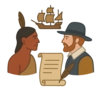
My name is William Bradford, and I was the governor of a little place you might have heard of, Plymouth Colony. Our story begins not in a grand palace, but on a small, creaky ship called the Mayflower. On September 6th, 1620, we waved goodbye to our homes in England and set sail across a vast, stormy ocean. For more than two months, we were tossed by waves and chilled by the wind. When we finally saw land, it was not the warm, welcoming place we had dreamed of. Instead, we arrived in the deep cold of November. The wind bit at our faces, and the trees were bare. We built simple homes as quickly as we could, but that first winter was terribly bleak. Sickness swept through our small village, and there was never enough food. Many of our friends and family did not survive those first few months. We were lonely, hungry, and afraid, and we worried we had made a terrible mistake coming to this new, wild land. It was a time of great sadness, and we prayed for a sign of hope.
Then, as the snow began to melt and spring arrived, our hope appeared. First, a tall, brave man named Samoset walked into our village and greeted us in our own language. It was astonishing. He later returned with another man, Tisquantum, whom you might know by the name Squanto. He had been to England and spoke English very well. He became our teacher and our friend, and his arrival was the turning point for our colony. The soil here was different from what we knew in England, and our seeds wouldn't grow. Tisquantum showed us a secret. He taught us to plant our corn seeds in small mounds and to bury a fish in each mound to make the soil rich with nutrients. It seemed strange, but we trusted him. He showed us where the best fish swam in the streams and which forest berries were safe to eat. He guided us through the woods, which had once seemed so frightening but now felt like a place of possibility. That summer, we worked hard, side-by-side, planting and tending to our crops. When autumn came in 1621, our fields were filled with corn, beans, and squash. Looking at the bountiful harvest, a feeling of deep relief and gratitude washed over me. We had made it. We would have enough food for the winter ahead.
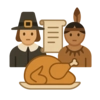
We knew we could not let this moment pass without giving thanks for our survival and our new friends. We decided to hold a great feast, a celebration of our harvest. I sent an invitation to the great leader of the Wampanoag people, Massasoit, and he arrived with ninety of his men. For three days, our small village was filled with laughter and joy. The sounds of our English games mixed with the cheers of the Wampanoag. The air smelled of roasting deer, wild birds, and baking corn bread. We sat together at long tables, sharing stories and food. It was a beautiful sight to see our two peoples, so different in so many ways, sharing a meal in peace and friendship. That feast was about so much more than just food. It was about gratitude for the earth's gifts, for the kindness of strangers who became friends, and for the hope of a peaceful future. Looking back, I see that our celebration was a reminder that even after the hardest times, there can be moments of shared joy and thankfulness.
Activities
Take a Quiz
Test what you learned with a fun quiz!
Get creative with colors!
Print a coloring book page of this topic.