

 English

Dr. Gladys West and the Stars That Guide Us
Hello there. My name is Dr. Gladys West, and I’ve always believed that numbers tell the most incredible stories. When I was a girl, long before computers fit in your pocket, I loved math. To me, every equation was a secret puzzle just waiting to be solved. Adding, subtracting, and multiplying felt like a fun game. I knew that if I could solve enough puzzles, I could help figure out some of the world's biggest challenges. I want you to imagine a time with no cell phones and no digital maps to tell you where to turn. If you were driving to a new place, you used a big, floppy paper map. If you were a captain sailing a ship across the ocean, you had to use the stars to find your way. It worked, but it was not always perfect. The big puzzle my team and I had to solve was this: how could we create a system that would let anyone, anywhere on the entire planet, know their exact location at any moment? It sounded like something out of a science fiction book. But I knew the answer was hidden somewhere in my favorite thing: mathematics.
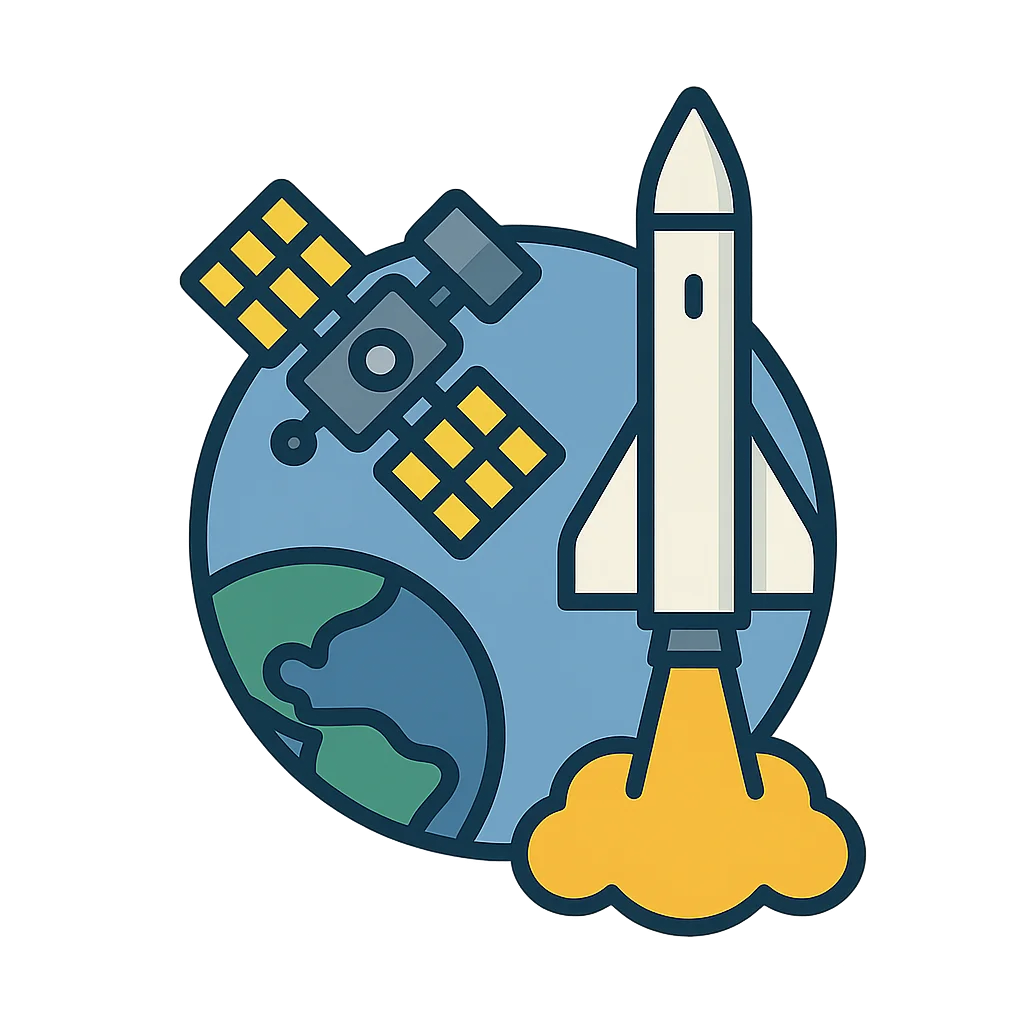
My job was at a place called the Naval Proving Ground in Virginia. I worked with some of the first really big computers, which were so large they filled entire rooms. My task was to feed these giant machines enormous amounts of data about our planet. You see, most people think the Earth is a perfect, round ball, like a marble. But it’s not. It’s a little lumpy and bumpy, with mountains and deep ocean trenches that affect gravity. My job was to use math to create a very, very precise model of the Earth’s true shape. This model, called a 'geoid,' was the secret ingredient we needed for our big project. This was so important because we were planning to send special satellites into space. These satellites would act like bright stars, sending signals down to Earth. For the signals to be useful, they needed to know the exact shape of the planet they were talking to. My mathematical model would be the 'brain' that allowed the satellites to work perfectly. For years, my team and I worked tirelessly, checking our calculations. Every number had to be perfect. Finally, the day arrived. It was February 22nd, 1978. The first satellite, named Navstar 1, was sitting on a launchpad, ready to blast into space. I was not at the launch site, but back in our control room, you could feel the excitement buzzing in the air. Everyone was quiet, our eyes glued to the big screens showing the countdown. Ten. Nine. Eight. My heart was pounding in my chest. We had poured so much of our lives into this project. Seven. Six. Five. I held my breath. Four. Three. Two. One. Liftoff. We saw the rocket rise on a pillar of fire and smoke. We watched its journey, making sure everything was going according to plan. Then, the message we were all waiting for came through: 'Navstar 1 has successfully reached orbit.' A huge cheer erupted in the room. We were hugging and shaking hands. Our mathematical star was finally in the sky, ready to start its job. It was one of the proudest moments of my life.
That first satellite, Navstar 1, was just the beginning. It was the very first star in what would become a whole constellation of them. Over the next several years, more and more satellites were launched, circling the Earth and constantly sending out their signals. Together, they formed what we now call the Global Positioning System, or GPS. Our big puzzle was finally solved. You might not think about it, but the work my team and I did all those years ago is probably in your pocket or in your family’s car right now. Whenever you use a map on a phone to find your way to a friend’s house, or see a delivery truck find your street, you are seeing our work in action. The math I did helps those little dots know exactly where they are. Looking back, I see that a love for numbers can truly change the world. What started as a little girl’s fascination with solving puzzles became a tool that helps billions of people every single day. My story shows that if you are curious, work hard, and team up with others to solve a big problem, you can create something amazing. You can create your very own star to help guide the world.
Activities
Take a Quiz
Test what you learned with a fun quiz!
Get creative with colors!
Print a coloring book page of this topic.










 Free for Educators