English
 For Schools
 For Homeschool

The Story of the Ballpoint Pen
Before I tell you who I am, I want you to imagine a world of inky disasters. Picture a journalist, rushing to write down a brilliant thought, only to have a glob of wet ink spill from his pen, smearing across the page and staining his fingers. That was the world my ancestors, the fountain pens, created. They were elegant, yes, but oh, they were messy. They leaked in pockets, smudged important documents, and required constant, careful refilling. This world of frustration was the very world that called me into existence. My name is the Ballpoint Pen, and my story begins with a man named László Bíró, a journalist in 1930s Budapest who was simply fed up with the mess.
László wasn’t just a writer; he was an observer, a thinker. Every day, he wrestled with his fountain pen, and every day he dreamed of something better, something reliable and clean. He needed a tool that could keep up with the speed of his thoughts, not one that would betray him with a sudden, disastrous leak. The ink-stained cuffs of his shirts and the ruined pages of his notebooks were a constant reminder of the problem. He knew there had to be a better way to put words on paper, a way that was as smooth and effortless as the ideas themselves. He just hadn't figured out how yet. It was this daily irritation, this persistent, messy problem, that planted the first seed of my creation.
László’s moment of inspiration didn't happen in a quiet study but in the loud, clattering environment of a newspaper printing press. He stood watching the giant rollers applying ink to paper, and he noticed something remarkable. The ink used for newspapers was thick, almost like a paste, and it dried almost instantly. There were no smudges, no blurs, just crisp, clean letters. A powerful idea sparked in his mind: what if he could put that quick-drying ink inside a pen? The challenge, however, was immense. This ink was far too thick to flow through the narrow channel of a fountain pen. It would just sit there, a stubborn, unmoving blob. He needed a completely new mechanism, a new way to deliver the ink from its reservoir to the paper. His first attempts were failures, but the idea was too good to abandon.
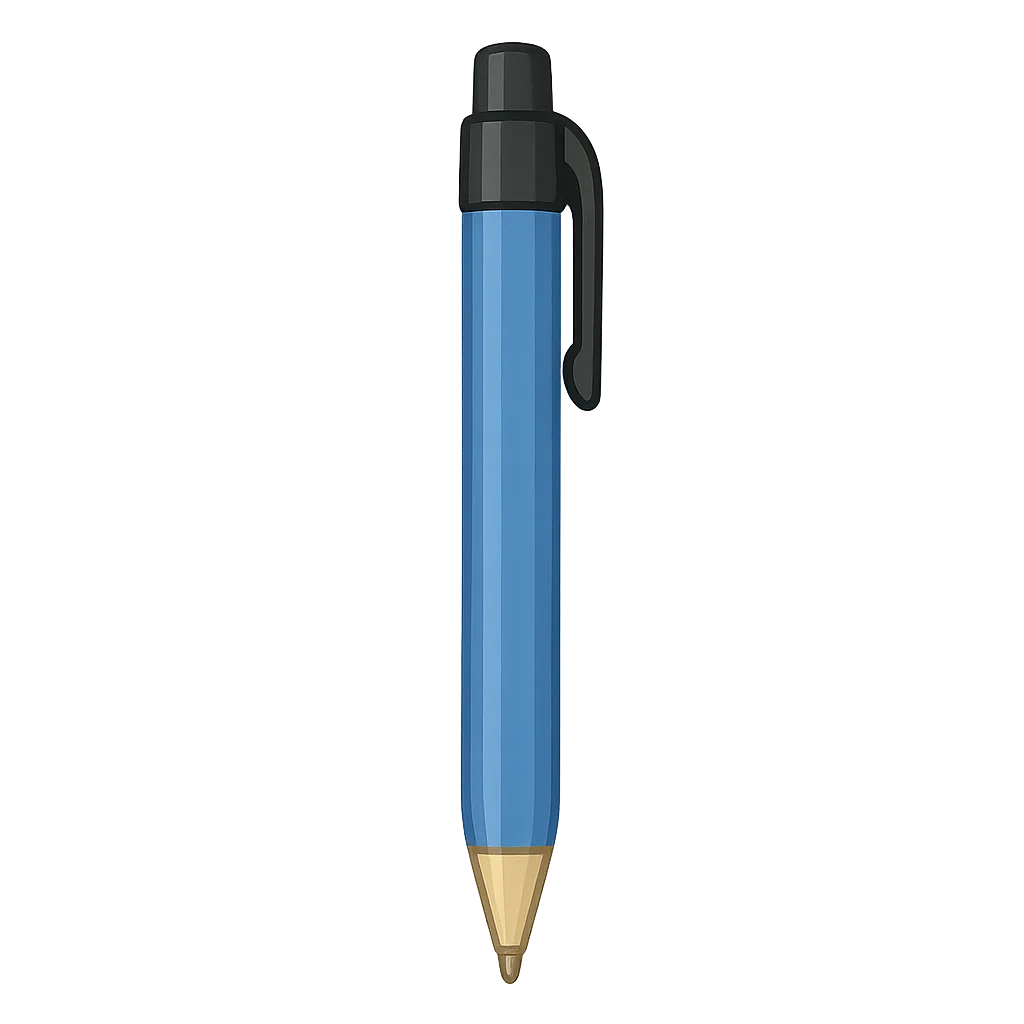
This is where his brother, György, a brilliant chemist, entered my story. László shared his vision, and György saw the scientific puzzle that needed solving. Together, they began a long series of experiments in their workshop. György worked tirelessly to formulate an ink with the perfect viscosity—thick enough not to leak, but fluid enough to write. Meanwhile, László focused on my tip. He recalled seeing a perfume bottle with a rollerball applicator and wondered if the same principle could work for a pen. He imagined a tiny, free-rolling metal ball, no bigger than the head of a pin, housed at the very point. This ball would spin as it moved across the paper, picking up the thick ink from inside and transferring it in a clean, consistent line. It was a revolutionary concept. After countless trials, they perfected the design. The ball spun smoothly, the ink flowed perfectly. On June 15th, 1938, they filed their first patent, and I, the first reliable ballpoint pen, was officially born.
My journey, however, was just beginning, and it soon took an unexpected turn. As the shadows of World War II spread across Europe, the Bíró brothers, who were Jewish, knew they had to leave their home in Hungary for their safety. They found a new home far away, in Argentina. It was a difficult time, full of uncertainty, but they didn't give up on their dream for me. In their new country, they found an investor and established a factory. On June 10th, 1943, they filed a new patent in Argentina and began my production. But my big break came from the sky. During the war, pilots in the British Royal Air Force had a serious problem. As their planes climbed to high altitudes, the change in air pressure caused their fountain pens to leak uncontrollably, creating a terrible mess in the cockpit. They needed a writing instrument that could work under extreme conditions.
Someone in the British government had heard about the new pen being made in Argentina and ordered a batch for the air force. I was the perfect solution. My sealed cartridge and thick ink were completely unaffected by the pressure changes. I didn't leak or explode. For the pilots, I was a small miracle. They could write navigation notes, jot down coordinates, and fill out reports at 30,000 feet without a single smudge. I was reliable, clean, and ready to write the moment they needed me. I became a trusted piece of equipment, a small but essential tool that helped them do their job safely and effectively. From the noisy workshops of Budapest to the silent, cold cockpits high above the clouds, I had proven my worth.
After the war, my journey continued. The pilots who had relied on me in the skies brought me back to the ground, and soon, everyone wanted one. My fame spread across the world, and in many places, people started calling me by my creator's name: the 'Biro'. I was no longer just a special tool for pilots; I became an everyday instrument for students, writers, artists, and workers. I changed the very act of writing. Suddenly, anyone could carry a reliable pen in their pocket without fear of an inky mess. Writing became simpler, cleaner, and more accessible than ever before. You could write on your side, upside down, on almost any surface, in almost any condition.
My story is a reminder that sometimes the most revolutionary inventions don't come from a grand, complicated plan. They come from a simple frustration, a messy problem that someone refuses to accept. László Bíró just wanted a pen that worked. His persistence, his collaboration with his brother, and his clever observation of the world around him turned that simple wish into an object that has touched billions of hands. So the next time you click me open to write a note or draw a picture, remember that every great idea, no matter how small it seems, has the power to roll out and make its mark on the world.
Activities
Take a Quiz
Test what you learned with a fun quiz!
Get creative with colors!
Print a coloring book page of this topic.