

 English

The Incorruptible Cashier
Before I existed, the world of commerce was a noisy, confusing jumble of trust and guesswork. My name is the Cash Register, but my ancestors were nothing more than simple wooden drawers or tin boxes. Imagine a bustling general store in the late 1800s. The air is thick with the smells of spices, leather, and freshly baked bread. A shopkeeper, with an apron dusted in flour, rushes back and forth, serving a line of customers. When someone pays, he slides open a heavy wooden drawer, its compartments filled with a chaotic mix of coins and bills. There was no system, no official record. At the end of a long, exhausting day, he would sit down to count the money, but his memory was often as jumbled as the coins themselves. Did he give the correct change for that bolt of fabric? Did every sale from that busy afternoon rush actually make it into the drawer? It was a constant source of anxiety. The biggest problem was trust. Without a reliable way to track transactions, it was nearly impossible to know if the money in the drawer matched the day's sales. Some employees, unfortunately, might be tempted to pocket a coin or two, and the owner would have no way of proving it. This quiet dishonesty, this constant uncertainty, was a heavy burden for business owners everywhere. They needed a guardian, a silent, mechanical accountant who could watch over every transaction with perfect, unwavering accuracy. They needed a way to bring order to the chaos and honesty to the counter. They needed me.
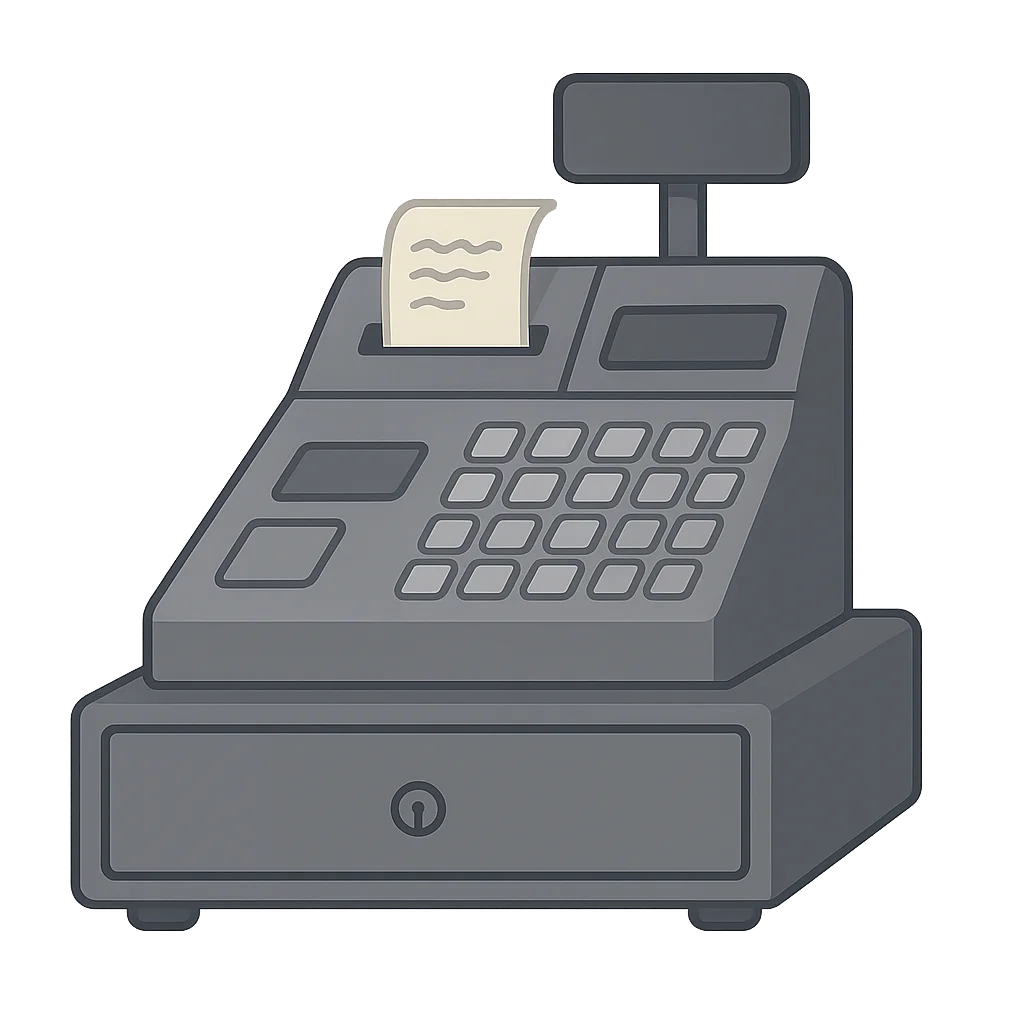
My story truly begins not in a bustling factory, but in a saloon in Dayton, Ohio, with a man named James Ritty. He was a kind but deeply frustrated business owner. He ran a popular establishment, but no matter how busy it was, he always seemed to be losing money. He had a strong suspicion that some of his bartenders were helping themselves to the profits, but with only a simple cash drawer, he had no way to prove it. The stress became so overwhelming that in 1878, he booked a steamship voyage to Europe, hoping the sea air would clear his head. It was on that very ship, surrounded by the rhythmic chugging of the massive steam engine, that inspiration struck him like a bolt of lightning. He wandered into the engine room and became fascinated by a large, intricate device on the wall. The ship's engineer explained that it was a mechanism designed to automatically count every single rotation of the ship's massive propeller shaft. James stood there mesmerized as the numbers on the dial clicked over, one by one, a perfect and incorruptible record of the ship’s work. A powerful thought sparked in his mind: if a machine could count the turns of a propeller, couldn't a similar machine be made to count the money coming into his business? The idea was so brilliant, so revolutionary, that he couldn't bear to continue his vacation. He cut his trip short and rushed back home to Dayton. Once there, he sought out his mechanically gifted brother, John, and together they locked themselves in their workshop. Their first attempts were clumsy, but they were fueled by that powerful idea. They tinkered endlessly with gears, levers, springs, and keys, determined to create a machine that could not be fooled. Finally, they built me. On November 4th, 1879, they received a patent for their invention, which they proudly named "Ritty's Incorruptible Cashier." I was a beautiful creation, housed in polished wood and gleaming metal. I had a full set of keys representing different amounts. When a bartender pressed a key, two brilliant things happened. First, a small indicator displaying the amount would pop up at the top, showing the customer the exact price being charged. This prevented the bartender from secretly entering a lower amount and pocketing the difference. Second, and most importantly, that same amount was added to a running total inside me, visible only to my owner. And for every single sale, a loud, cheerful bell would ring out—CH-CHING! That bell was more than just a sound; it was an announcement to the entire room that a transaction was being recorded honestly and accurately. I wasn't just a machine; I was a declaration of integrity.
James Ritty was a brilliant inventor, but he wasn't a natural salesman. He struggled to manage the growing demands of manufacturing me while also running his saloon. The stress was too much, and he eventually sold his patent and the small factory he had started. This is where my story takes a dramatic turn, thanks to a man named John H. Patterson. Patterson was a clever and determined businessman who had bought two of my early models for his own coal and supply company. He was amazed at how I transformed his business, virtually eliminating employee theft and giving him clear, accurate records for the first time. He saw my incredible potential. So, in 1884, he bought the entire company and renamed it the National Cash Register Company, which you might know today as NCR. Patterson wasn't just a businessman; he was an innovator who saw ways to make me even better. His most famous improvement came from a simple observation: I provided a record for the owner, but not for the customer. In 1892, he introduced a model with a built-in paper roll. With every transaction, I would print a small, itemized receipt that the customer could take with them. This little piece of paper was revolutionary. It built trust between the shopper and the store and provided proof of purchase. Under Patterson's leadership, I began to travel the world. My loud "CH-CHING" could be heard in department stores in Paris, small shops in London, and markets all across America. Over the decades, I continued to evolve. I gained motors to open my drawer automatically and more complex mechanisms to track different types of sales. I shed my wooden frame for sleek, durable metal. Eventually, the age of electronics arrived, and my mechanical gears and levers were replaced by circuits and digital screens. Today, you know my descendants as the sophisticated point-of-sale systems in every store, restaurant, and business. They scan barcodes, process credit cards, and manage inventory. But even in their complex digital hearts, my original purpose remains the same. I was born from a simple need for honesty and order, and I continue to stand as a quiet, reliable partner in commerce, ensuring that every transaction is fair and true. I am a reminder that sometimes, the most powerful inventions are the ones that help us trust each other a little more.
Activities
Take a Quiz
Test what you learned with a fun quiz!
Get creative with colors!
Print a coloring book page of this topic.















 Free for Educators