

 English

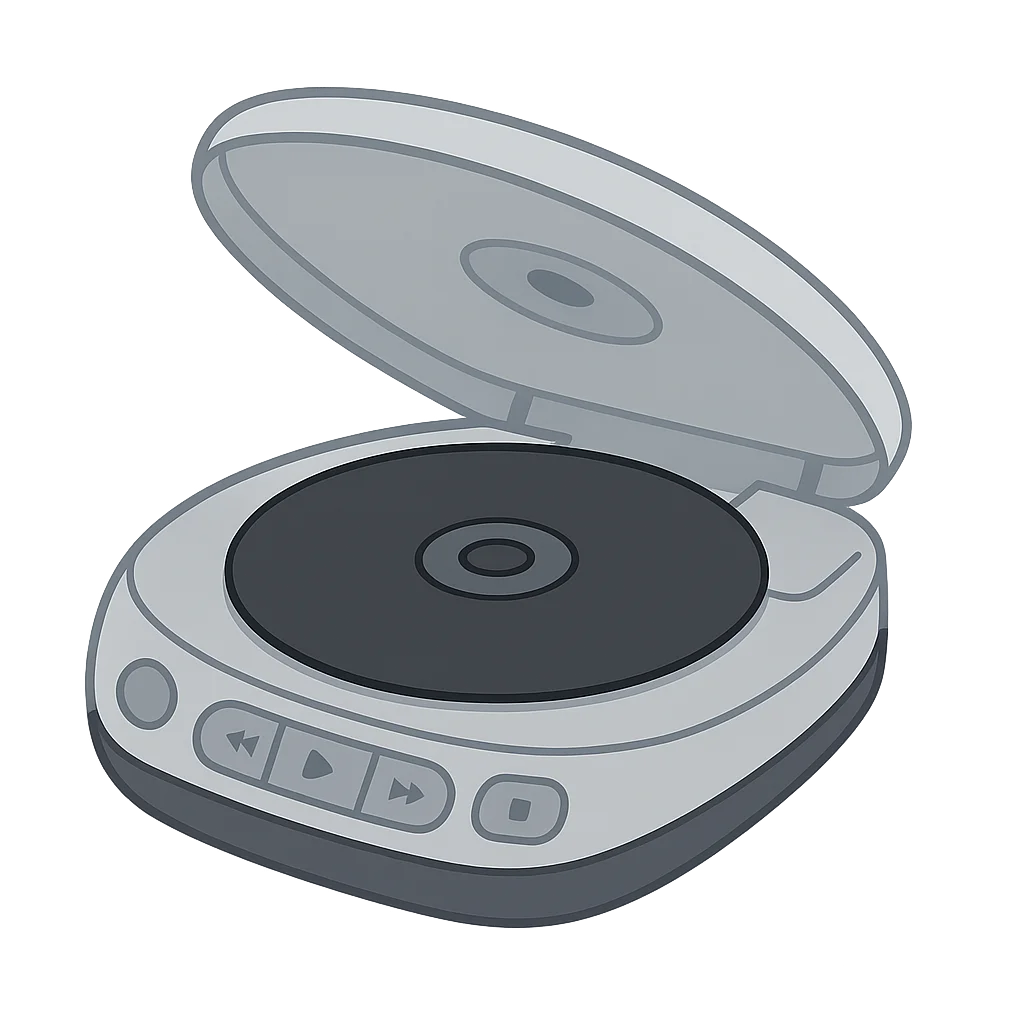
The Tale of the Shining Disc
Hello there. You might not recognize me at first glance, but I am the CD Player, and I’m here to tell you my story. My best friend is the Compact Disc, a beautiful, shimmering circle that holds music like a secret treasure. It catches the light and flashes with all the colors of the rainbow. Before we arrived, the world of sound was a very different place, a bit clunky and unpredictable. Imagine giant, black spinning plates called vinyl records. They were wonderful, but they were delicate. A tiny speck of dust could make a loud ‘pop.’ A little scratch could cause the needle to skip, repeating the same word over and over again. Then there were cassette tapes, little plastic boxes with long ribbons of magnetic tape inside. They were more portable, but oh, the troubles they could cause. Sometimes the tape would get chewed up by the machine, or it would stretch and make the singer sound wobbly and strange. People loved their music, but they dreamed of a better way to listen. They wished for a sound that was perfectly clear, as if the band were playing right in their room. They wanted something strong that wouldn't get ruined by a little bump or dust bunny. They wanted something small enough to carry, something that would let them take their favorite albums on adventures without any fuss. The world was waiting for a new kind of music, a new kind of magic, and I was just about to make my grand entrance.
My creation was a true team effort, a story of two groups of brilliant minds coming together. In the year 1979, two big companies from different parts of the world, Philips from the Netherlands and Sony from Japan, decided to combine their ideas. They knew that if they worked together, they could create something truly spectacular. For years, their engineers sketched drawings, built models, and tested theories. An inventor named James T. Russell had come up with the first ideas for recording information with light long before, and now these teams were making his dream a reality for music. They figured out how to turn music into a secret digital code, a language made of ones and zeros. This code was then pressed onto my friend, the shiny disc, as billions of microscopic bumps, or ‘pits,’ arranged in a long, spiraling path. You can’t see them with your eyes, but they are there, like a secret, bumpy road. So, how do I read this secret road. It’s my favorite part. Inside me is a tiny, powerful laser, a beam of light no thicker than a pin. When you place a disc inside me and press play, I spin it very fast. The laser shoots up and shines on the underside of the disc, following that spiraling path of pits. As the laser moves along, it reads the pattern of bumps. When the light hits a flat spot, it reflects back one way, and when it hits a pit, it reflects back differently. A tiny computer inside me understands this flashing reflection and instantly translates it back into the beautiful, perfect sound of music. It all happens so fast it feels like magic. Finally, after all that hard work, my big day arrived. On October 1st, 1982, the very first commercial CD player was sold in a store in Japan. The world held its breath, and for the first time, people heard music with a perfect, digital clarity that was unlike anything they had ever experienced before.
Once I arrived, everything changed. Suddenly, music sounded brand new. The annoying hisses, crackles, and pops of old records were gone forever. Every note was crystal clear, from the lowest rumble of a bass guitar to the highest shimmer of a cymbal. It was like cleaning a dirty window and seeing the world outside in bright, vibrant color for the first time. People were amazed. But my journey didn't stop in the living room. Soon, a smaller, portable version of me was born, called the Discman. I was now small enough to clip onto a belt or fit into a backpack. Kids could listen to their favorite albums on the bus to school, on family road trips, or while riding their bikes, all without missing a single beat. My legacy, though, is even bigger than just music. The laser technology that my creators perfected to read those shiny discs was an incredible idea. It paved the way for so many other inventions. It led to DVDs for watching movies, Blu-ray discs with even sharper pictures, and even helped create the technology we use for streaming music and movies over the internet today. Looking back, I see that I was more than just a machine. I was a tiny laser beam that lit up the future, showing the world a new way to listen, watch, and connect.
Activities
Take a Quiz
Test what you learned with a fun quiz!
Get creative with colors!
Print a coloring book page of this topic.
















 Free for Educators