

 English

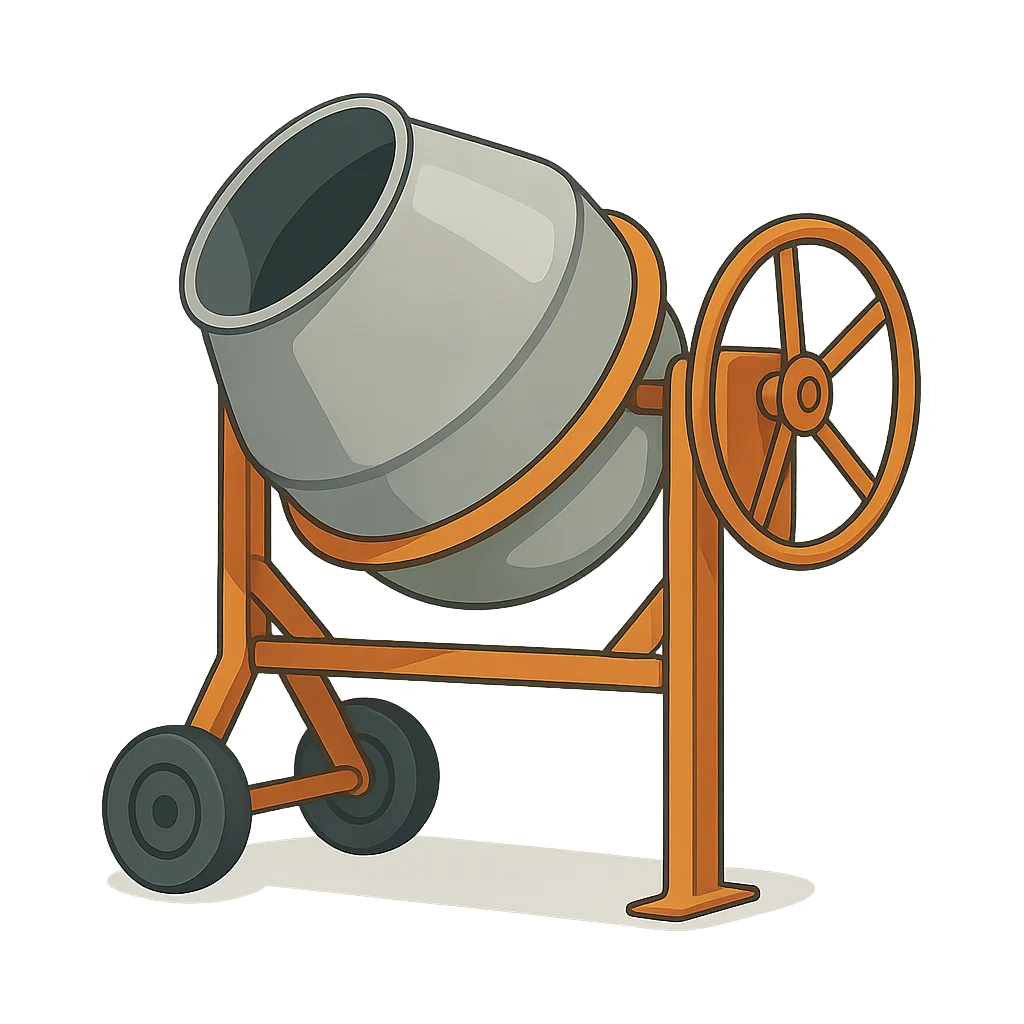
I Am Concrete: The Foundation of History
You might not think of me as having a story, but you walk on me, live within me, and cross over me every single day. I am Concrete. I am the silent, solid ground beneath your feet on the sidewalk, the strong walls of your school, and the towering pillars of a bridge. I feel the rumble of cars, the patter of rain, and the weight of buildings, holding everything steady and strong. I am so common now that you might not even notice me, but I have been part of human history for thousands of years, and my journey is one of forgotten secrets, brilliant discoveries, and incredible strength. Before your day ends, just look around. I am almost everywhere, quietly supporting your world, and I have been for a very, very long time.
My first great life began in the heart of the Roman Empire. The Romans were master builders, and they discovered a secret recipe that made me legendary. They mixed lime and special volcanic ash, which they called pozzolana, with chunks of rock. This wasn't just any recipe; it gave me a kind of magic. It allowed me to harden even underwater, something no other material could do. I became the backbone of their civilization. I was there, holding the mighty stones of the Colosseum together as gladiators clashed. I was the smooth, strong channel for the aqueducts, carrying fresh water to bustling cities for miles. My greatest achievement from that era, the one I am most proud of, is the Pantheon in Rome. Its magnificent, unsupported dome is made of me, and it has stood strong for nearly two thousand years, a perfect testament to my Roman strength. But empires fall. When Rome collapsed, the world entered a long, dark age, and my secret recipe was lost. The knowledge vanished, and for over a thousand years, I fell into a long, quiet sleep, waiting to be remembered.
It took over a millennium for the world to need my unique strength again. By the 1700s, people were building lighthouses on stormy coasts, structures that had to withstand the constant pounding of the sea. In the 1750s, a clever British engineer named John Smeaton was tasked with building the Eddystone Lighthouse. He knew he needed something special, something that could harden and endure in the wet, harsh environment. He began experimenting tirelessly, testing different types of limestone. He had a brilliant idea, discovering that mixing limestone containing clay and firing it in a kiln created a hydraulic lime—a material that hardened underwater. It was the first step in my reawakening. Decades later, a bricklayer from Leeds, England, named Joseph Aspdin, took the next giant leap. He experimented with his own kiln, burning finely ground limestone and clay at incredibly high temperatures until they fused together. He ground this new material into a fine powder. On October 21st, 1824, he patented his invention, calling it Portland cement. He gave it that name because when I dried, my fine, grey appearance looked just like the famous, high-quality building stone quarried from the Isle of Portland. This was it. My modern life had begun, and I was stronger than ever.
Even with my new Portland cement recipe, I had a weakness. I was fantastic at being squeezed—what engineers call compression. You could stack immense weight on me, and I wouldn’t complain. However, I wasn't very good at being stretched or bent, a force called tension. If you tried to bend a plain slab of me, it would snap. This limited the kinds of shapes and structures I could form. But in the mid-1800s, ingenious builders had another breakthrough. They realized that if they gave me a skeleton, I could overcome this weakness. They began embedding steel bars, or rebar, inside of me before I hardened. The steel was incredibly strong under tension, and I was strong under compression. Together, we were the perfect team. It was like I had gained a superpower. This partnership, known as reinforced concrete, changed everything. I could now soar into the sky, forming the skeletons of the first skyscrapers. I could stretch across wide rivers as graceful, durable bridges. This new strength allowed architects to dream in new shapes, creating curves and forms that were once impossible.
Today, I am the most widely used human-made material in the world, and my work is far from over. I am the quiet foundation of your home, giving your family a safe and stable place to live. I am the structure of hospitals where people heal and schools where minds grow. I am the smooth, curved surface of a skatepark and the immense, powerful wall of a dam that holds back a river to generate clean energy. My story is a long one, filled with forgotten knowledge and brilliant reinvention. From the dome of the Pantheon to the foundation of your own house, I have been a silent partner in human progress. I am proud to be the strong, reliable foundation upon which people build their communities, their connections, and their dreams for a better, stronger future.
Activities
Take a Quiz
Test what you learned with a fun quiz!
Get creative with colors!
Print a coloring book page of this topic.














 Free for Educators