

 English

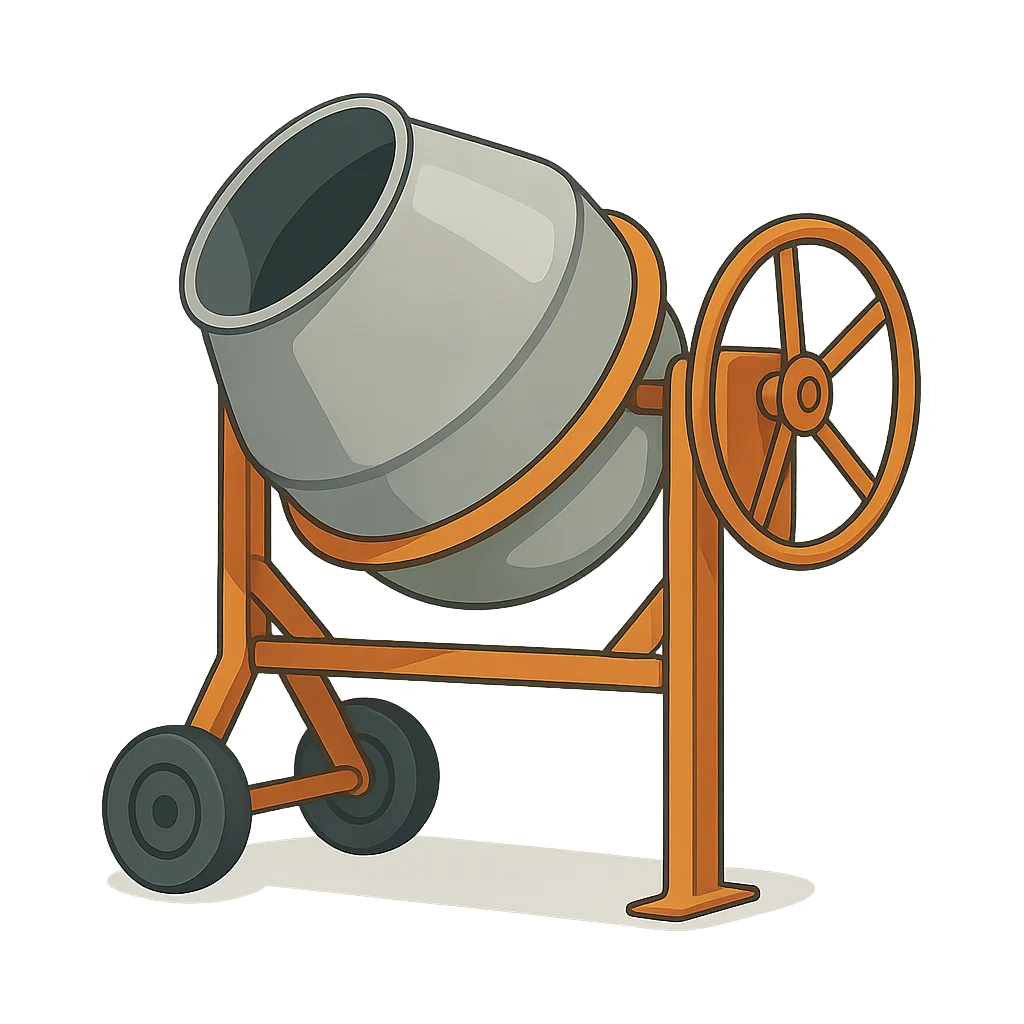
The Story of Concrete
Hello there. You might not know me by name, but we meet every day. I am Concrete. I am the sidewalk you skip on, the foundation of your school, and the tall buildings that scrape the sky. But I wasn't always so hard and strong. My life begins as a gooey, gray soup. Imagine a chef mixing special ingredients: a powder called cement, some water, sand, and small stones. When they are all stirred together, that thick soup is me. I can be poured into almost any shape you can imagine—a square block, a winding pathway, or a tall column. Then, I wait. Slowly, I drink up the water and begin to harden, turning from a liquid into a rock-solid form. My story is very, very old. The ancient Romans were my first true masters. They discovered a secret recipe using volcanic ash that made me incredibly strong and able to harden even underwater. With me, they built amazing things that have lasted for thousands of years. If you ever see pictures of the Pantheon in Rome, with its gigantic, beautiful dome, that's me. I have been holding that roof up for nearly two thousand years, a silent, strong giant protecting the history within.
After the great Roman Empire fell, a sad thing happened. My secret recipe was lost. For over a thousand years, people forgot how to make me strong and durable. The knowledge vanished, and builders struggled. They tried to make materials like me, but their creations would often crumble and crack under pressure or wash away in the rain. It was a long, quiet time for me. I waited patiently, knowing that one day someone would need my strength again. That day finally came in the 1800s. A man in England, a bricklayer named Joseph Aspdin, was determined to create a better building material. He was like a scientist in his own kitchen, experimenting with different types of limestone and clay. He would grind them into a powder and cook them in his stove, changing the recipe again and again. It was hard work, but he didn't give up. Finally, on October 21st, 1824, he created a new kind of cement that was incredibly powerful. He called it 'Portland Cement' because when it hardened, it looked just like a popular, strong stone from the Isle of Portland. This was the key. Joseph Aspdin’s invention was the new magic ingredient that brought me back to life, ready to build the world once more.
Joseph Aspdin's Portland Cement was a fantastic new start, but my story wasn't over. I was about to get a super-power upgrade. Builders and engineers discovered that while I was great at being squeezed, I wasn't so great at being stretched or bent. So, they came up with a brilliant idea. Before pouring me when I was still in my liquid soup form, they would place a skeleton of steel bars inside the mold. These bars are called rebar. When I hardened around this steel skeleton, we became a team. The steel gave me the power to bend and stretch without breaking, and I protected the steel from rust and gave it incredible strength. We became known as reinforced concrete. This partnership changed everything. With our combined strength, people could build higher and bigger than ever before. We became the stuff of dreams: towering skyscrapers that seem to touch the clouds, massive bridges that span wide rivers, and enormous dams that hold back powerful lakes to create electricity. I am the quiet foundation of the modern world. I am in the airport runways that planes land on and the skateparks where you do tricks. I am strong, reliable, and almost everywhere, quietly supporting your world and helping you build your dreams, one solid block at a time.
Activities
Take a Quiz
Test what you learned with a fun quiz!
Get creative with colors!
Print a coloring book page of this topic.














 Free for Educators