

 English

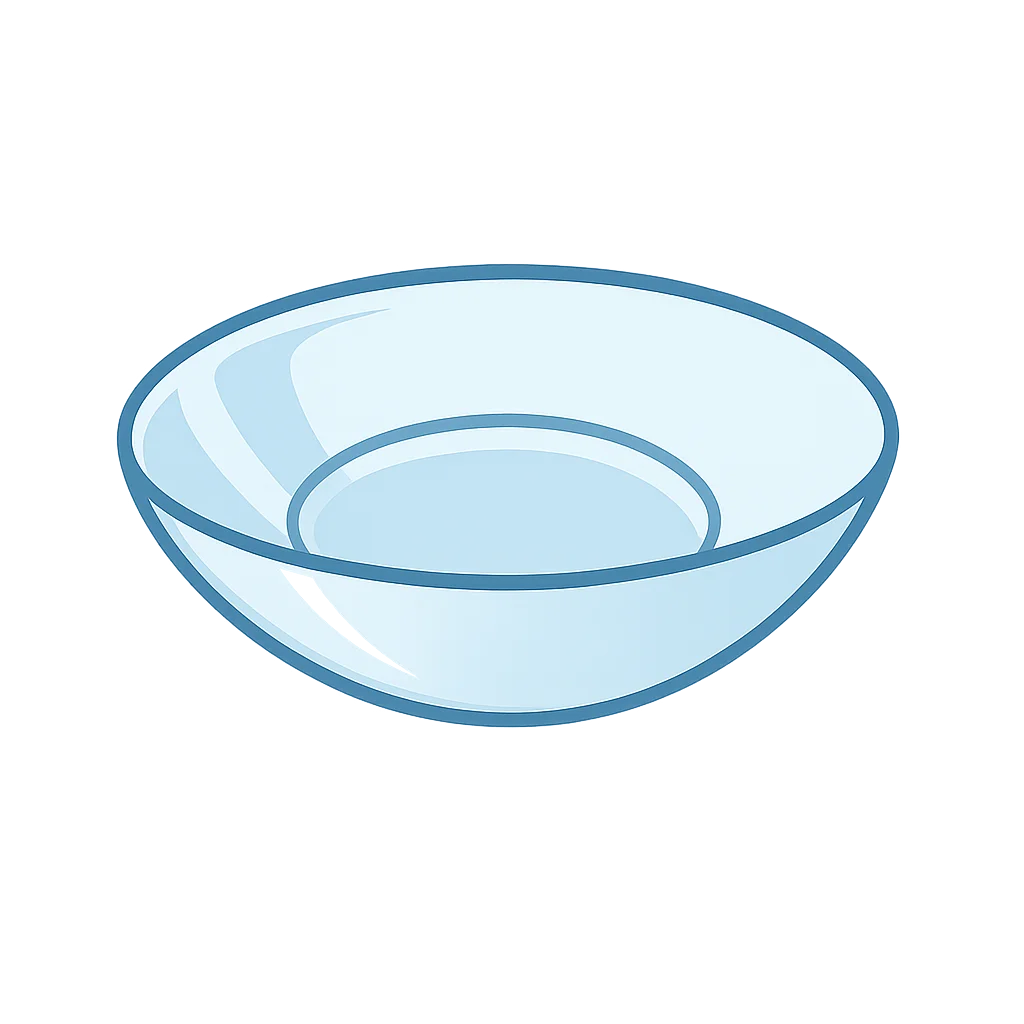
The Story of a Tiny Window
Hello there. You might not even notice me, sitting so quietly on the tip of a finger. I'm a soft contact lens, a tiny, clear disc of amazing technology. My job is to be a little window to the world for people whose eyes need a bit of help. I bend the light just right so that blurry signs become sharp, faraway trees become clear, and the words in a book stop wiggling. But I wasn't always this light, soft, and comfortable. My family history is very long, and it starts with a simple idea. I had some very old ancestors who were hard, clunky, and not very friendly to the eyes they were trying to help. My journey from a heavy piece of glass to the gentle helper I am today is quite a story of patience and brilliant ideas.
My story really begins with a dream from a famous artist and inventor, Leonardo da Vinci, more than 500 years ago. He imagined that putting water directly on the eye could change how a person sees. It was just an idea, a whisper of what I could become. Many centuries passed before my first real, but very uncomfortable, ancestor was born. In 1888, a doctor named Adolf Fick created a thick glass shell that could be placed over the entire eye. Imagine trying to wear a tiny glass bowl on your eye. It was heavy, and you could only wear it for an hour or two before your eye felt tired and sore. It wasn't very practical, but it was a start. It proved that a little lens, worn right on the eye, could actually work. This showed everyone that even the biggest inventions often have very humble beginnings, starting as something that barely works at all.
For a long time, my family stayed big and glassy. But inventors kept working, trying to make us better. A big change happened in the 20th century when people started using new materials. In 1948, an innovator named Kevin Tuohy had a brilliant idea. Instead of glass, he used a type of plastic. And instead of covering the whole eye, he made a lens that was much smaller, designed to float just on the cornea, the clear front part of the eye. This was a huge leap forward. Suddenly, my ancestors were lighter and much more comfortable. People could wear them for the whole day, not just for an hour or two. It was the first time that wearing a lens felt more like a help than a bother. The world was slowly getting clearer for more and more people.
But the biggest change, the one that made me who I am today, was a true revolution. It came from a clever chemist from Czechoslovakia named Otto Wichterle. He invented a special kind of plastic that was soft and loved water. It could absorb water and become jelly-like and gentle, perfect for resting on a sensitive eye. The story of my birth is my favorite part. On Christmas Eve of 1961, Dr. Wichterle was determined to create the first soft lens. He didn't have fancy equipment at home, so he built a machine himself. He used a toy building set that belonged to his children, a bicycle dynamo, and a motor from a record player. With this homemade contraption spinning away in his kitchen, he created me, the first soft contact lens. It proved that incredible inventions don't always come from big, expensive laboratories. Sometimes, they come from simple things and a whole lot of imagination.
That amazing Christmas Eve experiment changed everything. The creation of a soft, breathable lens made clear vision comfortable and safe for millions of people around the world. Suddenly, people who needed help seeing could run, swim, and play sports without worrying about their glasses falling off. From Dr. Wichterle's simple machine, a whole new family of lenses was born. Now, there are all kinds of us. There are daily disposable lenses you can throw away at night, lenses that can change the color of your eyes, and even special lenses that can reshape an eye while you sleep. Looking back, I see how a tiny idea, a dream from 500 years ago, grew and changed over the centuries. It took many clever people and a lot of persistence to turn me into the tiny, powerful window that helps the world see its own beauty more clearly every single day.
Activities
Take a Quiz
Test what you learned with a fun quiz!
Get creative with colors!
Print a coloring book page of this topic.









 Free for Educators