English
 For Schools
 For Homeschool

The Story of CRISPR, the DNA Editor
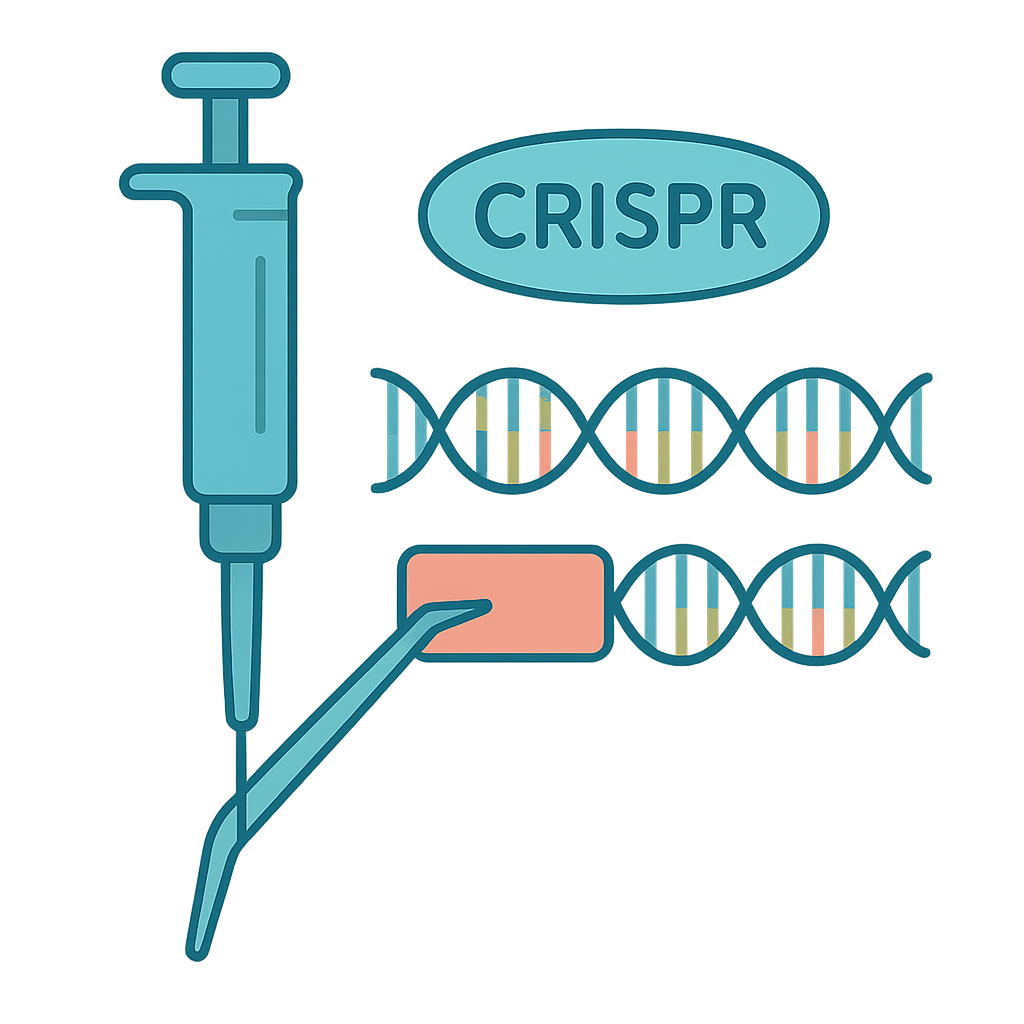
Hello. My name is CRISPR, and I'm a tiny helper that you can't even see. But even though I'm small, I have a very big and important job. Every living thing, from a fuzzy caterpillar to a tall sunflower to you, has a special instruction book inside each of its cells. This book is called DNA, and it's like a giant story that tells your body how to grow and work. It has all the instructions for what makes you special, like if you have curly hair or straight hair, and if your eyes are brown or blue. My job is to be a story editor. Sometimes, the DNA storybook gets a little mistake, like a tiny typo in a word. These typos can sometimes make people or plants sick. I can find that mistake and help fix it. I make sure the story is written just right, so everything can stay healthy and strong.
For a long, long time, I lived a secret life, hidden away from the world. I was living inside tiny living things called bacteria, which are so small you need a special microscope to see them. For them, I was a superhero shield. Whenever a mean virus tried to attack the bacteria, I would remember what the virus looked like. If it ever came back, I would find its instruction book and chop it up so the bacteria could stay safe and healthy. A scientist named Francisco Mojica was the first person to notice me doing this, and he was very curious. But it was two amazing scientists, Emmanuelle Charpentier and Jennifer Doudna, who discovered my true power. They were like super detectives, studying me very carefully for years. They worked together, sharing ideas and looking at me through powerful microscopes. They wondered out loud, "If CRISPR can find and cut a virus's story, maybe it can find and cut any story we want it to.". They decided to find out. On a very exciting day, June 28th, 2012, they finally figured it out. They learned how to give me a special guide. This guide is like a map that shows me exactly where to go in the huge DNA storybook, even if it has billions of words. Once my guide helps me find the one spot with the typo, I act like a pair of super-precise scissors. Snip. I make a neat little cut right where the mistake is. Then, the cell’s own repair kit comes in and writes the correct word in the story. Emmanuelle and Jennifer were so happy. They knew I could be used to help not just bacteria, but plants, animals, and even people too. I was ready to start my new job helping the world.
Now that my secret is out, I get to help in so many amazing ways. I feel so proud of the work I do. I help farmers by making their plants stronger. For example, I can help a tomato plant learn how to fight off pesky bugs all by itself, so it can grow big and juicy for you to eat. I can also help it grow even when there isn't much water. This means more healthy food for everyone. My most important job, though, is helping doctors. They use me to understand diseases that happen because of those little typos in the DNA storybook. By finding and fixing these mistakes, doctors are learning how to help people who are sick feel better. I am still very new, and scientists are learning more about me every day. There are so many more stories to edit and so many more problems to solve. I am so excited for the future. I know that with my help, we can make the world a much healthier and happier place for every single person, animal, and plant. My journey is just beginning.
Activities
Take a Quiz
Test what you learned with a fun quiz!
Get creative with colors!
Print a coloring book page of this topic.