

 English

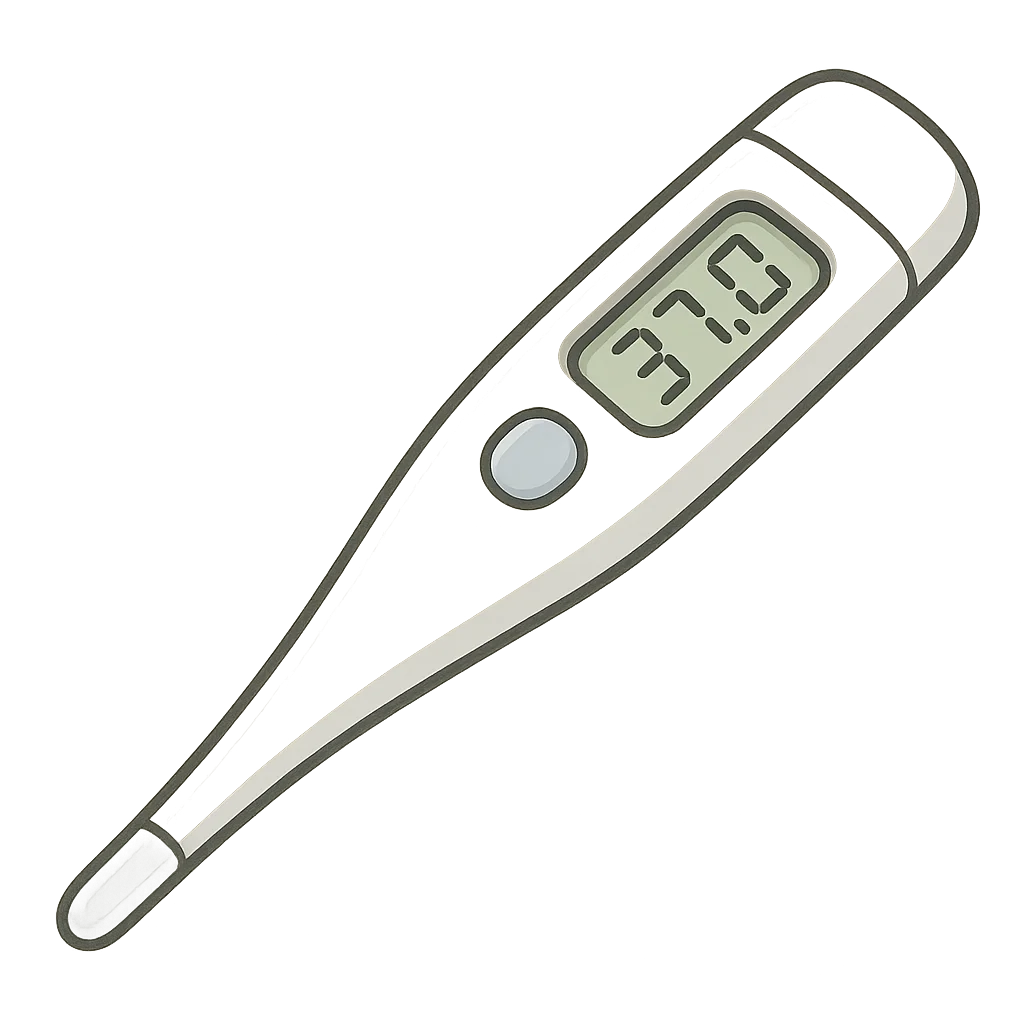
The Story of the Digital Thermometer
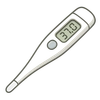
Before you hear my familiar beep, there was a different world of temperature-taking, a world of silence and slow, careful movements. I am a digital thermometer, a small plastic tool with a screen that gives you a number in seconds. But my story begins with my ancestor, the mercury-in-glass thermometer. It was a slender, fragile thing, elegant but full of risk. Imagine being a nurse in a busy hospital ward in the 1960s. To take a patient's temperature, you had to first shake the glass thermometer with a sharp flick of the wrist, hoping you didn't accidentally smash it against a bed frame. Then you had to wait. And wait. For three, sometimes five long minutes, the patient would hold it under their tongue while you attended to other duties. Finally, you would retrieve it and hold it up to the light, squinting to see where the thin, silvery line of mercury had stopped. It was a slow and delicate dance. The biggest problem, however, was the mercury itself. It was a beautiful, mesmerizing liquid metal, but it was also a poison. If one of my glass ancestors shattered, that silvery liquid would scatter into tiny, dangerous beads, releasing toxic vapors. Cleaning it up was a hazardous, complicated process. My creators knew there had to be a better, safer, and faster way to help people when they were sick. The world was ready for a new idea, and that new idea was me.
My journey from an idea to a real, working device began in the early 1970s, a time when electronics were changing everything. In San Diego, California, a team of brilliant minds at a company called Diatek Corporation were determined to solve the problems my glass ancestors posed. A man named Robert S. Allison led the charge. He and his team didn't look to glass and mercury; they looked to the world of circuits and electricity. Their idea was revolutionary. Instead of using expanding metal to measure heat, they decided to use an electronic component called a thermistor. You can think of a thermistor as a tiny, heat-sensitive detective. The warmer it gets, the more easily electricity can flow through it. My creators placed this tiny detective at my tip. When you place me under a tongue, the thermistor senses the body's heat and changes its electrical resistance. But that was only half the puzzle. A changing electrical signal isn't a temperature. For that, I needed a brain. They gave me one in the form of a microchip, a brand new technology at the time. This microchip was programmed to read the signal from the thermistor and, in a fraction of a second, translate it into a precise number that would appear on my digital display. On April 27th, 1971, my creators filed a patent for their invention. That day was like my official birth announcement to the world. But being born as an idea is one thing; growing into a reliable tool is another. The first versions of me were clumsy and not always accurate. The team worked tirelessly, facing many challenges. How could they make me fast enough for a doctor seeing dozens of patients? How could they ensure my reading was just as accurate as the old mercury thermometers? They experimented with different types of thermistors, refined the programming on my microchip, and designed a durable plastic shell that could withstand being dropped. There were countless moments of frustration, but with each setback, they learned something new, making me better, faster, and more dependable. They were driven by the thought of making healthcare safer for everyone, and their perseverance is the reason I exist today.
Once I was perfected, I began to appear in hospitals and clinics around the world, and everything changed. My arrival was quiet but profound. Nurses could now get an accurate temperature in under a minute. The constant fear of a mercury spill vanished. My simple, clear display meant no more squinting or guessing. My signature beep became a sound of efficiency and reassurance. Soon, I found my way into medicine cabinets in homes everywhere. I became a trusted tool for parents caring for sick children in the middle of the night, offering a quick, clear answer without the long wait or the worry of broken glass. I was proud to be a small part of so many families' lives, providing comfort and clarity during stressful times. But my story didn't end there. The technology that my creators pioneered—using an electronic sensor and a microchip—opened the door for even more advanced inventions. I was the foundation upon which my descendants were built. Soon came the ear thermometers, which use an infrared sensor to measure temperature from the eardrum in just a second. Then came the forehead scanners, which can get a reading without even touching the skin. These incredible tools owe their existence to the fundamental principles that were first realized in me. Looking back, I am more than just a piece of plastic and circuitry. I am a symbol of how a clever idea, born from a desire to solve a problem, can make the world a healthier and safer place. My journey from a spark of an idea to a household essential is a reminder that even the smallest inventions can have a massive impact, one beep at a time.
Activities
Take a Quiz
Test what you learned with a fun quiz!
Get creative with colors!
Print a coloring book page of this topic.










 Free for Educators