

 English

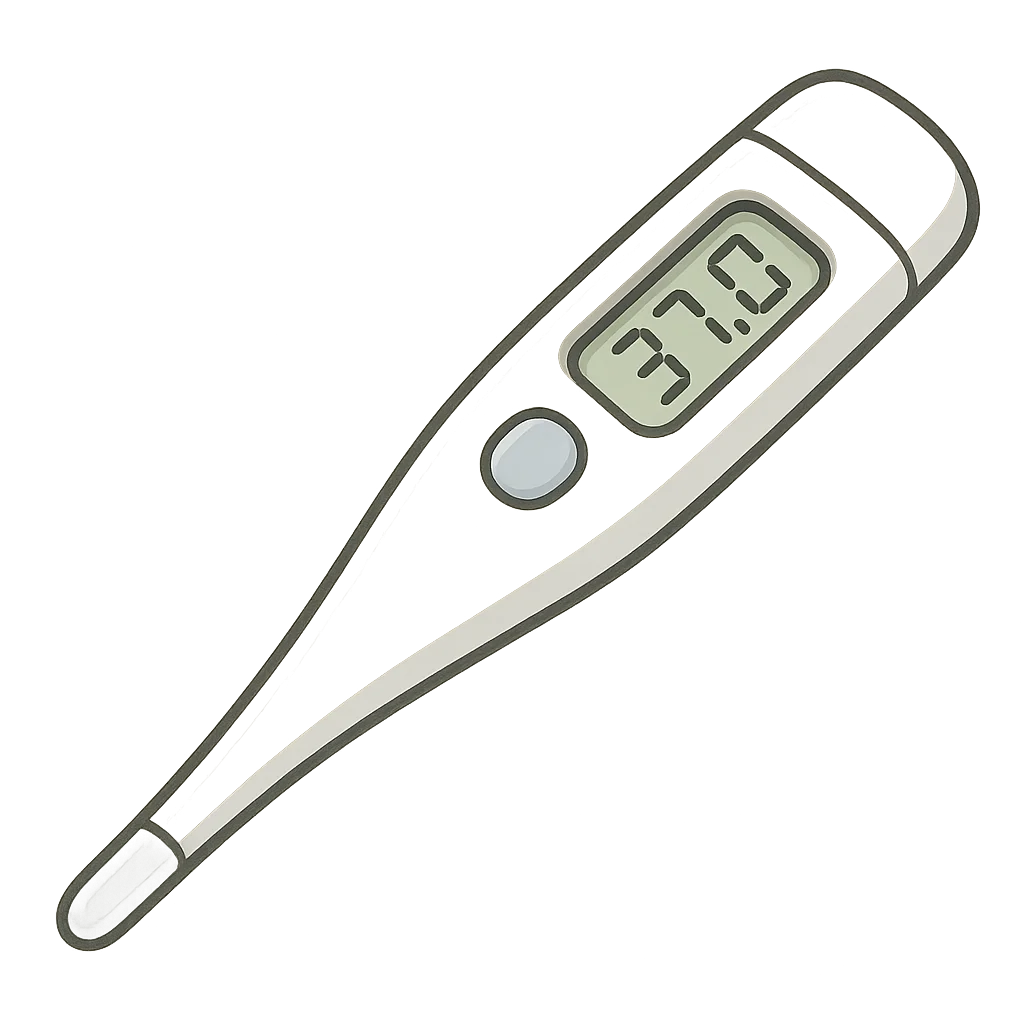
My First Beep
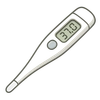
Hello. You probably know me. I’m that little friend who lets out a friendly 'beep!' when you’re not feeling well. My name is Digital Thermometer. Before I came along, my ancestors had a much tougher job. They were long, skinny sticks of glass filled with a silvery liquid called mercury. Imagine trying to stay perfectly still for three whole minutes with one of those under your tongue. It was so slow. And if you accidentally dropped one? Crash. Tiny, sharp pieces of glass and beads of poisonous mercury would scatter all over the floor. It was a real problem. My ancestors tried their best, but they were fragile, slow, and a little bit dangerous. Doctors and parents knew there had to be a better way. They needed a helper that was fast, safe, and simple enough for anyone to use to check for a fever. They needed a new idea, and that’s where my story begins.
My creation started not in a giant factory, but with a family. In the 1970s, a very smart inventor named Dr. Francesco Pompei and his wife were getting ready to welcome a new baby. Dr. Pompei wanted a much better way to check his wife’s temperature to make sure she was always healthy. The old glass thermometers were just too clumsy and took too long. He thought there must be a way to use the power of electricity to get a faster, more accurate answer. He had a brilliant 'Aha!' moment. He knew about a special little electronic part called a thermistor. A thermistor is like a tiny musical instrument that is sensitive to heat. When it gets warmer, its electrical resistance changes in a predictable way. You could think of it as changing its electrical 'tune' based on temperature. A low tune means it's cool, and a high tune means it's getting warmer. Dr. Pompei realized he could build a tiny computer 'brain' that could listen to the thermistor's tune and instantly translate it into a number you could read on a screen. He spent countless hours in his workshop, soldering tiny wires and testing different designs. He wanted me to be perfect—small enough to be comfortable, smart enough to be accurate, and fast enough to be helpful. Finally, after many tries, the first version of me was born. I let out my first beep. It was a sound of success. On February 24th, 1975, Dr. Pompei received a patent, which is an official document that announced to the world that this exciting new invention was his idea.
At first, I was something new and different. People were so used to my old glass-and-mercury relatives. But it didn't take long for everyone to see how much of a difference I could make. My biggest superpower was speed. No more waiting for what felt like forever. A few seconds was all I needed. A gentle placement, a short wait, and then... BEEP. A clear, easy-to-read number appeared on my little screen. Suddenly, checking for a fever wasn't a chore anymore. It was a quick, simple step that gave parents and doctors the information they needed right away. As the years went by, I continued to change and grow. My family got bigger. Some of my cousins were designed to take a temperature from inside an ear, while others could get a perfect reading just by being swiped gently across a forehead. We all share the same goal: to provide quick, reliable help. Looking back, I feel so proud of the journey from Dr. Pompei’s workshop to medicine cabinets all over the world. That small beep is more than just a sound. It’s a signal of care, a little bit of peace of mind, and a reminder that even a small idea can grow up to help millions of people feel better.
Activities
Take a Quiz
Test what you learned with a fun quiz!
Get creative with colors!
Print a coloring book page of this topic.












 Free for Educators