

 English

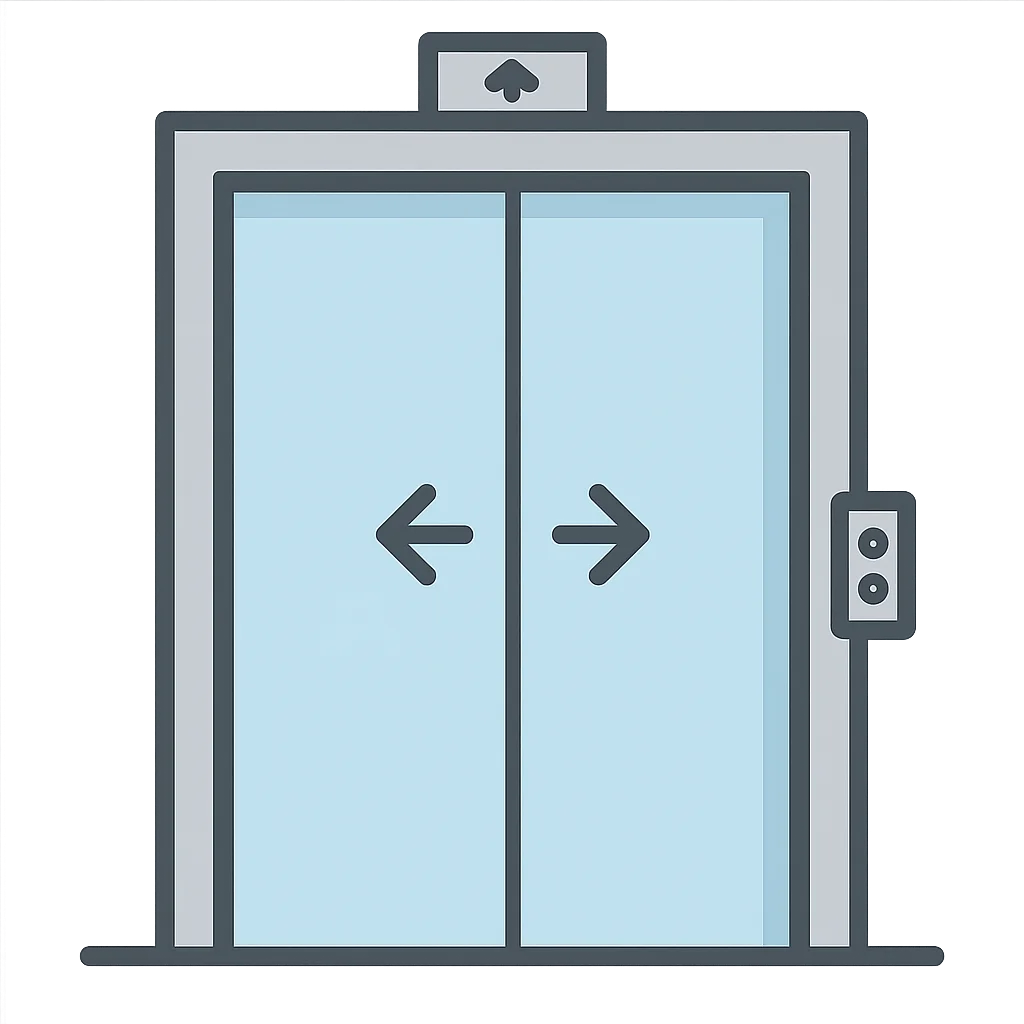
The Elevator: A Story of Rising Up
For the longest time, my existence was more of a dream than a reality. My name is the Elevator, and long before I was a sleek, silver box whisking people to the tops of glittering towers, I was just an idea. I watched a world built sideways, a world of weary legs and endless flights of stairs. Buildings stayed low to the ground because who would want to climb ten, twenty, or even fifty flights of stairs. It was simply impractical. My earliest ancestors were nothing more than crude hoists, rickety wooden platforms pulled by ropes, used to lift cargo in factories and warehouses. They were useful for hauling sacks of flour or crates of goods, but people looked at them with suspicion, and for good reason. The greatest fear, a fear that kept humanity grounded, was the terrifying possibility of the rope snapping. A single frayed strand could send everything plummeting to the ground. No one dared to trust their lives to such a simple, fallible system. I was a dream of vertical travel, but I was trapped by a single, vital problem: the need for absolute safety.
My story truly begins with a practical man named Elisha Graves Otis. In 1852, he wasn't trying to invent a machine that would reshape city skylines. He was managing a factory in Yonkers, New York, and simply needed a reliable way to move heavy equipment between floors without risking disaster. He knew the fatal flaw of the hoist. He thought not about the pulling, but about the falling. His mind worked on a solution, not for fame, but for the safety of his workers. His idea was brilliantly simple. He designed a tough steel spring, like a wagon spring, and attached it to the top of my lift platform. Then, he fitted the guide rails on either side of me with ratchets, like teeth on a saw. As long as the rope held the tension, the spring would stay flat. But if the rope were to break, the tension would release instantly, causing the spring to snap outward and slam into the ratchets on both sides, locking me securely in place. It was a safety brake, an automatic, foolproof stop. For two years, this was just a clever solution for a factory. But the world needed to see it. My big moment came in 1854, at the New York Crystal Palace Exhibition, a grand fair of innovation. Elisha built a special open-sided version of me, rising high above the exhibition hall. He stood confidently on my platform as I was hoisted nearly to the ceiling, the crowd of spectators watching with a mix of curiosity and fear. They saw the single rope holding me, and they knew how easily it could fail. Then, Elisha gave the signal. An axeman stood ready. The crowd gasped as he dramatically severed the thick rope with a single swing. I lurched downward. For a split second, there was a collective intake of breath, a silent scream hanging in the air. But then, it happened. A loud, sharp, and wonderfully reassuring 'CLACK.'. My safety brake had sprung into action, my steel spring locking into the ratchets. I had fallen only a few inches. Elisha Otis, standing calmly on my platform, looked down at the astonished crowd below and declared, 'All safe, gentlemen. All safe.'. In that moment, the world's fear of vertical travel vanished.
After that dramatic demonstration, my life changed forever. I was no longer just a factory hoist. I was a promise of a new kind of freedom. My very first official job as a passenger carrier began on March 23rd, 1857. I was installed in the E. V. Haughwout and Company department store in New York City, a five-story building that was a marvel of its time. Powered by a steam engine, I carried shoppers gracefully from floor to floor at a speed of forty feet per minute. It was a sensation. People came not just to shop, but to experience the thrill of riding in my cabin. I made the upper floors, once considered undesirable, just as accessible and valuable as the ground floor. But my true destiny was grander than any department store. Architects, who had always been limited by the number of stairs people were willing to climb, suddenly saw their canvas expand vertically. Their dreams could now touch the clouds. I became the heart of a new kind of building: the skyscraper. Without me, there could be no Empire State Building, no Burj Khalifa. I was the enabling technology that allowed cities to grow up instead of out. I transformed dense urban centers, making it possible for thousands of people to live and work in a single building, fundamentally changing the fabric of society. I helped make cities the bustling, vertical metropolises we know today, connecting people and places in a way that was once pure fantasy.
My journey has been a long one since that day at the Crystal Palace. The slow, steam-powered box of 1857 has evolved in ways Elisha Otis could have never imagined. I became faster, smoother, and safer with the advent of electricity in the 1880s. Today, I am a silent, intelligent presence in nearly every significant building on Earth. I am the lifeline in hospitals, rushing doctors to emergencies. I am the connector in sprawling airports, helping travelers make their flights. I provide access in homes for those who cannot manage stairs. I even help construct the very skyscrapers I inhabit, climbing the side of buildings as they grow. My core purpose, however, has never changed. I was born from a desire to solve a problem and make life safer and better. My story is a testament to the power of a single, clever idea to overcome a great fear. It shows that by focusing on a challenge, no matter how daunting, human ingenuity can lift the entire world to new heights. So the next time you step inside one of my cabins, think about the journey from a simple rope to a system that reshapes our world, and ask yourself: what problem can you solve today?
Activities
Take a Quiz
Test what you learned with a fun quiz!
Get creative with colors!
Print a coloring book page of this topic.














 Free for Educators