

 English

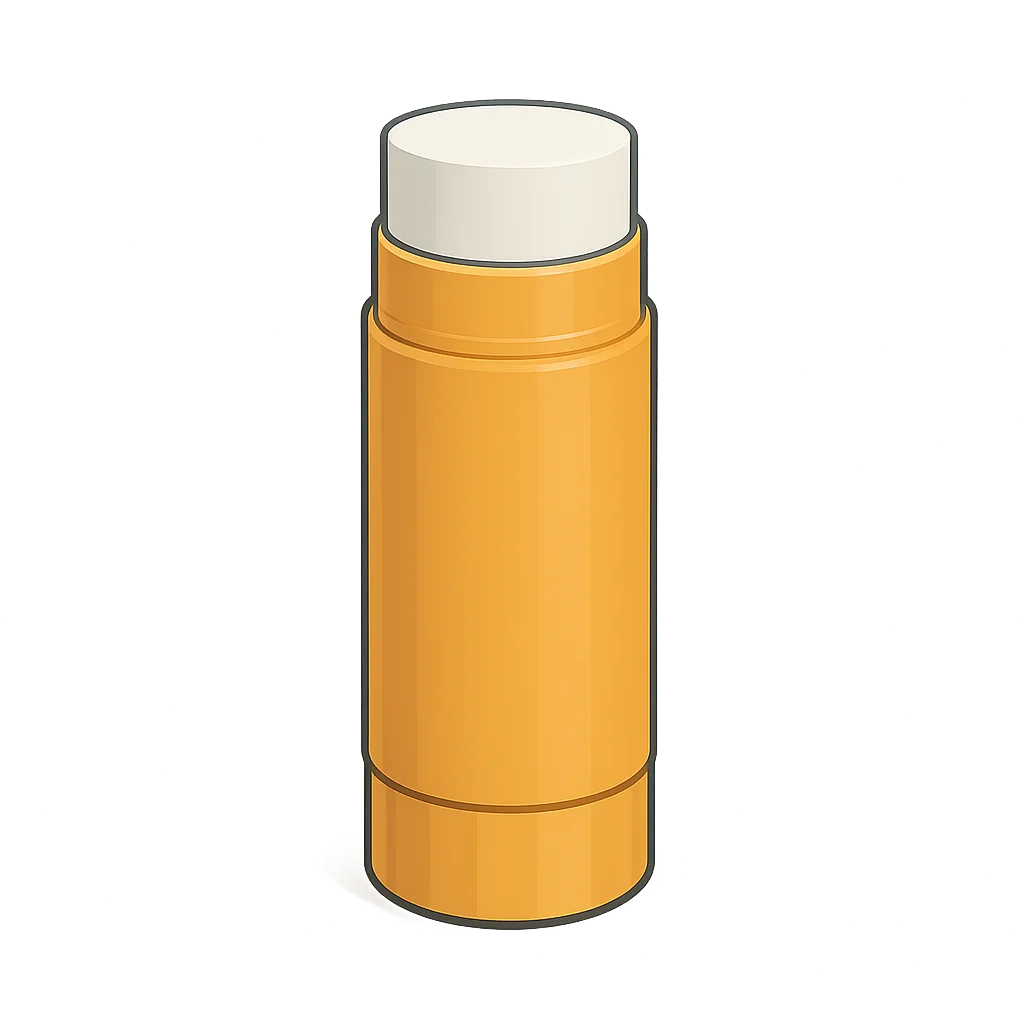
The Story of the Glue Stick
Hello from Your Pencil Case!
Hi there. You might know me. I’m that handy friend you reach for when you’re working on a school project, making a card for someone special, or just having fun with paper and scissors. I am the glue stick. Before I came along, things were… well, they were messy. Imagine trying to glue a picture into your scrapbook with a runny, white liquid that squeezed out of the bottle way too fast. It would get all over your fingers, making them sticky and gross. It would soak through the paper, leaving wrinkly, soggy spots on your beautiful artwork. Or maybe you would have used a thick, gooey paste that came in a little pot with a flat brush. You had to dip the brush in, scoop out a glob of smelly paste, and try to spread it evenly. It was clumsy, sticky, and always seemed to end up in places it shouldn't. It was a real challenge to keep your projects neat and clean. Kids and grown-ups wished for a better way, a way to stick things together without the mess and the fuss. They needed an idea that was simple, clean, and easy to use, but no one knew what that would look like just yet. Little did they know, the solution was just around the corner, inspired by something you’d never expect.
A Lipstick-Inspired Idea
My story really begins with a clever man named Dr. Wolfgang Dierichs. He was a researcher for a company in Germany called Henkel. In 1967, he was on a trip, watching the people around him, when he noticed something interesting. He saw a woman take out a tube of lipstick. With a simple twist of the bottom, the colorful stick appeared. She applied it neatly without getting any on her fingers, and with another twist, it disappeared back into its clean, little case. A brilliant idea sparked in Dr. Dierichs’s mind. What if glue could work the same way? What if you could have a solid stick of adhesive that you could twist up, apply exactly where you wanted it, and then twist back down? It would be the perfect solution to the messy problem of liquid glues and sticky pastes. He rushed back to his laboratory, filled with excitement. But turning the idea into a real product wasn't easy. Glue is meant to be wet and sticky, so how could you make it into a solid stick that still worked perfectly? Dr. Dierichs and his team spent two long years experimenting. They tested different formulas, trying to find the perfect recipe that was solid enough to hold its shape in a tube but soft and sticky enough to glue paper together when you rubbed it on. It was a big challenge. Some formulas were too hard and wouldn't leave any glue behind. Others were too soft and mushy. But Dr. Dierichs didn’t give up. He remembered the simple, clever design of the lipstick tube and knew it was the right path. Finally, in 1969, they did it. They perfected the formula and created me, the world’s very first glue stick. I was born inside a twist-up tube, just like that lipstick, ready to make crafting clean and fun for everyone.
Sticking Around the World
Once I was invented, everything changed. Suddenly, kids could work on their art projects without worrying about creating a huge, sticky mess. They could just uncap me, give my base a little twist, and glide my smooth, sticky surface over the paper. The glue went on in a neat, even layer, and it dried quickly without making the paper wrinkle. Teachers loved me because classroom cleanup became so much easier. Parents loved me because their kitchen tables were no longer covered in drips and spills of glue. My journey started in Germany, but it didn't take long for word to spread about this amazing new tool. Soon, I was traveling all over the world. I found my way into pencil cases in Japan, backpacks in America, and art studios in Brazil. I became a trusted helper for millions of people. Looking back, I am so proud of the journey I’ve had. I started as a simple idea inspired by a tube of lipstick, and now I help hold together countless creations, from a child’s first collage to an architect's detailed model. I am a reminder that sometimes the best inventions come from looking at ordinary things in a new way. So next time you have a clever idea, no matter how small it seems, believe in it. You never know what amazing things it might stick together.
Activities
Take a Quiz
Test what you learned with a fun quiz!
Get creative with colors!
Print a coloring book page of this topic.









 Free for Educators