

 English

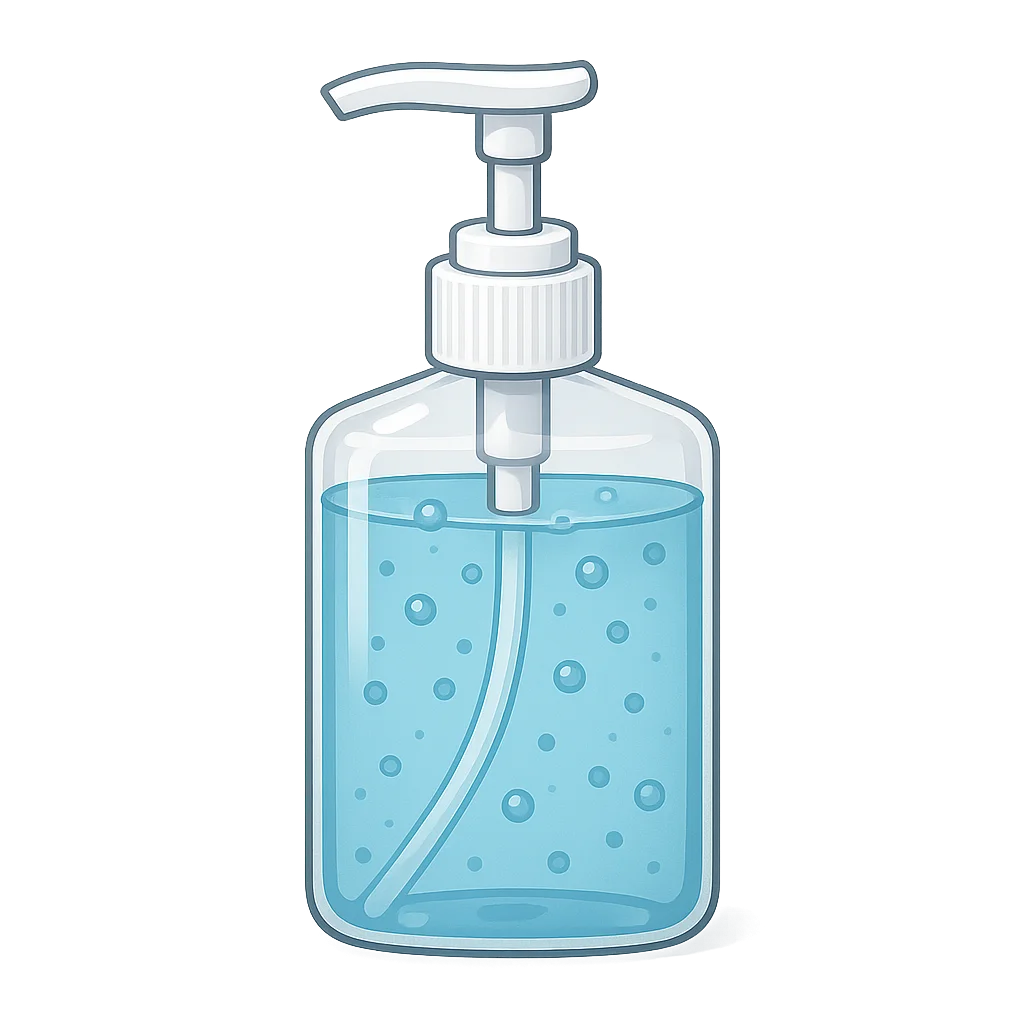
The Story of Hand Sanitizer
You probably know me as that cool, clear gel you squeeze into your hands, the one with the clean, sharp scent that disappears in a flash. I am hand sanitizer, and while I may seem simple, my story is one of care, cleverness, and a mission to protect. Before I existed, the world was a very different place, especially for the hardworking people in hospitals. Imagine a time before you could find me in every classroom or purse. In the mid-20th century, doctors and nurses understood that clean hands were crucial to stop the spread of invisible enemies called germs. The problem was, they were constantly rushing from one patient to another, and a sink with soap and water wasn't always just a few steps away. Every moment spent walking to a sink was a moment not spent caring for someone in need. It was a serious dilemma, a race against time and microscopic invaders.
It was in this environment, in 1966, that my story truly began. My creator was a thoughtful and observant nursing student in Bakersfield, California, named Lupe Hernandez. She watched the dedicated nurses and saw their struggle. She knew there had to be a better way, a faster, more efficient method for them to disinfect their hands on the move. An idea sparked in her mind, a vision of a portable solution that could be used anywhere, anytime. She imagined a powerful, germ-fighting liquid that could be carried in a pocket, ready to serve at a moment's notice. I wasn't a gel in a bottle yet; I was just an idea, born from a desire to help the helpers and keep patients safe. That single, brilliant thought was my very beginning.
Transforming an idea into a reality is never easy, and my creation was a puzzle of chemistry. Lupe Hernandez knew that my core strength would come from alcohol, my secret weapon against germs. Alcohol is a remarkable substance; it works by breaking apart the protective outer layers of germs, causing them to simply fall apart and become harmless. It’s an incredibly effective way to neutralize threats you can’t even see. However, Lupe faced a significant challenge. Alcohol by itself is thin and runny, like water. It would splash everywhere and evaporate almost instantly, not giving it enough time to do its job properly. It could also be very harsh and drying on skin, which would be a problem for nurses who needed to clean their hands dozens of times a day. Her task was to tame the alcohol.
She needed to figure out how to give me a body, to turn the powerful but unruly liquid into a smooth, gentle gel that would stay on the hands long enough to work its magic without causing irritation. This required careful experimentation to find the right thickening agent, a substance that would give me the pleasant, gel-like consistency you know today. After she perfected the concept, I was officially recognized with a patent, a certificate that proved I was a unique and new invention. For a while, I remained a specialized tool, not yet known to the wider world. My big break came much later. In 1988, a company called GOJO, which was already focused on hand hygiene, saw my immense potential. They refined my formula and introduced a version of me to the public called Purell. It was through them that I finally found my way into hospitals and clinics, ready to fulfill the mission Lupe Hernandez had imagined for me over two decades earlier.
For many years, my life was confined to the sterile, quiet corridors of hospitals and medical offices. I was a professional tool, a guardian for healthcare workers. But as time went on, people began to realize that the fight against germs wasn't just for doctors and nurses. Everyone could benefit from having a quick and easy way to clean their hands. That’s when I truly got to see the world. Companies started making smaller, portable versions of me, and soon I was leaving the hospital behind. I started showing up in new and exciting places: tucked into backpacks for school, clipped onto diaper bags for trips to the park, and sitting on office desks. I became a trusted friend for travelers on planes and trains, and a classroom staple for teachers and students.
During flu seasons or major global health events, my importance grew even more. I became a symbol of empowerment, a simple tool that everyone could use to protect themselves and their communities. I offered peace of mind in uncertain times, a small but significant way to take control of one's own health. My journey, from a thoughtful idea in a nursing student's mind in 1966 to a household name found across the globe, is a testament to the power of innovation born from compassion. I am more than just alcohol in a gel; I am the result of one person's desire to solve a problem and care for others, proving that a simple idea can make the world a healthier, safer place, one clean pair of hands at a time.
Activities
Take a Quiz
Test what you learned with a fun quiz!
Get creative with colors!
Print a coloring book page of this topic.



 Free for Educators