

 English

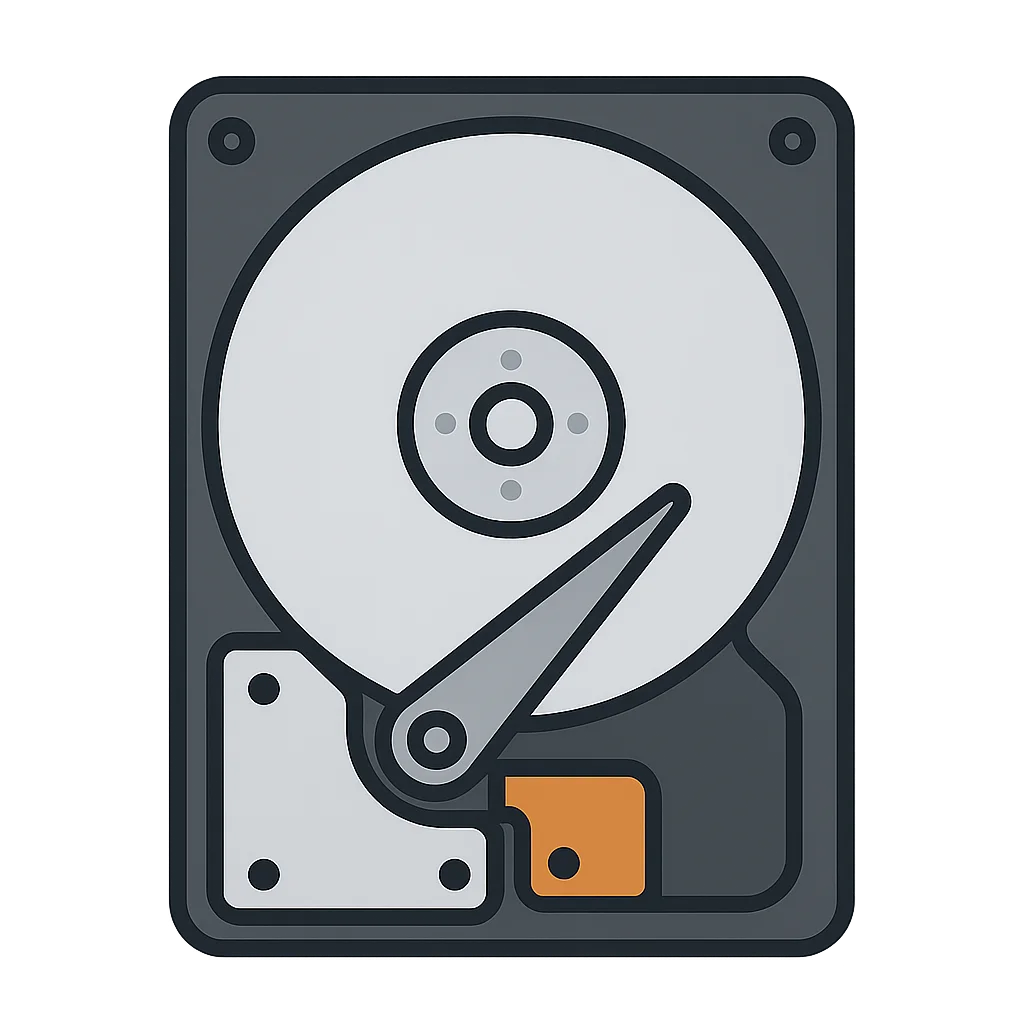
I am the Hard Disk Drive: A Keeper of Memories
Before I was born, the world of computers was a forgetful place. Imagine trying to remember a long story, but your memory was like a sieve, with all the important details slipping away. That’s what it was like for the earliest computers. They relied on clumsy stacks of paper punch cards and long, delicate reels of magnetic tape. To find a single piece of information, they had to read through the entire reel from beginning to end, a slow and frustrating process. If the one fact they needed was at the very end of the tape, they had to wait and wait. People dreamed of something better. They needed a memory that was vast, reliable, and, most importantly, quick. They needed a way to jump directly to any piece of information they wanted, instantly. I am that dream come to life. My name is the Hard Disk Drive, and I was created to give the world a memory that could hold its most important ideas, stories, and discoveries without ever forgetting.
My story begins in a bustling workshop in San Jose, California, at a company called IBM. A team of brilliant engineers, led by a visionary man named Reynold B. Johnson, worked tirelessly to solve the problem of computer memory. After years of experimenting, on September 13th, 1956, I finally whirred to life. My official name was the IBM 350 Disk Storage Unit, but you can think of me as the great-grandfather of all hard drives. I was not small and sleek like my descendants. I was a giant, as big as two large refrigerators standing side-by-side, and I weighed over a ton. Inside my enormous metal cabinet, fifty magnetic platters, each one two feet wide, spun at a dizzying 1,200 revolutions per minute. These platters were my memory keepers. A special arm with a read-write head would hover over them, held aloft by a cushion of air. This head was my magic wand. Unlike the old magnetic tapes, my head could zip to any location on any of my spinning platters in less than a second. It was a revolutionary idea called 'random access,' meaning any piece of data was just a moment away. I could hold five megabytes of information, which may not sound like much today, but back then it was an astonishing amount, enough to store the text from thousands of books. For the first time, a computer had a fast, permanent memory, and the digital world was changed forever.
My creators were proud, but they knew my journey was just beginning. My immense size and cost meant that only large corporations and governments could afford me. The next great challenge for engineers was a puzzle of opposites: how could they make me smaller and cheaper while simultaneously making me hold vastly more information? It was a task that would take decades of innovation. Throughout the 1960s and 1970s, engineers found clever ways to shrink my components and pack more data onto my platters. I started to shed my refrigerator-sized shell. By the early 1980s, I had become small enough to fit inside a boxy machine called a personal computer. This was a turning point. Suddenly, I wasn't just for scientists and big businesses anymore. I was moving into people's homes. I became the place where a student could save their book report, an artist could store their first digital drawing, and a family could keep their letters and photos. With every passing year, I continued to shrink in size while my capacity grew exponentially, from megabytes to gigabytes, and then to terabytes. I went from the desktop to the laptop, becoming a portable library of personal memories and creations that people could carry with them anywhere.
Today, you might hear more about my speedy cousins, the Solid State Drives, or SSDs. They are fantastic at what they do, living inside your thin laptops and lightning-fast phones. But my story is far from over. In fact, I am more important now than ever before. I am the workhorse of the digital world. Billions of my kind live together in enormous, air-conditioned buildings called data centers, which are scattered all across the globe. We are the invisible foundation of the internet. The funny videos you watch, the music you stream, the messages you send to your friends, and the websites you visit for school—all of that information lives on my spinning platters. I am the world’s collective memory, a vast and ever-growing library holding humanity's knowledge, creativity, and history. My purpose has always been to remember, to keep stories and ideas safe so they can be shared and built upon. And as long as there are new things to learn, create, and connect with, I will be here, silently spinning and faithfully remembering it all for you.
Activities
Take a Quiz
Test what you learned with a fun quiz!
Get creative with colors!
Print a coloring book page of this topic.






 Free for Educators