

 English

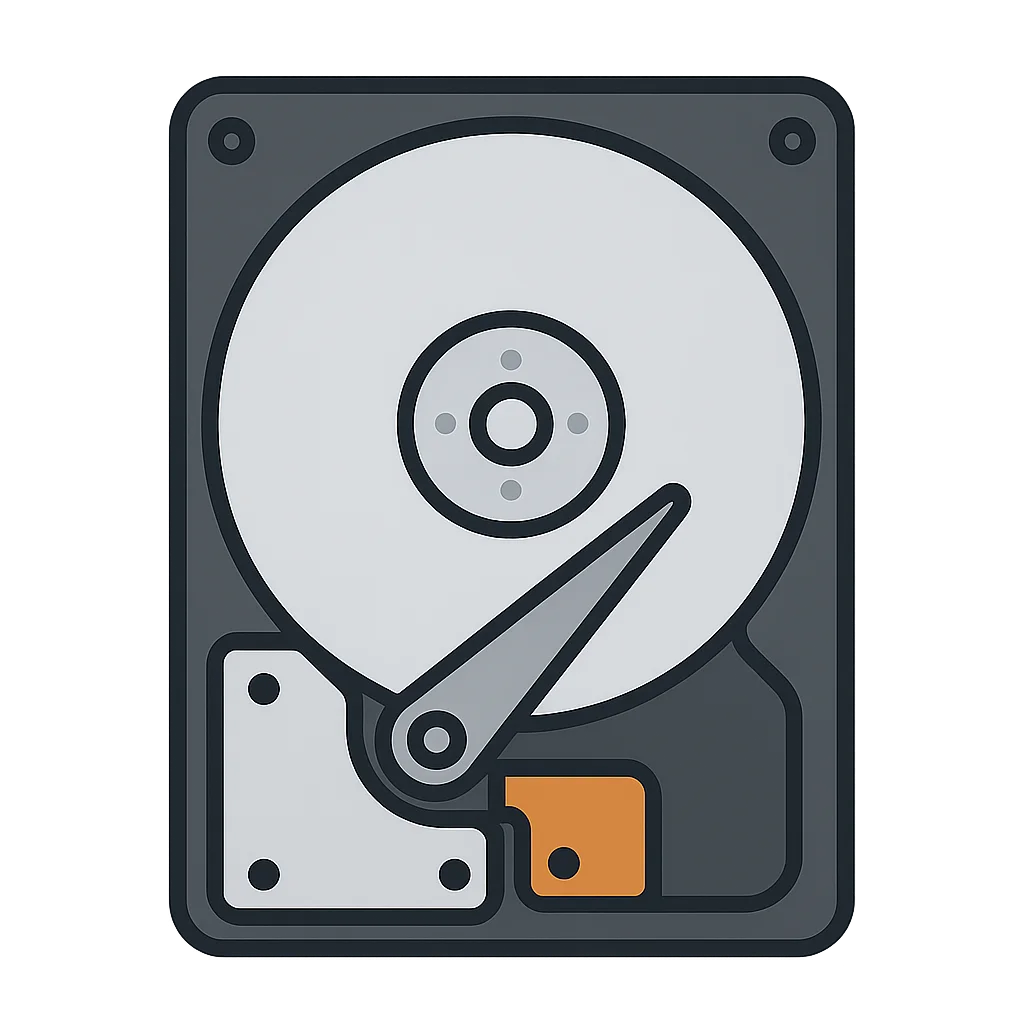
The Story of the Hard Disk Drive
Hello there. You might not see me very often, but I am one of the most important parts of your computer. My name is Hard Disk Drive, and I am the computer’s memory keeper. Before I came along, computers were quite forgetful. Imagine if you couldn’t remember what you did yesterday, or even five minutes ago. That’s what it was like for them. As soon as they were turned off, poof. All their information would vanish into thin air. It was a real problem. How could people get any serious work done if their computers couldn't remember anything? That’s where I came in. My job is to hold onto everything. I'm like a computer's diary, remembering all the stories you write. I'm a photo album, keeping your family pictures safe. I'm a giant library, storing every book, game, and school project you save. I spin tiny, shiny platters, faster than you can blink, to read and write information, making sure nothing is ever lost.
My story began a long, long time ago, on September 13th, 1956. I was born in a busy laboratory at a company called IBM. A team of very clever inventors worked together to create me, and their leader was a man named Reynold B. Johnson. He saw how much computers needed a better way to remember things, and he was determined to find a solution. My very first version was called the IBM 350, and I have to admit, I was enormous. I was as big as two refrigerators standing side-by-side and weighed over a ton. My insides were filled with fifty spinning metal disks, each the size of a large pizza. Even though I was a giant, I couldn't hold very much information by today's standards. All that space could only store about five megabytes of data, which is maybe one or two songs. I was a key part of a huge computer system called the RAMAC 305. The most amazing thing about me was that for the first time, people could find any piece of information they wanted almost instantly. They didn't have to search through a long tape from beginning to end. They could just ask me, and I could jump right to the spot. It was like being able to open a book to the exact page you need, instead of having to read every page before it.
After my big debut, I started on a long and exciting journey. My creators and other inventors were always thinking, 'How can we make this better?'. The challenge was to make me smaller, but also able to remember more. And boy, did I change. Over the years, I went on an incredible diet. I shrank from the size of a whale to the size of a sandwich you could hold in your hand. But as I got smaller on the outside, my brain got bigger and bigger on the inside. Imagine a library the size of a city, with millions of books. Now, imagine being able to fit all of those books, and more, into your backpack. That's what happened to me. This amazing transformation was what allowed personal computers to become a part of everyday life. Because I was small enough and could hold so much, I could finally fit inside a computer that sat on a desk in your home or school. Suddenly, people everywhere could have their own personal memory keeper. This changed everything, opening up a new world of creativity, learning, and connection for people all over the globe.
Today, you might hear about newer kinds of memory, but I am still working hard behind the scenes. The world has created an ocean of digital information, and it all needs a safe place to be stored. Think about all the movies you can stream or the huge online games you play with friends. A lot of that information lives on big, powerful versions of me in data centers all around the world. I am the silent, reliable guardian of countless memories. I hold precious family photos from generations ago, important scientific data that helps researchers make new discoveries, and the stories that people share online every single day. I am proud that I get to keep your world spinning, helping you learn, create, and connect with others. I am a keeper of history, a tool for the future, and a safe home for your digital life.
Activities
Take a Quiz
Test what you learned with a fun quiz!
Get creative with colors!
Print a coloring book page of this topic.










 Free for Educators