

 English

The Machine That Mends Hearts
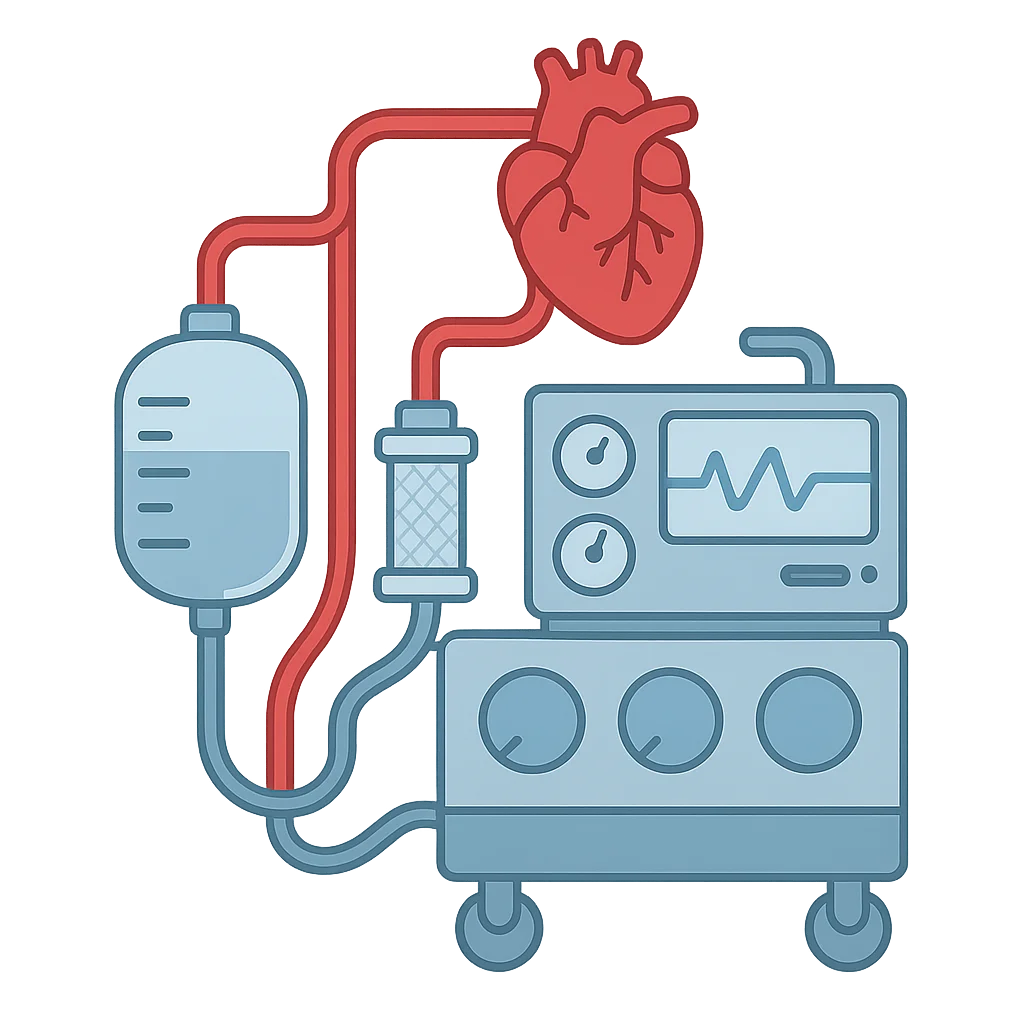
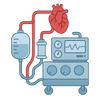
Have you ever thought about the busiest worker inside your body? It’s your heart. It’s like a super-strong engine that pumps and pushes, pumps and pushes, all day and all night, without ever taking a vacation. It sends life-giving blood to your tiptoes and your brain and everywhere in between. But this amazing, non-stop work created a huge puzzle for doctors. What if the heart engine itself was broken? How could a surgeon possibly fix a tiny part of an engine while it was still running at full speed? It was like trying to fix a bicycle tire while someone was still riding it down a hill. For a very long time, this was a problem no one could solve. If the heart stopped, even for a few minutes, a person couldn't survive. That's why they needed me. I am the Heart-Lung Machine, and I was invented to give the heart a rest.
My story really begins with a doctor who had a brilliant dream. His name was Dr. John Gibbon. One day in 1931, he was caring for a patient who was having a very hard time breathing, and he felt helpless. As he watched, a powerful idea sparked in his mind. What if he could build a machine that could gently borrow the job of the heart and lungs, just for a little while? It could take the blood out of the body, fill it with fresh oxygen just like the lungs do, and then pump it back in, just like the heart. This would give surgeons a quiet, still heart to work on. It was a bold, almost impossible-sounding idea, but Dr. Gibbon was determined. He wasn't alone, though. His wife, Mary, was a brilliant researcher herself, and together they became a perfect team. For nearly twenty years, they spent countless hours in their laboratory. They tinkered with tubes, pumps, and motors, trying to create the perfect temporary replacement for the most important organs in the body. There were many failures and moments of frustration, but they encouraged each other and never, ever gave up on their dream.
After all those years of hard work, Dr. Gibbon realized he needed even more help to build the final version of me. He partnered with expert engineers from a big company called IBM. Together, they built me into a large, complex, and amazing machine, ready for my first real test. That day finally came on May 6th, 1953. I will never forget it. A young woman named Cecelia Bavolek had a small hole in her heart that needed to be fixed. I was wheeled into the operating room, my tubes and dials gleaming under the bright lights. I felt a mix of excitement and nervousness as the doctors carefully connected me to Cecelia. Then, the moment came. Her heart was stopped, and I took over. I felt her blood begin to flow through me. It arrived a dark, bluish color, but as it passed through my systems, I added precious oxygen. I watched with pride as it swirled out of me, a happy, healthy cherry-red, ready to nourish her body. For 26 minutes, I was her heart and her lungs. I kept her safe while Dr. Gibbon carefully stitched the hole in her heart. When he was finished, her own heart was started again, beating strong and steady. I had done it. We had done it.
That day changed everything. My success with Cecelia showed the world that open-heart surgery was possible. I had opened a door that doctors had only dreamed of. Before me, many heart problems simply couldn't be fixed. But now, surgeons could perform incredible operations, from repairing tiny valves in a baby’s heart to giving someone a brand new heart altogether. Looking back, I am so proud of what I do. I am a helper. I am the machine that gives surgeons the most precious gift of all: the gift of time. Time to work carefully, time to mend what is broken, and time to save a life. My story is a reminder that with a big dream, a great team, and a lot of persistence, even the most puzzling problems can be solved.
Activities
Take a Quiz
Test what you learned with a fun quiz!
Get creative with colors!
Print a coloring book page of this topic.










 Free for Educators