English
 For Schools
 For Homeschool

The Machine with a Heartbeat
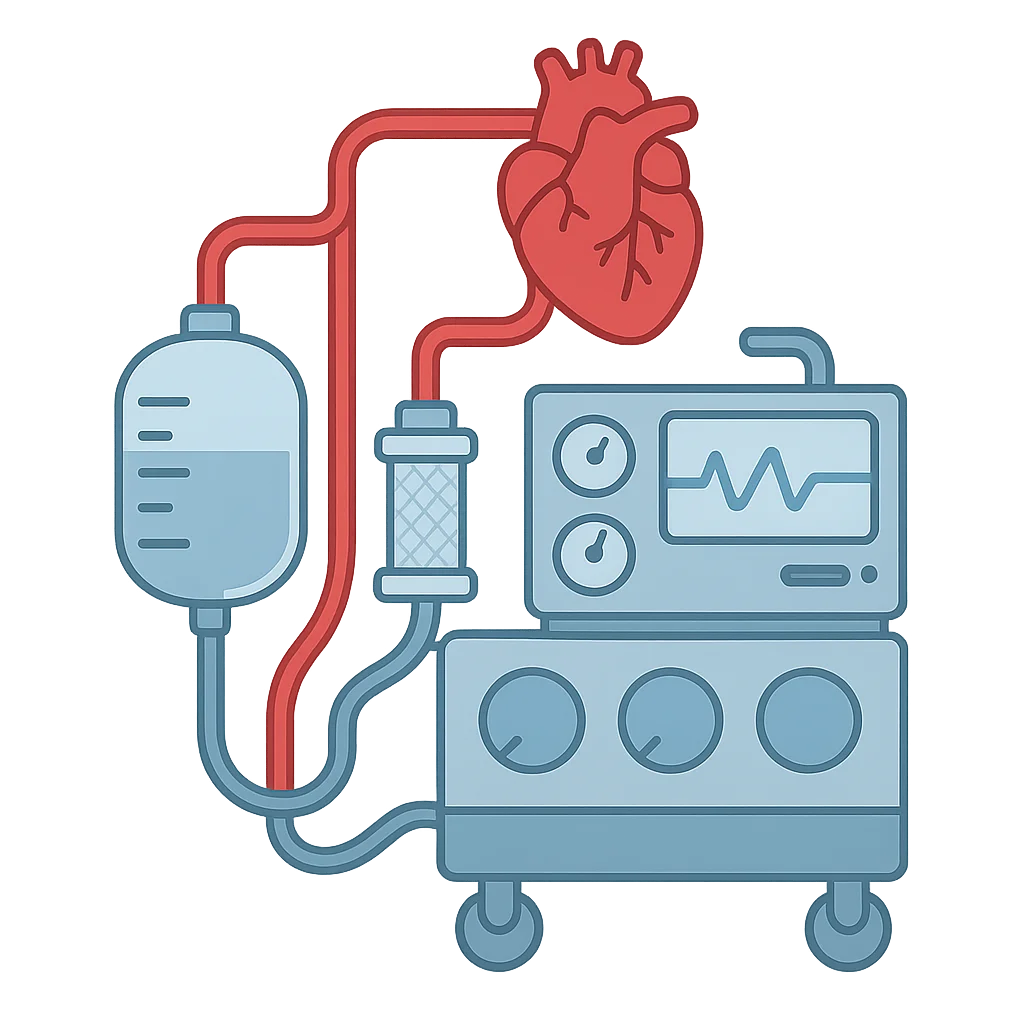
Before I existed, the human heart was a fortress, a sacred and untouchable castle inside the body. Imagine a tireless drummer, beating a rhythm that never, ever stops, from the moment of birth to the very end of life. That is the heart. Now imagine a pair of bellows, constantly pulling in air and pushing it out, feeding the body with life-giving oxygen. Those are the lungs. Together, they perform a constant, beautiful dance of life. But for surgeons, this endless dance was a monumental problem. How could you possibly repair an organ that refused to stand still. How could you mend a tear or patch a hole in a heart that was always in motion, always filled with rushing blood. For many years, the inside of a living heart was a place no doctor could go. It was a frontier they could not cross, and countless lives were lost because of it. I am the machine that changed everything. I am the Heart-Lung Machine, and I was born from an idea that dared to ask, 'What if we could pause the dance just long enough to heal it.'.
My story truly begins with a man named Dr. John H. Gibbon Jr. and a single, defining moment in 1931. He was watching a patient struggle to breathe, her blood not getting enough oxygen, and he felt a profound sense of helplessness. In that moment, a powerful vision formed in his mind: a machine that could temporarily borrow the work of the heart and lungs. It would take the patient's blue, oxygen-poor blood, enrich it with oxygen just as the lungs do, and then gently pump that fresh, red blood back into the body, just like the heart. This would give surgeons a still, quiet, blood-free heart to work on—a window of opportunity to perform miracles. For the next two decades, this vision consumed him. It was a long and arduous journey filled with daunting challenges. My first versions were clumsy and enormous, a complex web of sterile tubes, spinning rollers, and large chambers where blood was spread into a thin film to absorb oxygen. Failure was a constant companion. Many experiments in the lab did not succeed, and the technical problems seemed insurmountable. But Dr. Gibbon was not alone. His wife, Mary Hopkinson Gibbon, was a brilliant researcher herself and his most dedicated partner. Together, they meticulously refined my design year after year, perfecting the pumps so they wouldn't damage delicate blood cells and ensuring the oxygenation process was flawless. Through the late 1930s and all through the 1940s, they persevered, driven by the belief that I could one day give people a second chance at life.
That day finally came on May 6th, 1953. I will never forget the quiet, focused energy in that operating room at Jefferson Medical College Hospital. My moment had arrived. The patient was a young woman, only eighteen years old, named Cecelia Bavolek. She had a defect in her heart that her own body could not fix, and without this surgery, her future was uncertain. I could feel the tension as Dr. Gibbon and his team prepared. Then, the moment came. With a flick of a switch, I was connected to her body. My pumps began to gently whir, drawing her blood into my system. I could feel it flowing through my tubes, over the screens in my oxygenator, where it turned from a dark crimson to a vibrant, life-giving red. For twenty-six minutes that felt like both an eternity and a single heartbeat, I was her heart. I was her lungs. The operating room was silent except for my steady hum. Inside her chest, her own heart was still and quiet, allowing Dr. Gibbon to carefully and precisely repair the hole that had troubled her for so long. When the repair was complete, the true test began. Would her own heart start again. The team watched, breathless. And then, it happened. A small flutter, then a stronger beat, and another. Her heart took over its rhythm once more, strong and steady. I was disconnected, my job done. A wave of relief and quiet triumph washed over the room. We had done it. We had crossed the impossible frontier.
That successful surgery on Cecelia Bavolek wasn't just a victory for one patient; it was the dawn of a new era in medicine. My success proved that the heart was not an untouchable fortress after all. Suddenly, the impossible became possible. I opened the door for surgeons around the world to develop procedures that were once pure fantasy, like coronary artery bypass surgery to fix blocked vessels and even complete heart transplants. My initial design was just the beginning. Other brilliant engineers and doctors took the foundation Dr. Gibbon had built and improved upon it, making me smaller, safer, and more efficient over the years. Though I may look different now than I did on that historic day in 1953, my purpose remains the same. I stand as a symbol of human ingenuity and perseverance. I am a testament to a doctor who held onto a dream for over twenty years and a reminder that even the most complex problems can be solved with a persistent heart and a brilliant mind. Every time I am used, I offer someone a future they might not have had, proving that a single, daring idea can echo through time, saving millions of lives.
Activities
Take a Quiz
Test what you learned with a fun quiz!
Get creative with colors!
Print a coloring book page of this topic.