English
 For Schools
 For Homeschool

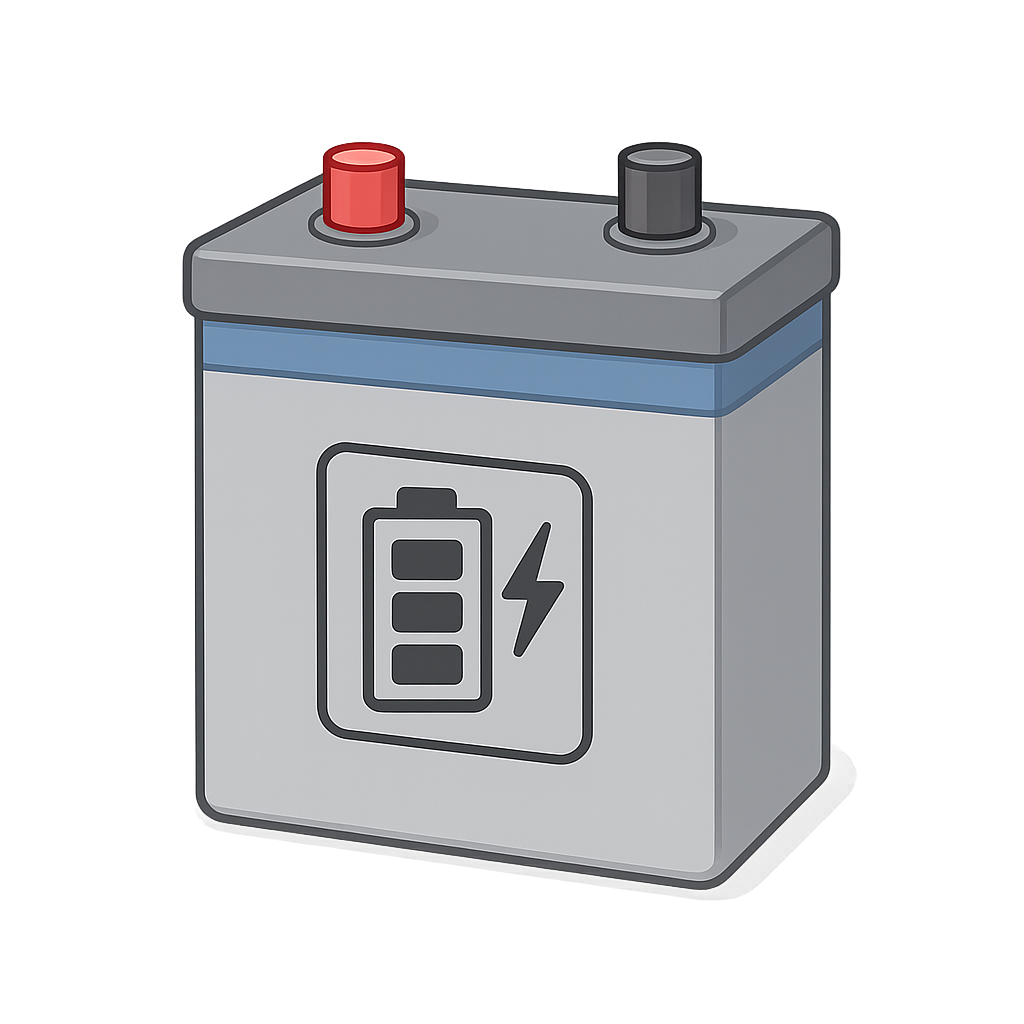
I am the Lithium-ion Battery
Before you scroll on your phone or close your laptop, I want you to feel the warmth in your hands. That’s me. I am the Lithium-ion Battery, the silent, energetic heart that powers your world. It might be hard to imagine, but there was a time before I existed, a time when life was much heavier and tangled. Think of music players so large they had to be carried on a shoulder, or cameras that needed bulky, disposable battery packs. Telephones were stuck to the wall with curly cords, and the dream of a computer you could carry in a backpack was just that—a dream. The world was tethered, bound by the limits of its power sources. My ancestors, the lead-acid and nickel-cadmium batteries, were strong but clumsy. They were heavy, didn't last very long, and often contained toxic materials. They were a temporary solution to a growing problem.
Scientists and engineers around the globe knew there had to be a better way. They were on a quest, searching for a kind of energy magic. They needed a power source that was incredibly lightweight, yet powerful enough to run complex machines. It had to be compact enough to fit in your pocket but durable enough to last for years. And most importantly, it needed to be rechargeable, capable of being refilled with energy thousands of time without losing its strength. This was the great challenge of the late 20th century: how to create a battery that could finally set technology free. They needed a spark of an idea to ignite a revolution, and that’s where my story begins.
A Team of Brilliant Minds
My creation wasn’t the work of a single person in a lone laboratory; I am the child of many minds, working across decades and continents. My story truly began in the 1970s with a British-American chemist named M. Stanley Whittingham. Working for an oil company, of all places, he was exploring new ways to store energy. He was the first to build a working version of me, using a material called titanium disulfide and metallic lithium. His first design was revolutionary. I was born with immense potential, a raw and powerful energy. But I was also wild and unpredictable. My lithium metal component was so reactive that I was prone to catching fire. I was a brilliant idea, but I was too dangerous for the real world. I had potential, but I needed to be tamed and understood more deeply.
That's when an American professor named John B. Goodenough entered my story. He was a brilliant scientist who had a hunch that I could be made safer and even more powerful. On May 2nd, 1980, after careful thought and experimentation, he made a groundbreaking discovery. He realized that if my metallic component was replaced with a cobalt oxide, my structure would become far more stable and could hold twice the energy. It was like he gave me a stronger, more reliable backbone. I was no longer a wild spark; I was becoming a steady flame, capable of storing and releasing incredible amounts of power safely. This was a monumental step, but there was still one piece of the puzzle missing. I was much stronger, but I still wasn't quite ready for a life outside the lab. I could not be recharged over and over again without eventually breaking down.
The final, crucial chapter of my creation was written by a Japanese chemist, Akira Yoshino. Working for a technology company, he was determined to make me a practical reality. He knew about the work of both Whittingham and Goodenough and built upon their foundations. On April 10th, 1985, he made the final breakthrough. Instead of using reactive pure lithium, he used a carbon-based material that could safely absorb lithium ions. This innovation was the key. It made me not only safe and powerful but also incredibly durable. I could now be charged and discharged hundreds, even thousands, of times without losing my capacity. I was finally complete. I was a product of teamwork, a testament to how the ideas of scientists from the United States, the United Kingdom, and Japan could come together to solve a problem for the entire world.
Powering a New World
My official birthday, the day I finally stepped out of the laboratory and into the world, was in 1991. A Japanese company, Sony, placed the first commercial version of me inside their new camcorder. For the first time, families could record memories without being tethered to a wall outlet or weighed down by clunky battery packs. It was a feeling of liberation, and it was only the beginning. Soon, I was slimming down laptops, making them truly portable. I slipped into mobile phones, transforming them from car accessories into the smartphones we carry in our pockets today. I power the tools doctors use in hospitals, the tablets you read on, and the drones that soar through the sky.
Now, I am taking on my biggest challenge yet: helping to create a cleaner planet. I am the heart of electric cars, silently powering them without producing harmful emissions. I am also used in massive energy grids to store solar and wind power, ensuring that clean energy is available even when the sun isn't shining or the wind isn't blowing. On December 10th, 2019, my three creators, John B. Goodenough, M. Stanley Whittingham, and Akira Yoshino, were awarded the Nobel Prize in Chemistry for their collaborative work. It was a celebration of their perseverance and shared vision. Their story, and mine, is a reminder that big problems are often solved not by one person, but by many, working together to build a brighter, more connected, and sustainable future for everyone.
Activities
Take a Quiz
Test what you learned with a fun quiz!
Get creative with colors!
Print a coloring book page of this topic.