

 English

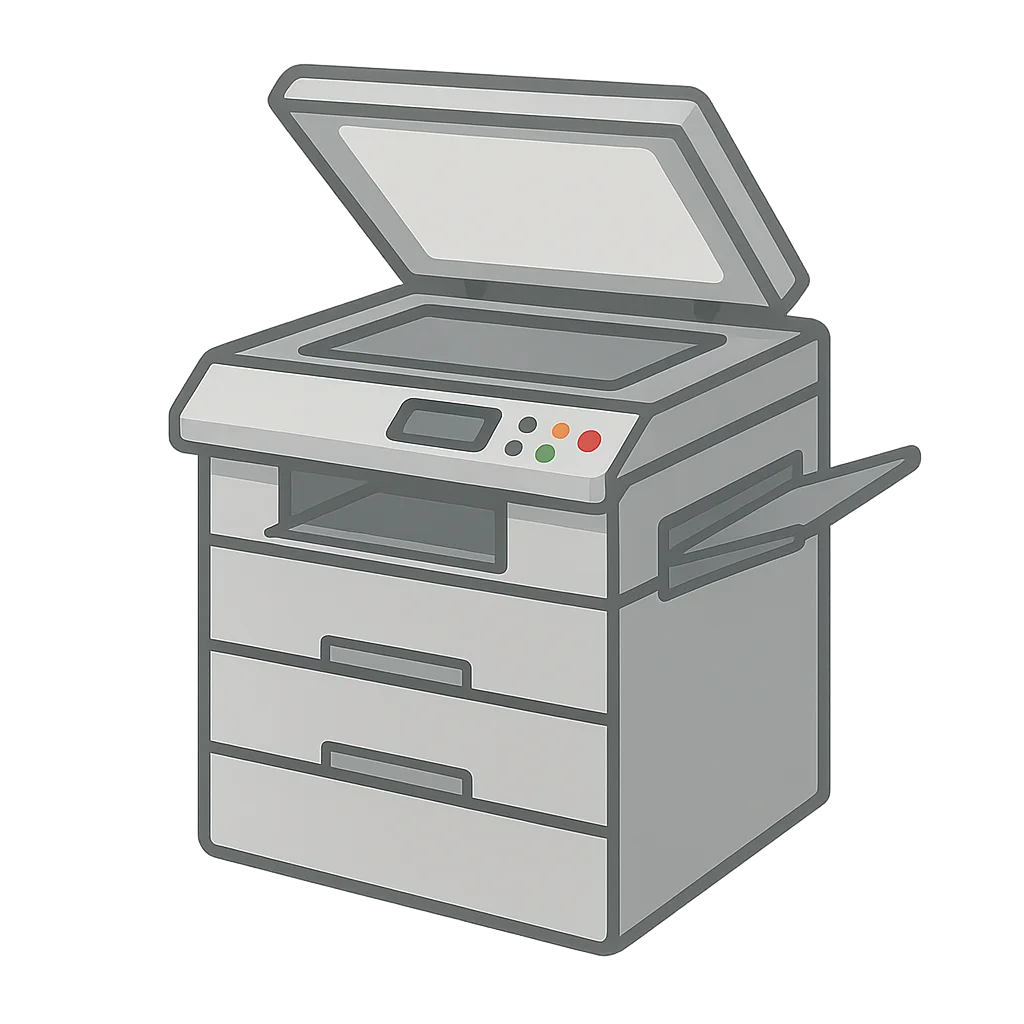
The Story of the Photocopier
Before I could hum and glow in the corner of an office, the world was a much slower, messier place. Imagine trying to share a drawing or a poem with twenty classmates. You would have to write it out twenty times, your hand cramping, your letters getting sloppier with each copy. That was the reality. I am a photocopier, but for a long time, I was just an idea, a desperate wish in the mind of a man named Chester Carlson. Chester was a patent attorney in the 1930s, and his job involved making endless copies of documents and drawings. The work was tedious, but for him, it was also physically painful. Arthritis stiffened his joints, making every handwritten copy a small mountain of effort. He used carbon paper, a thin, inky sheet that created a smudgy duplicate, but it was messy and could only make a few copies at a time. He knew there had to be a better way. He wasn't a famous inventor or a wealthy scientist; he was just a thoughtful person with a frustrating problem. That frustration became my seed. He spent his nights and weekends in the New York Public Library, devouring books on physics and chemistry, searching for a spark of inspiration. He was looking for a kind of magic, a way to capture an image and reproduce it instantly, cleanly, and easily. He was looking for me.
Chester decided to build a laboratory, but it wasn't a gleaming facility with fancy equipment. It was the small kitchen in his apartment in Astoria, Queens. The air smelled of toast and chemicals as he tinkered with sulfur, metal plates, and bright lights. He was fascinated by a principle called photoconductivity—the idea that some materials hold an electrical charge better in the dark. His idea was simple but brilliant: use light to draw a hidden image with static electricity, like writing with invisible ink. Then, he could use a fine, dark powder to stick to the charged parts of the image and transfer it to paper. For years, he experimented. He faced small explosions, smelly fumes, and countless failures. But on October 22nd, 1938, something incredible happened. With his assistant, Otto Kornei, he wrote “10-22-38 ASTORIA” on a glass slide. He charged a sulfur-coated zinc plate, projected the image onto it with a bright light, dusted it with a special powder, and carefully pressed a piece of wax paper onto the surface. When he peeled it away, the words were there. It was faint, a little blurry, but it was the first xerographic copy ever made. I was born. My birth, however, didn't mean immediate success. For years, Chester showed me to some of the biggest companies in the world—more than twenty of them. They all said no. They called me clumsy, unnecessary, and too complicated. But Chester never gave up his belief in me. Finally, in 1947, a small company called The Haloid Photographic Company saw my potential. They invested in Chester’s vision, and together, we began a long journey of refinement. After years of hard work, on September 16th, 1959, I was finally ready for the world. I was introduced as the Haloid Xerox 914, the first user-friendly, push-button office copier. I was big and heavy, but I could make a copy in seconds, and that was pure magic to everyone who saw me work.
My arrival changed everything. Suddenly, the slow, painstaking work of duplication vanished. In offices, memos and reports could be shared with everyone in minutes, not hours. Ideas began to travel at the speed of light, or at least, at the speed of my internal drum. In schools, teachers could hand out worksheets and articles to every student, opening up new ways of learning. In libraries, a researcher no longer had to spend days copying passages from a delicate book by hand; they could have a perfect copy to take with them. I became a quiet but essential part of the engine of progress, helping people connect, collaborate, and create. My form has changed over the decades—I became smaller, faster, and learned to copy in color. My core spirit even lives on in the digital scanners and phone apps that capture and share information today. But my story remains a testament to the power of perseverance. I exist because one person, faced with a personal struggle, refused to accept that things couldn't be better. He believed in solving a problem not just for himself, but for everyone, and in doing so, he gave the world a new way to share its knowledge.
Activities
Take a Quiz
Test what you learned with a fun quiz!
Get creative with colors!
Print a coloring book page of this topic.















 Free for Educators