

 English

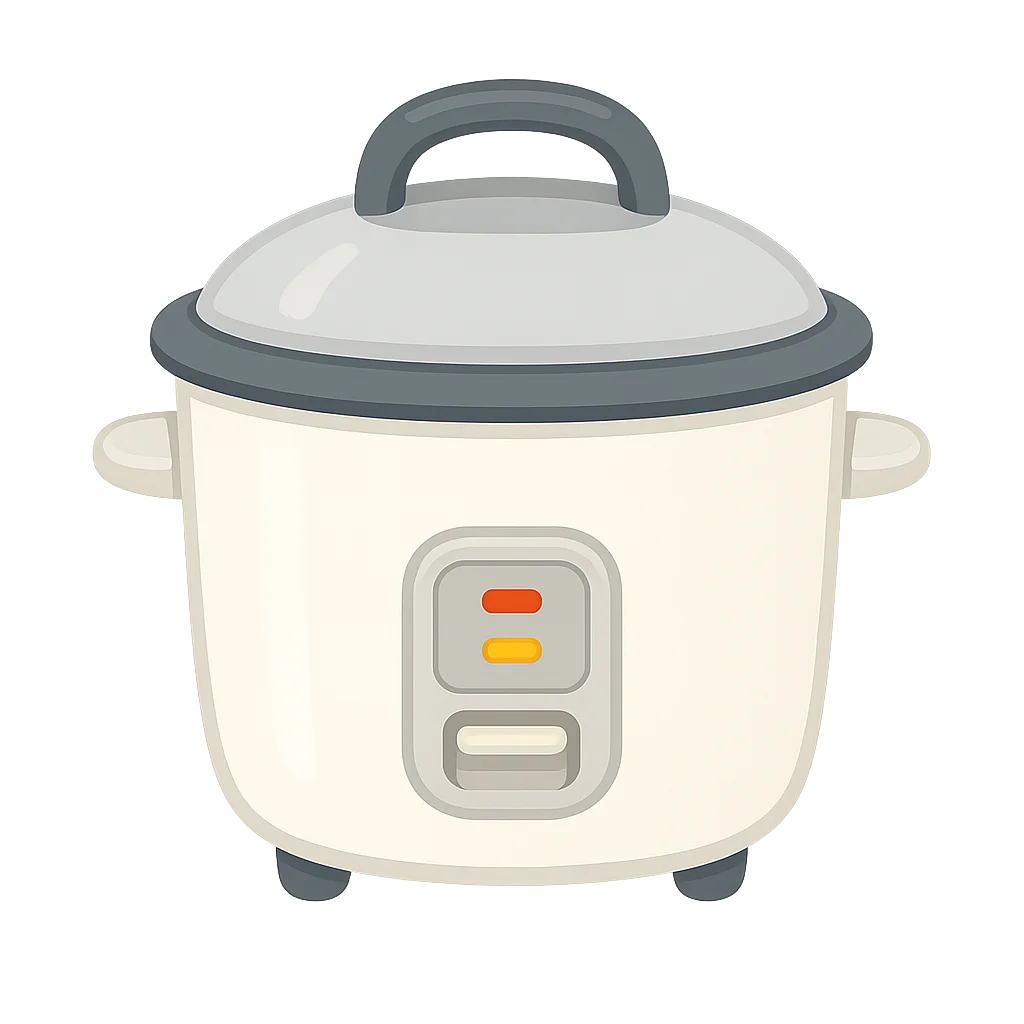
The Helpful Pot with a Brain
Hello there. You might know me. I am the Rice Cooker, and I sit quietly on kitchen counters all over the world, but my story is one of big problems and clever solutions. Before I was born, cooking rice was a nerve-wracking gamble. Imagine your parents or grandparents standing over a bubbling pot on a hot stove, their faces tense with concentration. They had to get everything just right: the amount of water, the height of the flame, the exact moment to turn off the heat. One minute of distraction could lead to disaster. A thick, black crust of burnt grains might weld itself to the bottom of the pan, filling the kitchen with a smoky, bitter smell. Or worse, they might lift the lid to find a soupy, uncooked mess, with hard grains floating in lukewarm water. Getting that perfect, fluffy rice was an art form that required constant attention.
For busy families, especially in post-war Japan where my story begins, this was more than just a minor annoyance. It was a daily chore that stole precious time. Someone always had to be the designated “pot-watcher,” unable to help with homework, set the table, or simply rest after a long day. The simple, comforting act of sharing a meal began with a stressful, uncertain task. People dreamed of a way to cook rice perfectly every single time, without the guesswork and without being chained to the stove. They needed a helper, a reliable friend in the kitchen. That is where my story truly begins, with a problem that was waiting for a spark of genius to solve it.
My life began in Japan, during a time of incredible change and rebuilding after World War II. It was a period filled with hope and a drive for innovation, and the company that brought me to life, Toshiba, was filled with brilliant minds. My creator was a thoughtful and persistent engineer named Yoshitada Minami. He and his team were given the challenge: create an automatic rice cooker. It sounded simple, but the journey was incredibly difficult. For months, they experimented day and night. They tried using simple timers, but that didn't work because different amounts of rice and water needed different cooking times. They tried using jars with heating coils, but the rice often cooked unevenly. They went through hundreds of prototypes, facing failure after failure. The team was exhausted and morale was low. They almost gave up on the project entirely.
Then came the breakthrough, the “aha!” moment that changed everything. Yoshitada Minami had a brilliant idea while observing how traditional rice pots worked. He realized that as long as there was water in the pot, the temperature would stay at its boiling point, 100 degrees Celsius. However, the very instant all the water was absorbed by the rice, the temperature of the pot would suddenly shoot up. He needed a switch that could sense that exact temperature change. The solution was a clever device called a bimetallic thermostat. It was a small strip made of two different metals fused together. These metals expanded at different rates when heated. At just the right temperature—a little over 100 degrees Celsius—the strip would bend with a distinct “click.” That click was everything. It was the signal that the rice was done, and it could be used to automatically shut off the power. After countless tests to perfect the design, I was finally ready. On December 10th, 1955, the first automatic electric rice cooker, my earliest self, was introduced to the world. I wasn't just a machine; I was a promise of a perfect meal, every time.
From my birthplace in Japan, my fame began to spread. At first, people were skeptical. Could a machine really be trusted with something as important as the daily rice? But soon, word got around. Families who used me found they had something new and wonderful: free time. The person who usually watched the pot was now free to do other things. They could read stories to their children, help with schoolwork, or just sit down for a few quiet moments before dinner. I took over the stressful job of pot-watching, and I did it perfectly. My single switch was a symbol of reliability. Push it down to start, and when it popped up with a gentle click, dinner was ready. No burning, no mush, just fluffy, delicious rice.
My journey took me across oceans and continents. I found homes in Korea, China, India, the United States, and countries all over the globe. In each new place, I adapted, helping to cook the many different types of rice that are central to their cultures—from long-grain basmati to short-grain sushi rice. I became a silent but essential member of millions of families. I was there for everyday dinners, special holiday feasts, and comforting meals on sick days. I saw children grow up, tasting their first spoonfuls of rice from my pot. I was more than just an appliance; I was a part of their daily lives, a source of comfort and consistency in a busy world. I helped make sure that no matter how hectic the day had been, families could come together to share a warm, nourishing meal without any fuss.
Over the decades, I have continued to change and grow, just like the families I serve. I am no longer just a simple machine with an on-off switch. My modern relatives are much more advanced. Many of us now have something called a “fuzzy logic” microchip inside. You can think of it as a tiny, clever brain. This brain can make subtle adjustments to temperature and cooking time all by itself. It knows the difference between brown rice, which needs more time and water, and delicate white rice. It can sense the temperature in the room and how much rice is in my pot, and it uses all that information to create the perfect result. Some of my cousins can even be programmed to have rice ready at a specific time, or they can cook porridge, steam vegetables, and even bake cakes.
But even with all these new abilities, my core purpose has never changed. From that first model in 1955 to the smart cookers of today, my greatest joy comes from doing one simple job perfectly. I take away a little bit of stress from the day and help bring people together. The story of my creation is a reminder that perseverance and a single clever idea can solve a common problem and make life a little easier and more delicious for everyone, one warm, fluffy grain of rice at a time.
Activities
Take a Quiz
Test what you learned with a fun quiz!
Get creative with colors!
Print a coloring book page of this topic.
















 Free for Educators