

 English

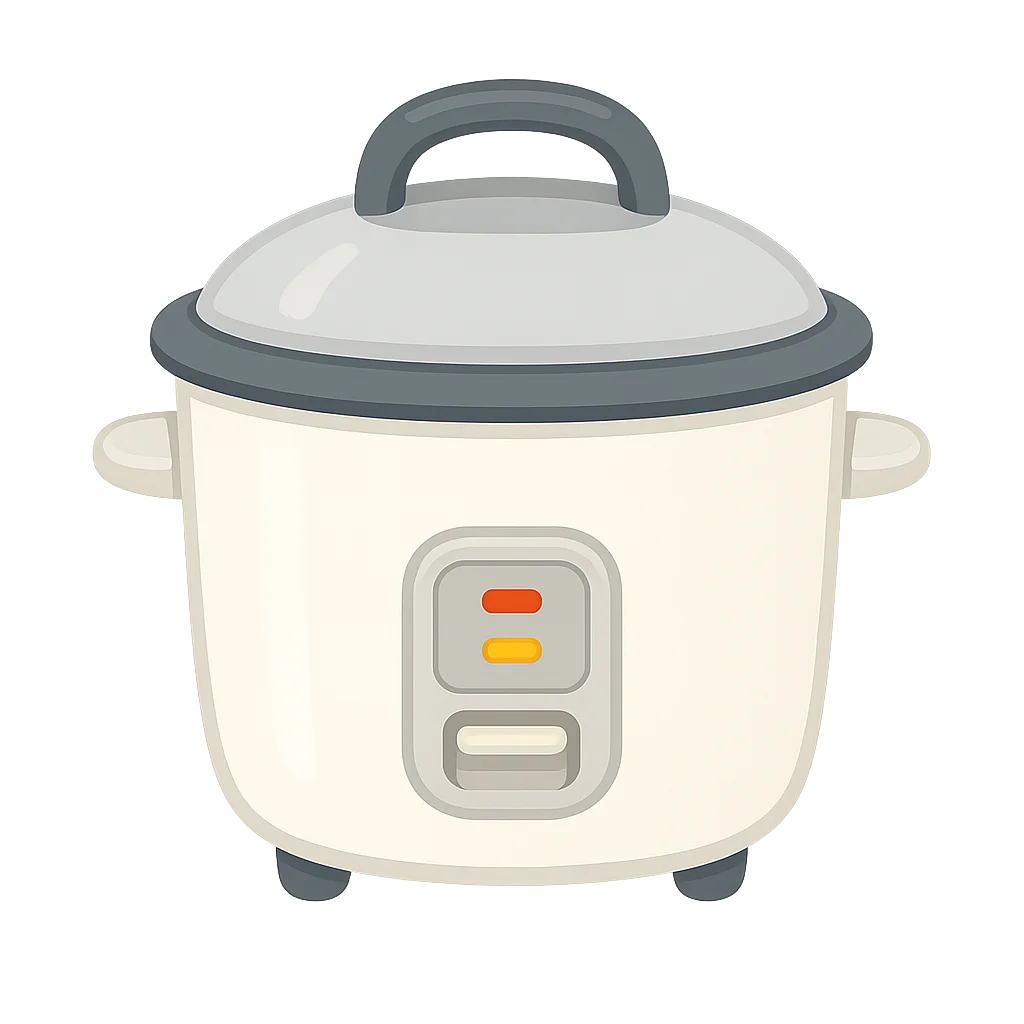
The Story of the Rice Cooker
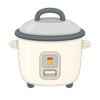
Hello there. Can you smell that warm, comforting scent. That’s me, the Rice Cooker, getting a perfect pot of fluffy rice ready. My favorite sound in the whole world is the little click I make when I finish my job. It’s a sound that means a delicious meal is just moments away. I love the feeling of my lid being lifted and a warm cloud of steam escaping, revealing perfectly cooked grains of rice, each one separate and tender. But it wasn't always this easy. Before I came along, cooking rice was a real challenge. You had to watch the pot on the stove so carefully. If you looked away for just a minute, the bottom could burn into a black, crispy mess. Or, if you added too much water, you’d end up with a sticky, gooey porridge that nobody wanted to eat. People wished for a way to make perfect rice every single time, without having to worry. They needed a helper in the kitchen, and that’s where my story begins.
My story started in a busy workshop in Japan, a long time ago. A clever man named Yoshitada Minami and his team at a company called Toshiba were determined to solve the rice-cooking problem. This was back in the 1950s, a time of many new ideas. The team worked day and night, trying to create a pot that could cook rice all by itself. Their first attempts were not very successful. They tried using different kinds of pots, some made of wood and some of metal. They experimented with different ways to heat me. Sometimes the rice came out hard and uncooked, and other times it was a soggy mush. It was very frustrating for my creators, but they refused to give up. They knew how much a simple, automatic rice cooker would help families. After many months of hard work, they had a brilliant idea. The real challenge was knowing exactly when the rice was done. They realized that as long as there was water in the pot, the temperature would stay at boiling point. But the moment all the water was absorbed by the rice, the temperature of the pot would suddenly get much hotter. They needed something that could feel that change. They found the perfect solution: a special switch called a bimetallic thermostat. It was a clever little strip made of two different metals joined together. When it felt that extra burst of heat, the metals would expand at different rates, causing the strip to bend and click, shutting off my power. It was the sound of victory. Finally, in December of 1956, I was born. I was ready to leave the workshop and find my first home.
My first jobs were in kitchens all across Japan. Suddenly, families had a reliable friend they could count on for every meal. Busy parents no longer had to stand guard over the stove, constantly stirring and checking the rice. They could set me up, press a button, and walk away. This gave them precious time back. They could help their children with homework, read a story, or just enjoy a quiet moment before dinner. I felt so proud knowing I was making their lives a little easier. Soon, my fame began to spread. I traveled on boats and planes to kitchens all over the world. I learned to cook long-grain rice for families in India, sticky rice for sushi in America, and golden saffron rice for celebrations in the Middle East. No matter the country or the culture, my job was always the same: to bring a warm, perfect pot of rice to the family table. Looking back, I see that I am more than just a kitchen appliance. I am a helper, a time-saver, and a small part of the comfort and joy that families share during their meals. And it all started with a determined team that wouldn't give up on a bright idea.
Activities
Take a Quiz
Test what you learned with a fun quiz!
Get creative with colors!
Print a coloring book page of this topic.












 Free for Educators