

 English

The Little Blinking Box That Connected the World
Hello from the Blinking Box!
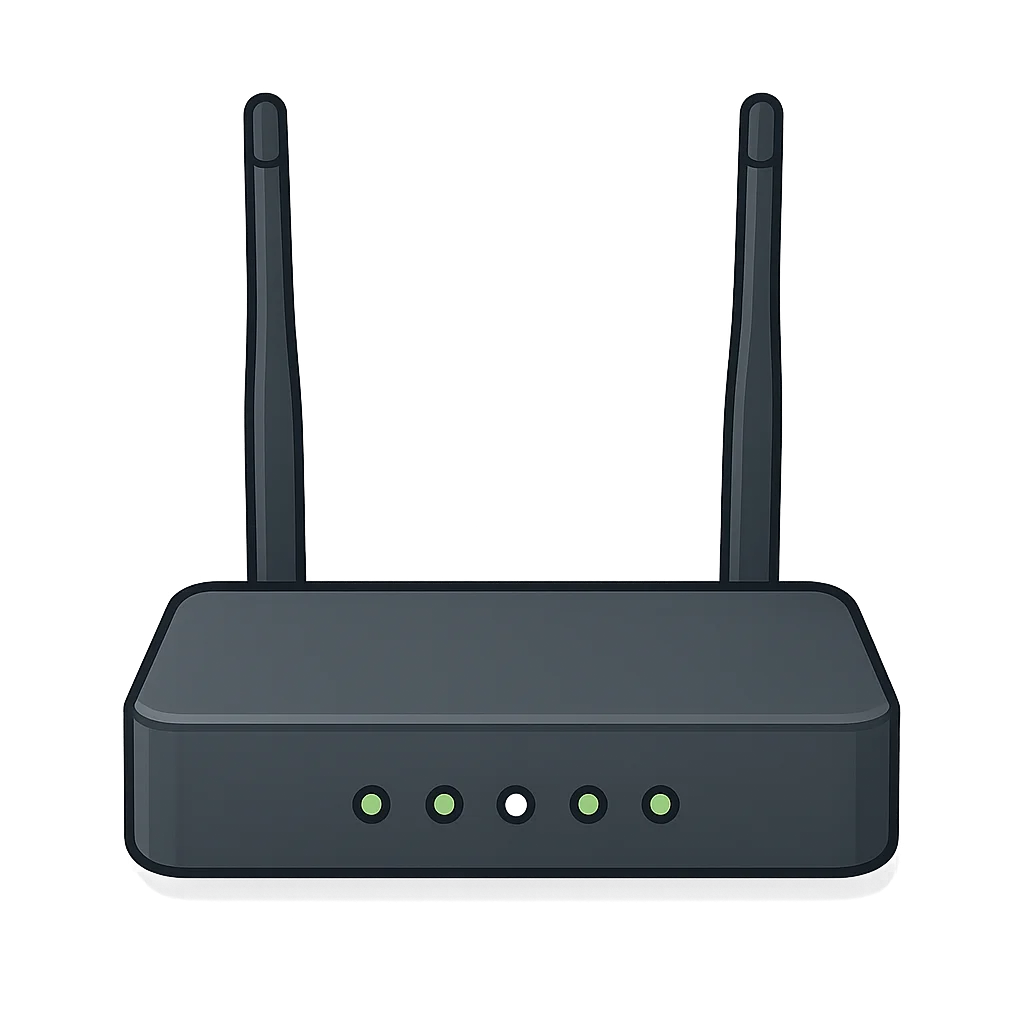
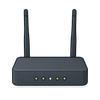
Hello there. You’ve probably seen me sitting quietly on a shelf or desk in your home, a little box with a row of tiny, blinking lights. I’m a Router, and though I might not look like much, I have one of the most exciting jobs in the world. Have you ever wondered how you can be in a video call with your grandparents who live a thousand miles away, or how a funny video you send to a friend arrives in just a few seconds? It feels like magic, but it’s really me, working hard behind the scenes. Think of me as a super-fast, super-smart mail sorter for the entire internet. Every piece of information, whether it’s a homework assignment, a secret message in a game, or a scene from your favorite movie, comes through me. My job is to look at where it needs to go and send it on the fastest, safest path possible. I am the bridge that connects your home to a whole universe of information, friends, and adventure, and my story is all about building bridges where there were none before.
A World of Disconnected Islands
Before I came along, the world of computers was a very different place. It was like a vast ocean dotted with thousands of small, isolated islands. On each island, the computers could talk to each other perfectly. An office had its own network, a university had its own, and a government lab had another. They were all chattering away happily, but only with their immediate neighbors on the same island. If a scientist at one university wanted to send their research data to a colleague at another university, it was incredibly difficult. Their computer islands spoke different languages and had no bridges connecting them. It was a world of digital separation. Imagine writing a letter to your best friend, but you can’t send it because the mail carrier from your town doesn’t travel to their town. This was the big problem that brilliant engineers and scientists were trying to solve. They dreamed of a way to link all these separate computer islands together into one giant continent of shared knowledge, a world where information could flow freely and instantly from anywhere to anywhere. They needed someone, or something, that could stand between all the islands and direct the traffic. They needed a guide, a translator, and a traffic cop all rolled into one. They needed me.
My Big Idea: Becoming the Internet's Traffic Cop
My story really begins with my ancestors, the Interface Message Processors, or IMPs. Back in 1969, they were the pioneers, the machines that formed the very first large-scale computer network, called the ARPANET. They figured out a brilliant trick called 'packet switching.' Instead of trying to send a huge file all at once, they would break it down into thousands of tiny pieces, like postcards from a very long letter. Each 'postcard,' or packet, had an address on it. The IMPs would send these packets out, and they didn't all have to take the same route. Some might zip through a connection in Utah, while others went through Massachusetts. At the destination, another machine would carefully reassemble all the postcards in the right order to remake the original file. This was a revolutionary idea, but there was still a problem: it only worked for computers on the same type of network. The different 'islands' still spoke different languages. That’s where my own, personal story begins. My true birthday was in 1981 at Stanford University. An amazing engineer named William Yeager was working on a project to connect all of the university's different computer systems. He wrote a brand-new set of instructions, the software that became my brain. This software made me the first 'multiprotocol' router. 'Multiprotocol' is a fancy way of saying I could speak and understand many different network languages. Suddenly, I wasn't just a bridge; I was a universal translator. I could take a packet from one type of network, understand its address, and send it on its way across a completely different type of network. I had become the internet’s first true traffic cop, directing information between all the islands and finally uniting them.
From the Lab to Your Living Room
For a few years, I was mostly a marvel of the academic world, living in university labs and research centers. The people who worked with me saw what I could do, and they knew I was destined for more than just connecting campus buildings. Two of those people were Leonard Bosack and Sandy Lerner, who also worked at Stanford and had seen my abilities firsthand. They understood that every school, every library, every business, and eventually every home would want to be part of this growing, interconnected world. They believed my power to connect people and information should be available to everyone. So, on December 10th, 1984, they took a leap of faith and started their own company, which they named Cisco Systems. Their entire mission was to build more of me—thousands and then millions of my siblings and cousins. They built stronger, faster, and smarter versions of me. Thanks to their vision, I left the quiet labs and went out into the world. I started connecting libraries to vast databases, helping doctors in different hospitals share medical images, and allowing students across the country to collaborate on projects. My family of routers grew and grew, weaving a digital web that soon wrapped around the entire planet, all leading to the small, blinking box that sits in your home today.
Your Digital Bridge to Everywhere
Now, here I am. I may be small and silent, but my work never stops. I am the invisible hero working day and night to bring the world to your fingertips. When you team up with friends from other countries in an online game, I'm the one making sure your actions happen in an instant. When your family settles in to stream a new movie, I'm the one who brings the show to your screen without interruption. Every time you look up a fact for a school report, watch a tutorial to learn a new skill, or see the face of a loved one on a video call, I am the bridge that makes that connection possible. My greatest purpose is to bring people, ideas, and joy together, erasing the distances that once kept us apart. The world is full of incredible creators, thinkers, and dreamers like you. My story is one of perseverance and the amazing things that can happen when we decide to build bridges instead of walls. I am so excited to see what the future holds, and I'll be right here, blinking away, ready to help connect the next great ideas you and your generation will share with the world.
Activities
Take a Quiz
Test what you learned with a fun quiz!
Get creative with colors!
Print a coloring book page of this topic.



 Free for Educators