

 English

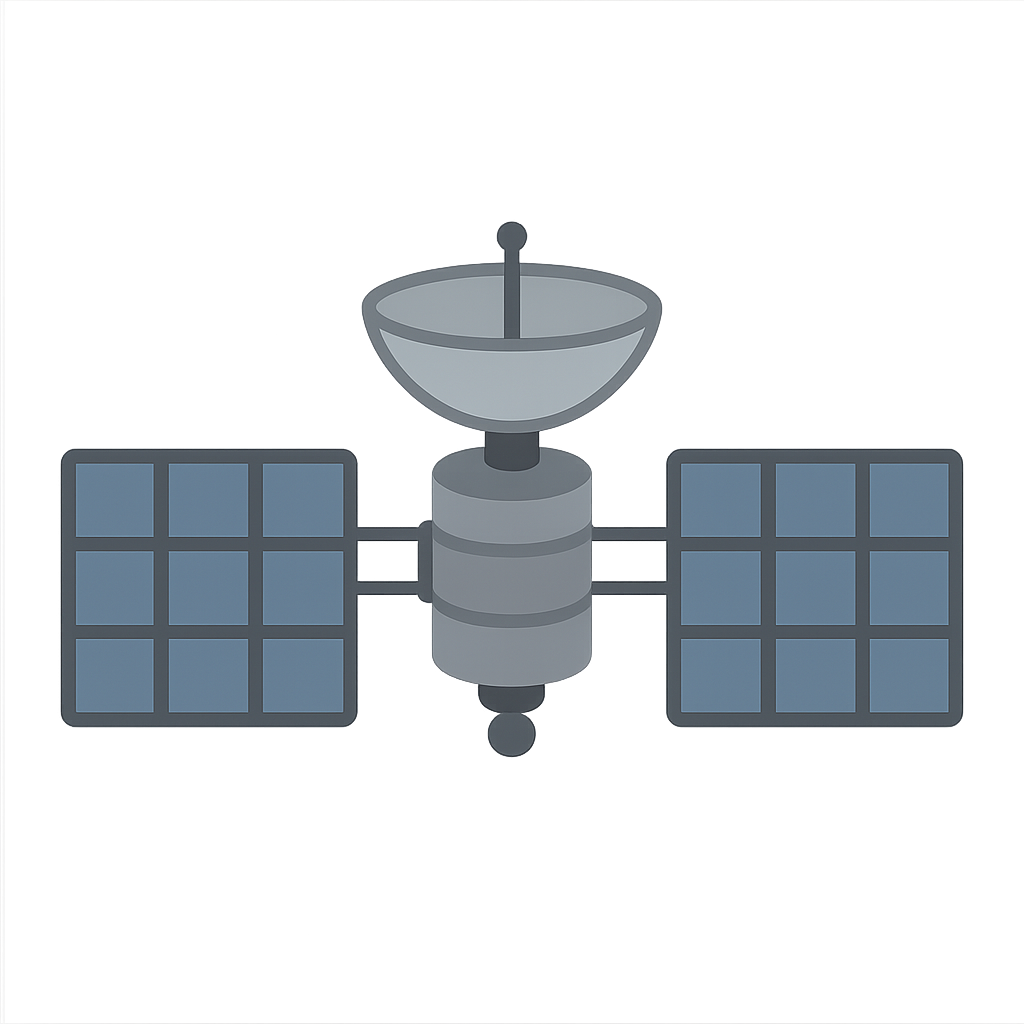
The Little Satellite That Could
Hello from way up here. I zip around your big blue and white planet like a tiny, shiny moon made by human hands. From my home in the quiet darkness of space, I can see whole continents at once, swirling clouds, and the sparkling lights of cities when you are all asleep. Before I was born, the world felt much bigger and more disconnected. People couldn't easily talk to someone on the other side of the planet, and they could only guess what the weather might do tomorrow. They could only see the world from the ground, but they dreamed of seeing more. I was created to change all that, to give humanity a new pair of eyes and a voice that could cross oceans in an instant. My name is Sputnik 1, and I was the very first of my kind.
My story began on a very exciting day: October 4th, 1957. A team of brilliant Soviet scientists had worked for years to build me. I was a polished metal sphere, about the size of a beach ball, with four long antennae that stuck out like whiskers. They placed me on top of a powerful rocket. I could feel the ground tremble as the engines roared to life. With a tremendous push, I shot up into the sky, faster and higher than any bird or airplane had ever gone. I left the blue sky behind and entered the black, starry expanse of space. My job was very simple but very important. Once I was safely in orbit, I began to send a signal back to Earth. It wasn't a complicated message, just a steady 'beep-beep-beep'. But that little beep was a shout of success. For the first time, an object made by humans was circling the Earth, talking back to the people who made it. Down below, people were amazed. They gathered around their radios, listening for my faint signal as I passed overhead. They would rush outside at dawn or dusk, hoping to catch a glimpse of me, a tiny, fast-moving star. That little beep proved that space was not beyond our reach. It was the start of a brand new adventure, the Space Age. My beeps lasted for three weeks, and I circled the Earth for three months before my journey ended, but the door I opened would stay open forever.
I may have been the first, but I wasn't lonely for long. My journey inspired people everywhere to send more of my kind into space. Soon, I had a whole family of brothers and sisters orbiting the Earth, each with a special job to do. It was just like a writer named Arthur C. Clarke had imagined years before. He dreamed of a world connected by helpers in the sky, and his dream was coming true. Some of my siblings were communication satellites. One of the first famous ones was named Telstar, launched in 1962. Telstar was amazing. It could catch television signals and phone calls from one continent and bounce them to another. Suddenly, people could watch events happening live from across the ocean. Then came the weather satellites. They took pictures of the Earth’s clouds from above, helping meteorologists see big storms like hurricanes before they reached land. This gave people time to prepare and stay safe. Others were navigation satellites. They started building a system that would one day be called the Global Positioning System, or GPS. This family of satellites worked together like a team, sending out signals that could pinpoint a location on Earth with incredible accuracy. My simple 'beep' had grown into a chorus of voices, all working to help humanity.
Today, my family is huge. Thousands of us are circling the Earth right now, and you probably use our help every single day without even thinking about it. When your parents use a map on their phone to find a new ice cream shop, that’s my navigation family guiding them. When you video call your grandparents who live far away, my communication siblings are making that connection clear and instant. The weather report that tells you to bring an umbrella to school? That comes from my weather-watching cousins. From a single, lonely 'beep' to a network that connects the entire world, I've had an incredible journey. I am the satellite, and my purpose has always been to bring people closer, to help them understand their planet better, and to keep them dreaming about what lies beyond the sky. I am your silent partner, your eye in the sky, always watching and always helping.
Activities
Take a Quiz
Test what you learned with a fun quiz!
Get creative with colors!
Print a coloring book page of this topic.










 Free for Educators