

 English

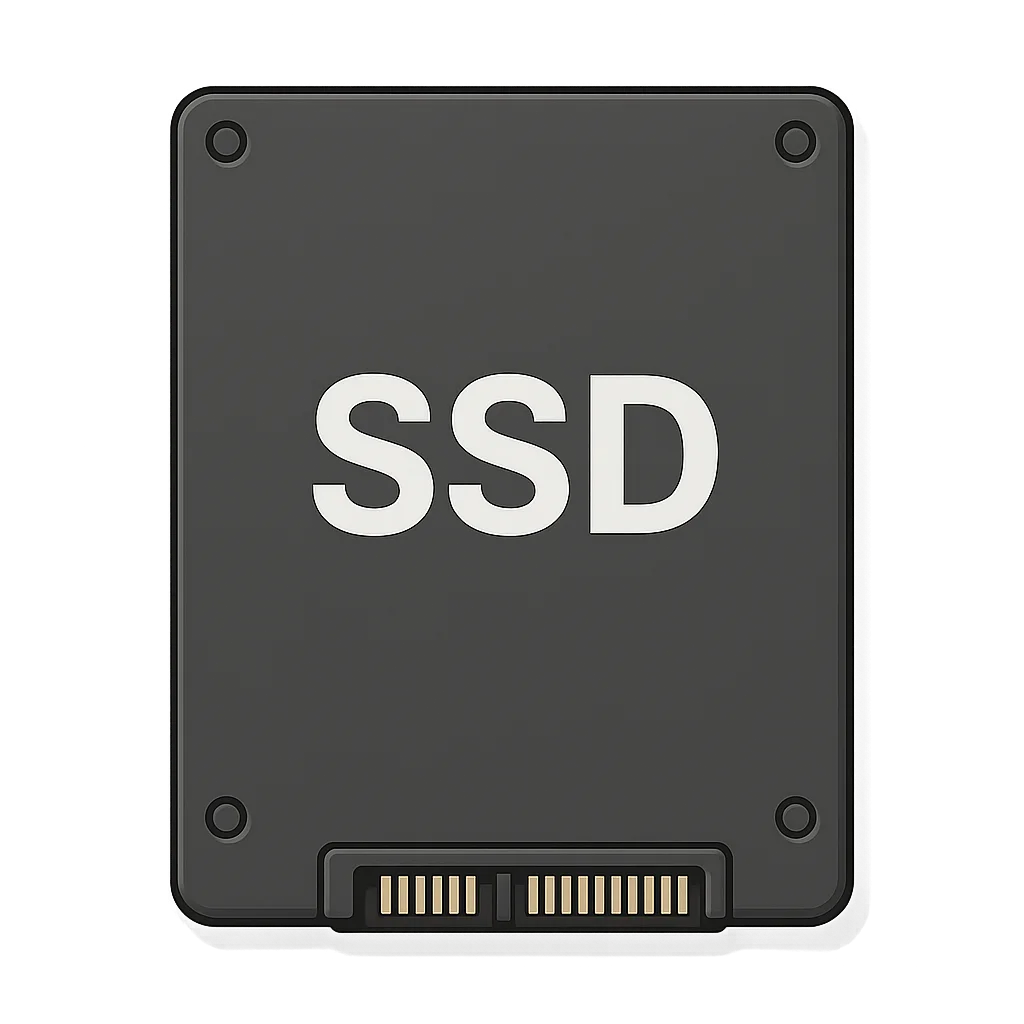
The Silent Flash of Progress: My Life as an SSD
Hello, my name is Solid State Drive, but my friends just call me SSD. You’ve probably never seen me, but if you use a modern computer, a gaming console, or a smartphone, we’ve definitely met. I live silently inside these devices, and my job is one of the most important: I hold all of your digital memories. Your photos, your favorite games, your school projects, and the apps you use every day all live with me. My specialty is speed. I can find and deliver any piece of information you need in the blink of an eye. I don’t have any moving parts, unlike my older cousin, the Hard Disk Drive, or HDD. He was always clanking and whirring, but I work in complete silence, using the quiet magic of electricity to do my job instantly.
To understand why I was such a big deal, you need to know about the old way of doing things. My predecessor, the HDD, worked like a tiny, incredibly fast record player. Imagine a stack of shiny, spinning platters coated in a magnetic material. A tiny arm with a read-write head would have to race back and forth across these spinning disks, trying to find the exact microscopic spot where a piece of information was stored. This physical movement took time—only milliseconds, but in the world of computers, that’s an eternity. It was also a delicate dance. If you dropped a laptop with an HDD inside, that little arm could crash into the spinning platter, scratching it and potentially destroying the data forever. It was a marvel of engineering for its time, but it was clear that the digital world needed something faster, tougher, and more reliable. The world was waiting for a new solution, one that didn't rely on spinning parts.
A brilliant idea was about to change everything, and it came from a dedicated engineer in Japan. His name was Dr. Fujio Masuoka, and he was working for a company called Toshiba. Throughout the early 1980s, he was determined to create a new kind of memory that could store information without needing constant power and without any moving parts. In 1984, he had his breakthrough: flash memory. This is the technology that makes me who I am. You can think of it as a gigantic, microscopic grid of billions and billions of tiny light switches. Each switch can be either on or off, representing a one or a zero in the binary language of computers. These switches, called floating-gate transistors, can trap electrons to hold their state even when the power is turned off. It was a revolutionary concept. Dr. Masuoka and his team named it 'flash' memory because the act of erasing a whole block of these switches was incredibly fast, reminding them of the quick, bright flash of a camera. This 'flash of genius' was the seed from which I would eventually grow.
It took some time for that brilliant seed to become a full-fledged drive like me. The very first true Solid State Drives using flash memory were introduced to the world around 1991. In those early days, I was nothing like I am today. I was incredibly expensive to make, and I could only store a tiny amount of data—maybe enough for a few documents or a handful of low-resolution pictures. Because of this, I was reserved for very special and demanding jobs. I was sent on missions with the military and even into space, where my toughness was essential. In environments with heavy vibrations or extreme forces, a fragile HDD would fail, but I could keep working perfectly. For many years, I was a specialist, a piece of high-end technology for missions where failure was not an option. But all the while, clever engineers were working tirelessly, figuring out how to pack more and more of those tiny 'light switches' into smaller spaces and how to make the whole process cheaper. Their perseverance slowly but surely prepared me to move from top-secret missions to your desktop.
Today, I am everywhere, and my impact is all about speed and convenience. I am the reason your laptop can wake up from sleep in a couple of seconds, instead of the long minutes it used to take. I am the reason that enormous, beautifully detailed video games can load new levels without making you wait forever. Because I don't need space for spinning platters and moving arms, I allowed devices like tablets and ultra-thin laptops to become a reality. I helped make smartphones the powerful, pocket-sized computers they are today. My journey from a complex idea in a lab to the heart of your most-used devices shows how a new way of thinking can change the world. I don't just store your files; I give you back time and empower your creativity, allowing you to learn, create, and connect faster than ever before. And the best part is, my story is still being written, and I can’t wait to see what incredible things we will build together in the future.
Activities
Take a Quiz
Test what you learned with a fun quiz!
Get creative with colors!
Print a coloring book page of this topic.





 Free for Educators