

 English

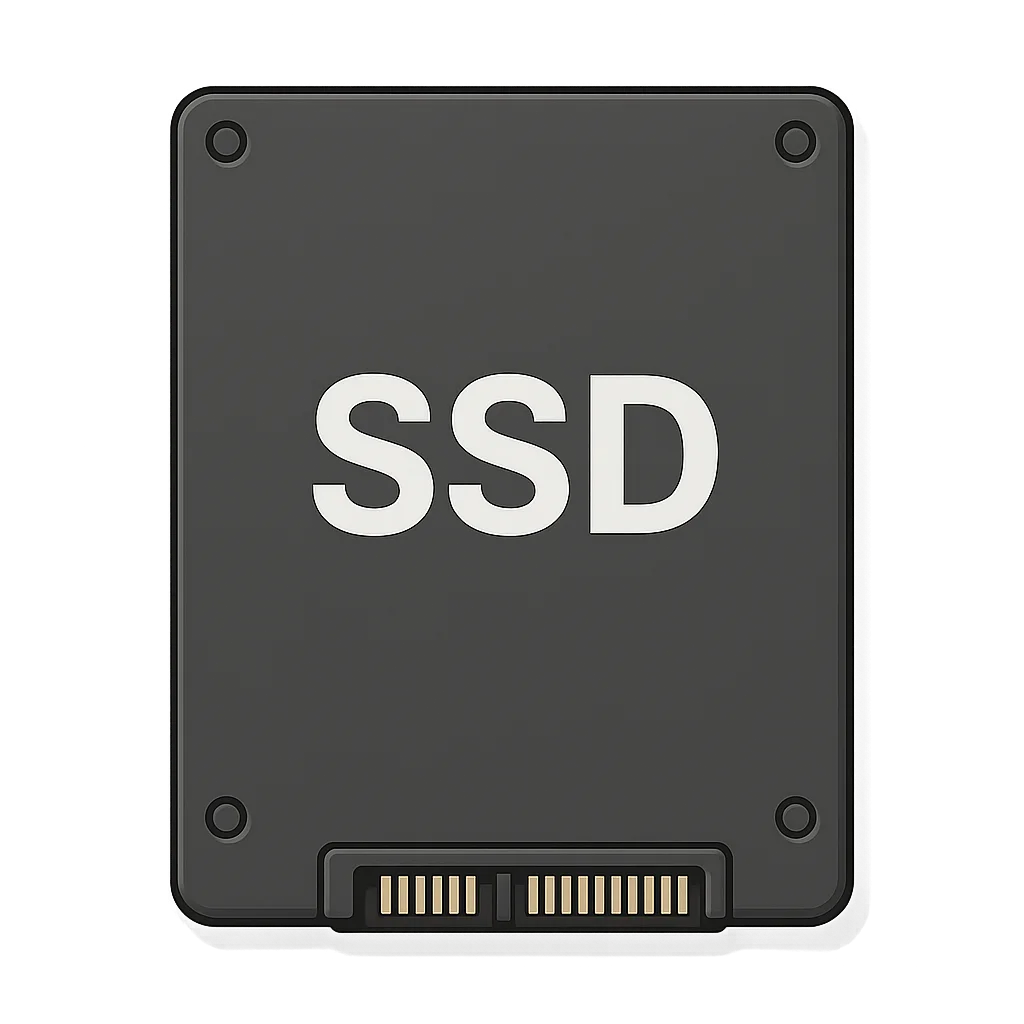
The Super-Speedy SSD
Hi there. You might not have seen me, but I bet you use me every single day. My name is Solid State Drive, but my friends call me SSD. I live inside the sleek metal cases of computers, the shiny screens of phones, and the exciting world of video game consoles. My job is to be the brain’s super-fast helper, grabbing information in the blink of an eye. Before I came along, my older cousin, the Hard Disk Drive, or HDD, did the job. He was clever, but a bit old-fashioned. Imagine a tiny record player inside your computer, with shiny disks spinning around and a little arm that had to race back and forth to find songs, pictures, or games. Because he had all those moving parts, he was a little slow. If you bumped him or dropped him, he could get hurt easily, which was a big problem. People needed something faster, stronger, and more reliable. They needed a new kind of memory, and that’s where my story begins.
My story started in a country filled with amazing technology, Japan. In the 1980s, a brilliant engineer named Dr. Fujio Masuoka was working for a company called Toshiba. He had a revolutionary idea. He wanted to create a memory that didn't need any spinning disks or moving arms. He imagined something that could hold onto information using only electricity, something that worked almost instantly. He called his invention 'flash memory,' because it could erase and rewrite information in a flash, just like a camera's flash! You can think of my flash memory as a huge city made of billions of microscopic rooms. Each tiny room has a special door that can trap a little bit of electricity. If a room has electricity trapped inside, it’s like a light switch that’s turned ‘on’. If it has no electricity, the switch is ‘off’. By remembering which switches are on and which are off, I can store all your photos, your favorite games, and your school projects. The best part is that these little rooms remember their state even when the power is turned off. Because I have no moving parts, I am silent, tough, and incredibly fast. My first big debut in the world was on September 2nd, 1991, when a company called SanDisk created a 20-megabyte version of me. That's not very much space today, but back then, I was a technological treasure. I was also very, very expensive, so only a few people could have me.
For a long time, I was a rare and costly item, like a diamond for your computer. But over the years, many smart engineers and scientists worked hard to make me better. They figured out how to build my tiny memory rooms smaller and smaller, so I could fit more of them into the same space. They also discovered new ways to make me that didn't cost so much money. Slowly but surely, I started showing up in more and more devices. Today, I am an everyday hero. I am the reason your laptop can wake up from sleep in just a few seconds. I am the reason your favorite video game loads a giant, beautiful world without making you wait forever. When you take a picture with your phone, I store it safely, and because I have no moving parts, your memories are safe even if your phone gets bumped around in your backpack. Looking back, I feel so proud. I helped make technology faster, stronger, and more exciting for everyone. I help artists create amazing drawings, writers tell incredible stories, and gamers explore new universes, all without the long wait. And the best part is, my story isn't over. I’m always getting even faster and better, ready to help power the next big idea.
Activities
Take a Quiz
Test what you learned with a fun quiz!
Get creative with colors!
Print a coloring book page of this topic.





 Free for Educators