

 English

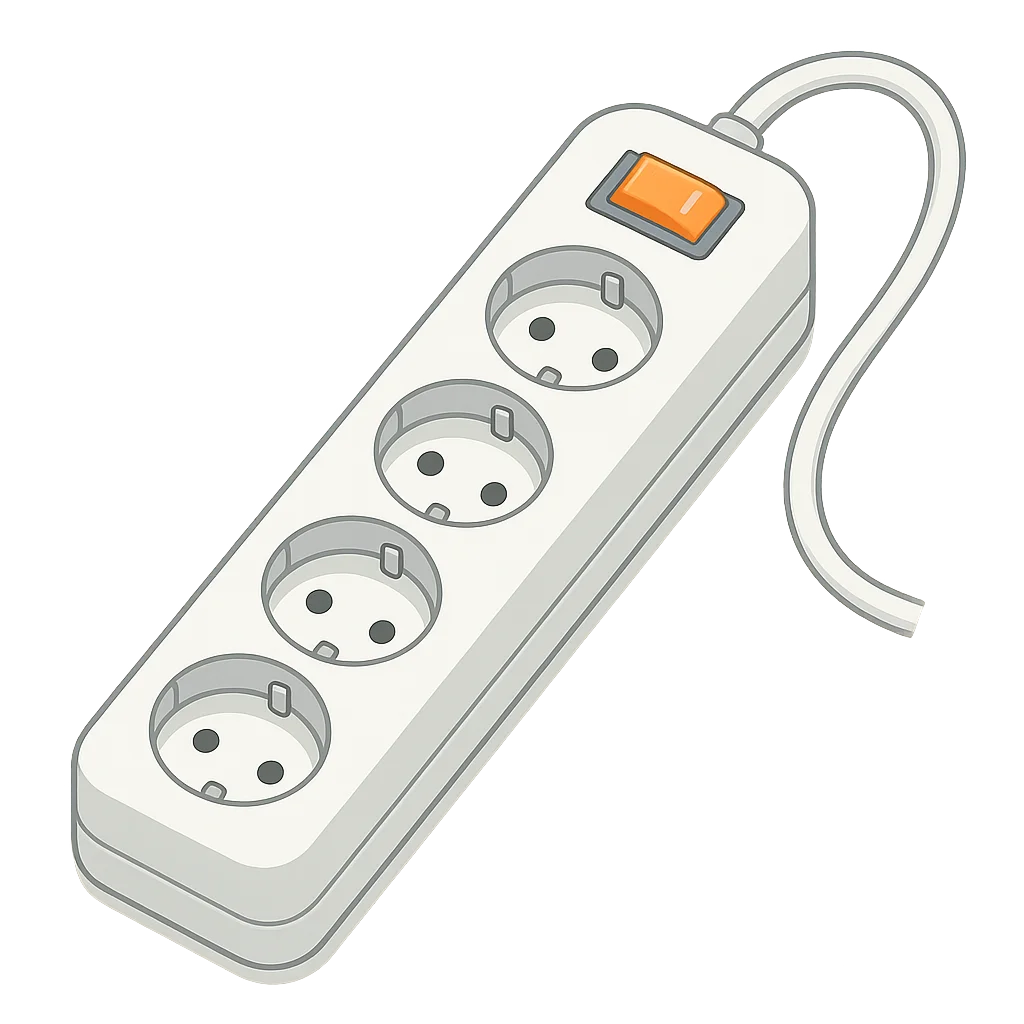
The Silent Guardian
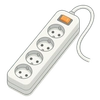
You probably don't notice me, tucked away behind a desk or nestled in a tangle of cords behind the television. I am a Surge Protector, and my story is one of quiet, constant vigilance. I was born from a need you might not even know exists, in an era crackling with new energy and excitement. The late 1970s and early 1980s were a magical time. The first personal computers were finding their way into homes, their green-and-black screens glowing with promise. Video game consoles were beeping and blooping in living rooms, and VCRs were letting families watch movies whenever they wanted. These machines were amazing, but they were also incredibly delicate. They had a hidden enemy, an invisible danger that lurked within the very walls of the house: the power surge. Imagine the electricity flowing to your devices is like a calm, steady river. Most of the time, it's perfectly safe. But sometimes, due to a lightning strike miles away or a problem at the power station, that calm river can suddenly become a massive, raging tidal wave of energy. This wave, a power surge, could crash into a computer or television in a fraction of a second, frying its sensitive circuits and turning a wonderful new invention into a useless box of plastic and wire. People were investing their savings into this new technology, only to see it destroyed by a force they couldn't see or control. A silent threat needed a silent guardian, and that’s where my story truly begins.
My existence is owed to a thoughtful engineer named Harold P. Kopp. In the late 1970s, he watched as more and more of these incredible electronics entered the world, and he understood the growing risk. He saw the frustration when a brand-new device suddenly went dark forever. He knew there had to be a better way to protect them than simply hoping for the best. Harold’s mission was to create a simple, affordable shield that any family could use. He didn't want a complicated, expensive solution; he wanted an everyday hero. He began experimenting, looking for a way to build a gatekeeper that could stand between the wall outlet and the precious electronics. The key to my being, the very heart of my design, was a remarkable little component called a Metal Oxide Varistor, or MOV. The best way to understand the MOV is to think of it as a lightning-fast security guard for electricity. When the flow of power is normal and steady, the MOV just lets it pass right through. But the instant it detects the leading edge of a dangerous surge—that giant electrical wave—it acts. In less than a nanosecond, it slams a gate shut, diverting all that harmful excess energy away from the device and safely to the ground wire. It was a brilliant and elegant solution. After countless tests and refinements to make me both effective and reliable, Harold P. Kopp was ready. On April 28th, 1980, my patent was officially filed. This date is like my birthday and my blueprint all in one. It was the moment my purpose was defined and my design was set, ready to begin my life's work of standing guard.
Soon after, I began arriving in homes and offices across the country. I wasn’t flashy or exciting. I was just a humble strip of plastic with a few extra outlets. But my job was one of the most important in the room. I became the silent protector of late-night homework assignments, the guardian of hard-won video game high scores, and the reason a family’s new VCR survived the summer thunderstorm season. I gave people something invaluable: peace of mind. They no longer had to rush to unplug everything when the sky turned dark. They trusted me to be their first line of defense against the invisible zap of a power surge. As time went on, the world I protected grew more complex. It wasn't just one computer and a television anymore. Suddenly, there were printers, speakers, video game consoles, and chargers for all sorts of new gadgets. To keep up, I had to evolve. I grew longer, offering six, eight, or even twelve outlets. My designers gave me indicator lights to show I was working, and eventually, they added USB ports so I could directly charge the phones and tablets that became central to modern life. I may spend my entire life hidden from view, but I know my worth. Every file that is saved, every movie that is enjoyed, and every connection that is made happens, in some small part, because I am there, quietly and faithfully doing my job. I am a small hero in a big, technological world, a reminder that sometimes the most important work is done by those you never see.
Activities
Take a Quiz
Test what you learned with a fun quiz!
Get creative with colors!
Print a coloring book page of this topic.










 Free for Educators