

 English

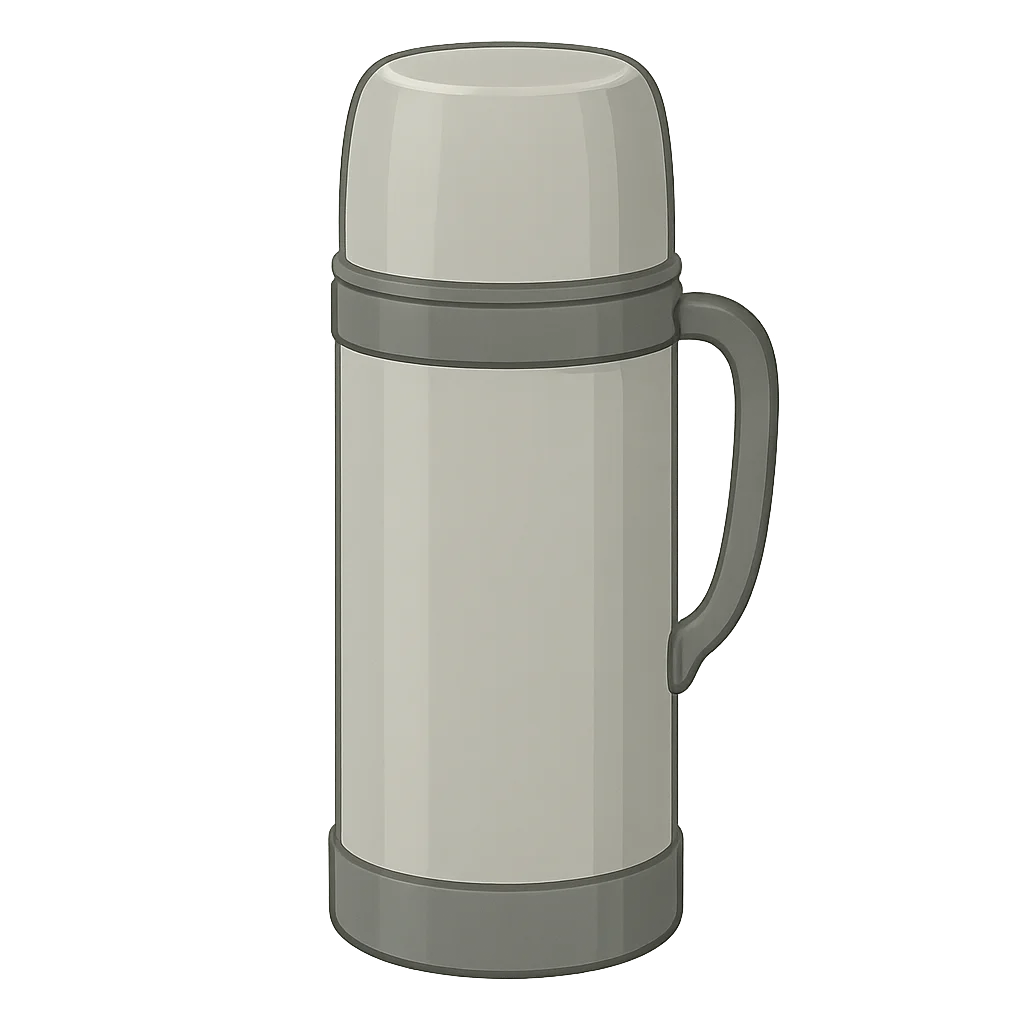
My Life as a Thermos
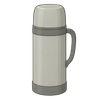
Hello there. You might know me from your lunchbox or a family picnic, but I bet you don't know that I was born in a science laboratory. My name is Thermos, and my story began long ago, not in a bustling factory, but in a quiet lab in London filled with strange glass tubes and bubbling liquids. It was the year 1892, and my creator was a brilliant Scottish scientist named Sir James Dewar. He wasn't trying to keep soup warm; he was working with things that were colder than the coldest winter day you can imagine. His biggest challenge was finding a way to keep these super-cold liquids from warming up so he could study them. He tried everything, but heat always found a way to sneak in. After much thought, he had a brilliant idea. He took a glass bottle and placed it inside a slightly larger glass bottle. Then, using a special pump, he sucked all of the air out from the space between the two walls, sealing it tight. That very first version was me, a simple glass flask designed for a very important scientific job.
My secret power is something you can't even see: it's nothing at all. The empty space between my inner and outer walls is called a vacuum. Heat is a traveler, you see. It loves to move from warmer places to colder places, but it needs something to travel through, like air or water. By removing the air, Sir James Dewar created a roadblock that heat couldn't cross. This meant that cold things inside me stayed cold, and if you put something hot inside, the heat couldn't escape. For years, I worked happily in the lab, a special tool for science. But my life changed when two German glassblowers, Reinhold Burger and Albert Aschenbrenner, saw me. They realized my secret power could help everyone, not just scientists. They gave me a strong metal case to protect my delicate glass walls and made me much more durable for everyday life. They knew I needed a proper name, so on October 1st, 1904, they held a competition. The winning name was 'Thermos,' which comes from the Greek word 'therme,' meaning heat. It was the perfect name for a friend who could control temperature.
After I got my new name and my sturdy metal jacket, I left the laboratory for good and began my journey into homes all over the world. Suddenly, I was going on adventures I had never dreamed of. I was filled with steaming hot chocolate for ice skaters on a frozen pond and packed with icy lemonade for families enjoying a sunny day at the beach. I traveled with explorers to the tops of snowy mountains, keeping their tea from freezing. I went to construction sites with workers, providing a warm meal in the middle of a long day. My biggest joy, though, was becoming a trusty companion in children's lunchboxes. I loved hearing the happy sigh when a child opened me up to find their favorite soup was still perfectly warm, a little piece of home to enjoy at school. Looking back, I see that I started as a solution to a scientific problem, but I became so much more. I became a small part of people's daily lives, bringing comfort and smiles, one perfectly kept meal at a time.
Activities
Take a Quiz
Test what you learned with a fun quiz!
Get creative with colors!
Print a coloring book page of this topic.







 Free for Educators