

 English

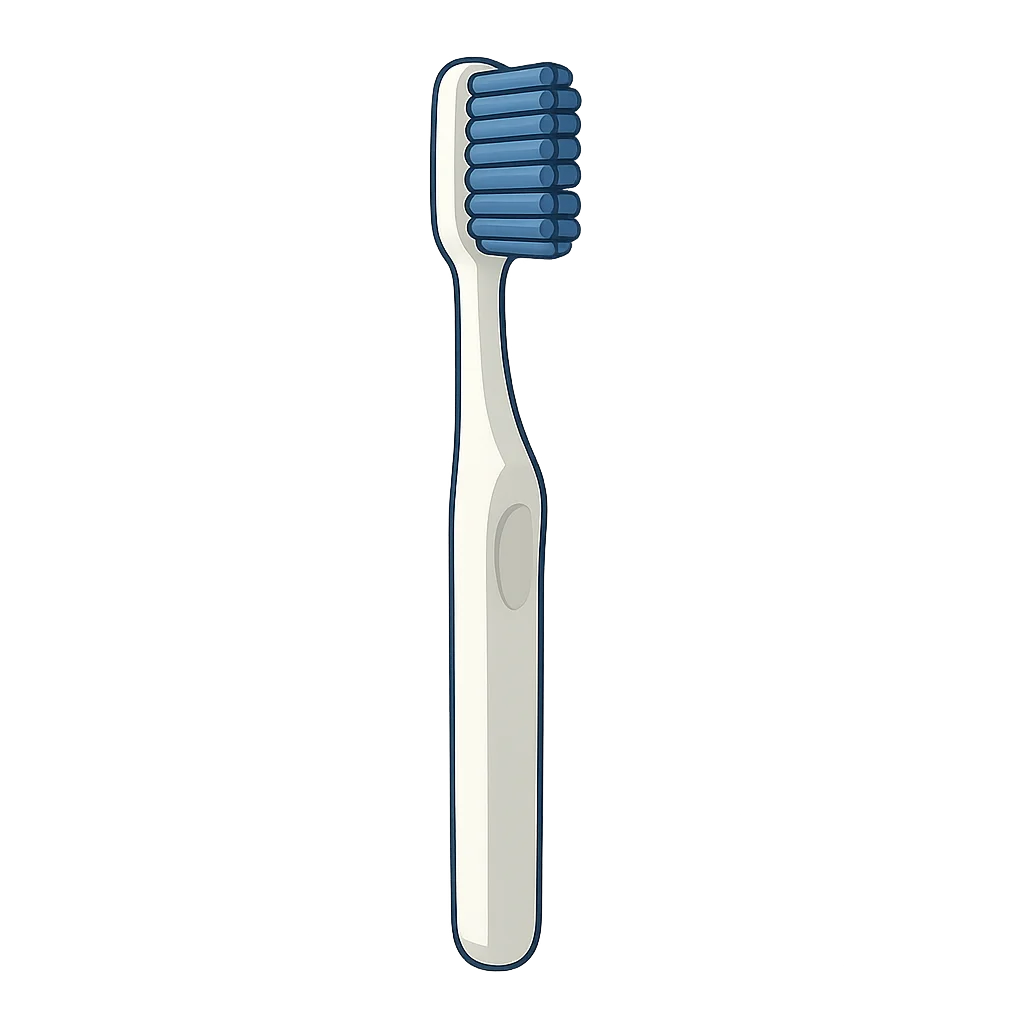
A Brush with History: My Story
Hello there. You probably see me every morning and every night, but I wonder if you’ve ever considered my story. I am the toothbrush, your trusted partner in keeping your smile bright and healthy. My life, however, didn’t begin in a neat package on a store shelf. My story is a long journey through time, starting thousands of years ago in places like ancient Babylonia and Egypt, around 3500 BCE. My earliest ancestors weren’t much to look at. They were called “chew sticks,” and they were exactly what they sound like: small twigs from fragrant trees. People would chew on one end until the wood fibers frayed, creating a soft, brush-like tool to scrub their teeth. It was a simple, clever idea, the very first step on a long road. For centuries, my family remained humble twigs, faithfully serving civilizations across the globe. But a significant change was coming. Around the 15th century, a new version of me appeared in China. This ancestor was a true leap forward. Instead of a frayed stick, I was given a handle crafted from animal bone or sturdy bamboo. Into this handle, my creators painstakingly inserted stiff, coarse hairs from the back of a hog’s neck. I was finally starting to look like the tool you recognize today. I was sturdier and more effective, but I must admit, I was still a bit rough around the edges. Those hog bristles were harsh, and keeping me clean was a challenge. Still, I represented progress, a new chapter in the quest for a clean mouth.
My most defining moment, the one that truly shaped my destiny, began in a rather grim and unlikely place: an English prison cell. The year was 1780, and a man named William Addis found himself with a lot of time to think. He was a clever man, and he was deeply dissatisfied with the common method for cleaning teeth at the time. People would dip a rough cloth in salt or soot and rub it against their teeth. It was messy, unpleasant, and not very effective. William Addis knew there had to be a better way. One day, as he watched a worker sweep the floor with a broom, a revolutionary idea sparked in his mind. The simple action of bristles sweeping away dirt gave him the inspiration he needed. He decided to create a miniature broom for the mouth. His resources were limited, but his determination was not. He managed to save a small animal bone from his dinner. Then, with painstaking effort, he drilled tiny holes into it. The next challenge was finding bristles. He persuaded a friendly guard to give him some coarse hairs, which he carefully tied into small tufts, pushed into the holes, and sealed with glue. There, in the dim light of his cell, he held the first mass-producible version of me. When William Addis was finally released from prison, he didn't forget his invention. He founded a company in 1780 to manufacture me, and soon, my design began to spread. His family continued the business for generations, and what began as a moment of ingenuity in a dark place grew into an industry that would change daily habits for millions.
For more than a century and a half, I served people faithfully with my bone handle and animal-hair bristles. But my greatest transformation was yet to come. The date was February 24th, 1938, a day that gave me a complete makeover. A chemical company named DuPont had just invented a remarkable new material called nylon, a synthetic fiber that was strong, flexible, and hygienic. I was one of the very first products to feature this wonder material. My new nylon bristles were a monumental improvement. Unlike animal hair, which could hold onto bacteria and soften too quickly, nylon was easy to clean, dried fast, and could be made with different levels of firmness for a more comfortable and effective cleaning. My popularity truly soared during World War II. The U.S. Army required its soldiers to brush their teeth daily as part of their hygiene discipline. Millions of soldiers learned this habit and brought it home with them after the war ended in 1945, making me a permanent fixture in bathrooms across the country and, eventually, the world. Since then, my family has grown to include electric cousins who vibrate and spin, but my fundamental purpose remains unchanged. I am a simple tool born from a long history of innovation, from a frayed twig to a prisoner’s brilliant idea. I stand as proof that even a small object can have a profound impact, helping people everywhere face the world with a healthy, confident smile.
Activities
Take a Quiz
Test what you learned with a fun quiz!
Get creative with colors!
Print a coloring book page of this topic.















 Free for Educators