

 English
 Continue with Google
 Continue with Apple

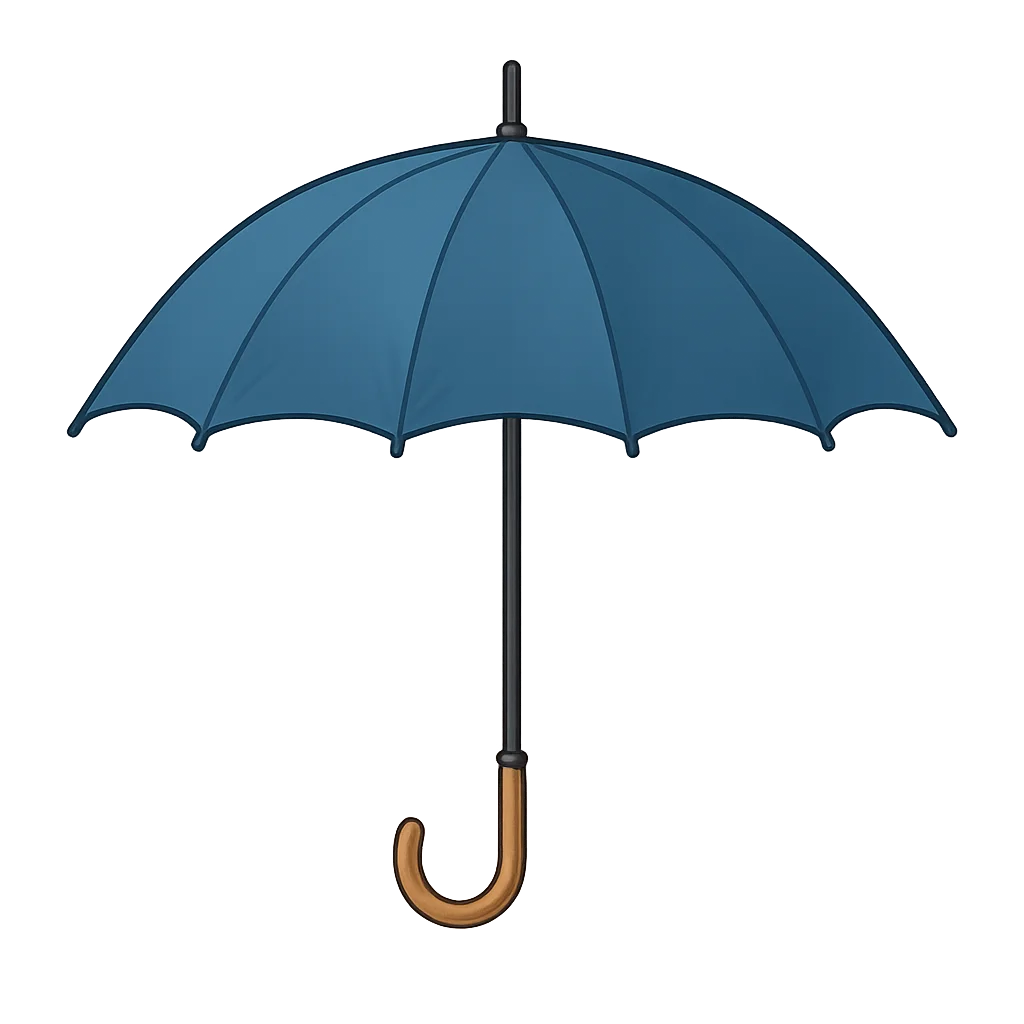
My Life in Sun and Rain: The Story of the Umbrella
I am the Umbrella, but my story did not begin in a storm. For thousands of years, I was a creature of the sun, a symbol of immense power and divine right. Imagine the world thousands of years ago, in places like Ancient Egypt, Assyria, and China. The sun was a powerful force, and to be shaded from it was the ultimate luxury. I was not a simple tool then; I was a magnificent canopy, a personal sky held aloft on a pole. My skin was not nylon, but woven from the finest silks, painted with elaborate designs, and sometimes even stitched with peacock feathers that shimmered like jewels. My handle might be carved from ivory or precious wood, and only the most powerful hands were permitted to hold me, or more often, to have me held over them. I was a constant companion to pharaohs, emperors, and kings, a clear signal to all who saw me that the person beneath my shade was not ordinary. I was a shadow that followed royalty, a testament to their status, whispering of their importance on the warm, dry breezes. I was less an object and more a part of the royal court, a silent, beautiful guardian against the sun’s brilliant gaze.
My journey to Europe was a slow one, and for a long time, my life there was much the same. I was still a delicate thing, a ‘parasol’ used by wealthy women as a fashion accessory to protect their fair skin from the sun. The idea of using me in the rain seemed absurd, even improper. But everything changed in the bustling, often-drizzly city of London around the year 1750. That was when I met a man of extraordinary courage and persistence, Jonas Hanway. He was a traveler and a philanthropist who had seen my kind used in other parts of the world. He saw the perpetually damp cobblestones of London and had a revolutionary idea: why couldn't I be a shield against the rain, too? When he first stepped out with me open against the downpour, he was met with shock and ridicule. People laughed, pointing at this peculiar man carrying a woman’s sunshade in the rain. The hackney-coachmen, who drove the horse-drawn taxis of the day, were furious. They saw me as a threat to their business; if people could stay dry while walking, why would they pay for a carriage? They shouted insults and sometimes even threw rubbish at Jonas. But he was undeterred. For thirty years, until his death in 1786, Jonas Hanway walked the streets of London with me, his faithful companion. Slowly, painstakingly, his simple act of defiance changed minds. People began to see the sense in it, and other men started carrying me. Jonas taught the world that I could be practical, not just pretty, a friend to all in the wet weather.
Even after Jonas Hanway made me popular, I was still a rather clumsy and expensive friend. My skeleton, the ribs that give me my shape, was made of heavy wood or brittle whalebone. I was heavy to carry, and my ribs would often snap in a strong gust of wind, making me unreliable and costly to repair. For many years, only the well-to-do could afford to own me. But my second great transformation came on May 23rd, 1852. A man named Samuel Fox, a steel manufacturer, had a brilliant idea. He realized that the new, thin steel wires used for making women's corsets could be adapted for my frame. He designed a new skeleton for me, made of strong, light, and flexible steel ribs. He called his design the 'Paragon' frame, and it was a masterpiece of engineering. Suddenly, I was no longer a heavy, fragile luxury. My new steel bones made me incredibly durable and much cheaper to produce. I became sleek, strong, and affordable. Thanks to Samuel Fox, my life as an exclusive item was over. I was ready to be a dependable tool for everyone, from a banker in the city to a farmer in the field.
Today, I live a life my ancient ancestors could never have imagined. I can be small enough to disappear into a purse or a backpack, or large enough to shelter a whole family on the beach. I can spring open at the touch of a button, and some of my cousins are even engineered to be windproof, bravely turning themselves inside out and back again without breaking. I come in every color of the rainbow and a thousand different patterns. From a symbol of exclusive power held over a king, I have become a simple, democratic tool of personal comfort. I offer a small, private shelter from the storm, a moment of dryness in a wet world. My story is a reminder that even the most ordinary objects can have an extraordinary history, and that with a little courage and a spark of innovation, a simple idea can unfold to make a big difference in everyone’s daily life.
Reading Comprehension Questions
Click to see answer