

 English

The Guardian in the Glass
You probably don't notice me, but I am one of the most important guardians of your health. I am the Water Filter. I don't wear a cape or have superpowers you can see, but my job is to fight invisible enemies, the tiny germs and impurities that can hide in water. I live in your refrigerator pitcher, inside a hiker's bottle, or in massive buildings that serve your entire city. My appearance has changed dramatically over the centuries, but my purpose has always been the same: to make water clean, safe, and life-giving. My story is not just one of science, but of human curiosity and the relentless quest for a healthier world. It begins long, long ago, with the simplest of ideas and the most brilliant of minds.
My earliest ancestors were humble but clever. Thousands of years ago, ancient Egyptian texts from the 13th century BCE described people siphoning water, hoping the dirt would settle out. They knew, as did people in ancient India, that boiling water or filtering it through charcoal and sand made it taste better and seem purer. They were the first to recognize my potential. My first truly famous form, however, was born in Greece around 400 BCE. A brilliant doctor named Hippocrates, often called the “Father of Medicine,” created a simple device known as the “Hippocratic sleeve.” It was nothing more than a cloth bag through which he poured water. The cloth would catch sediments and other visible impurities, making the water clearer. For centuries, this was the best technology available. People understood that clear water was better than cloudy water, even if they couldn't see the microscopic dangers lurking within. For two thousand years, my family of filters remained simple, based on the principle of straining, a quiet and constant effort to protect humanity from sickness, one drop at a time.
Everything changed for me during the 19th century. The Industrial Revolution had caused cities like London and Glasgow to swell with people, but sanitation couldn't keep up. Rivers became sewers, and deadly diseases like cholera swept through communities, causing widespread panic and sorrow. People blamed “miasma,” or bad air, but the real killer was in the water. My first hero of this era was an engineer named Robert Thom. In 1829, in Paisley, Scotland, he designed the very first municipal water treatment plant. Using a slow sand filter, he delivered clean water to an entire town, a revolutionary achievement. But the world needed more proof. That proof came from my second hero, Dr. John Snow, who acted like a brilliant detective during the terrifying London cholera outbreak of 1854. While others feared the air, Dr. Snow suspected the water. He meticulously mapped every case of cholera in the Soho district and noticed they were all clustered around a single public water source: the Broad Street pump. He presented his evidence and persuaded the local council to take the handle off the pump. Almost immediately, the outbreak subsided. He had found the source. A few years later, in the 1860s, the great scientist Louis Pasteur's germ theory finally explained why I worked. He proved that invisible microorganisms were the true cause of disease, confirming what Dr. Snow’s investigation had shown. At last, the world understood my true importance.
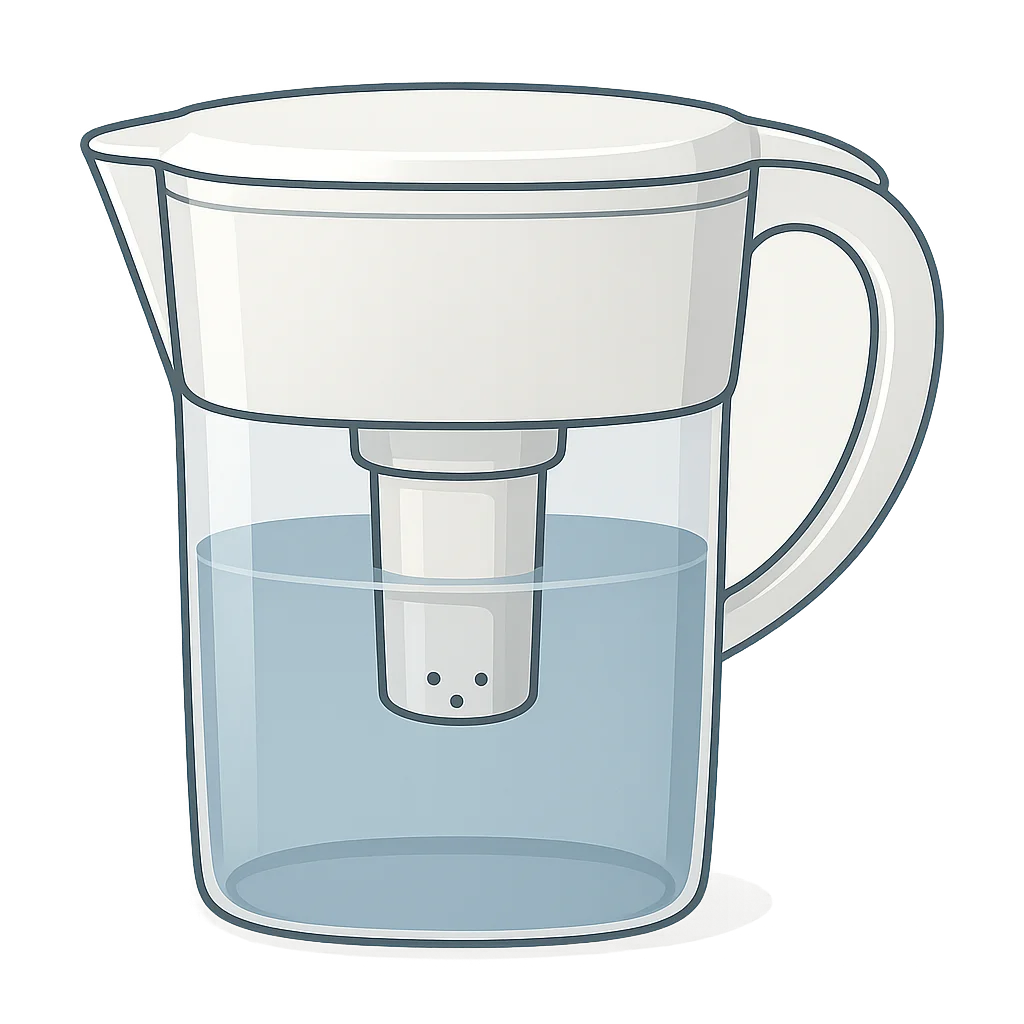
Today, I am more varied and essential than ever. I am the massive, complex system of filtration, coagulation, and disinfection at your city’s water treatment plant, working tirelessly day and night. I am also the sleek carbon filter in your kitchen pitcher, removing chlorine and other impurities to improve the taste of your water. I am the portable, life-saving filter a hiker uses to drink safely from a mountain stream, and the advanced system on the International Space Station that recycles every last drop of moisture into pure drinking water for astronauts. My journey from a simple cloth bag to a high-tech purifier has been a long one, driven by human ingenuity and the fundamental need for health. But my story is not over. My mission continues as scientists and engineers work to bring my life-saving abilities to every corner of the globe, ensuring that everyone has the right to clean, safe water. The story of innovation is still being written, and I am proud to be a part of it.
Activities
Take a Quiz
Test what you learned with a fun quiz!
Get creative with colors!
Print a coloring book page of this topic.
















 Free for Educators