

 English

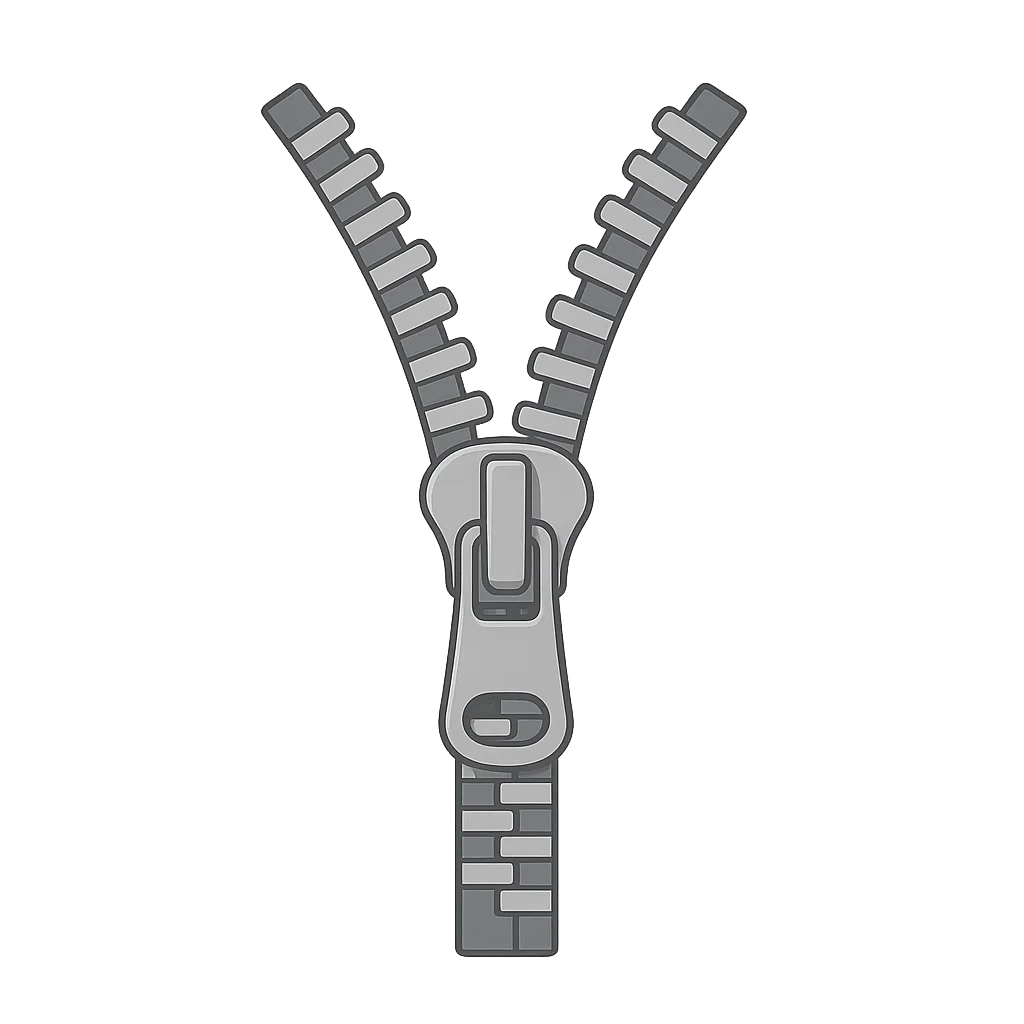
The Story of the Zipper
Before I came along, the world was a much fussier place. Imagine trying to get ready for school or a day of play, but every single piece of clothing required a battle. Tiny buttons that slipped through your fingers, long laces that tangled into impossible knots, and stubborn hooks that refused to catch their eyes. It was a world of slow, painstaking fastening. Getting into a pair of high-top boots could feel like a morning-long project. People needed a way to bring two edges of fabric together quickly, securely, and without all the hassle. They dreamed of something simple, something that could close a gap with a single, satisfying pull. That's the world I was born into—a world desperately waiting for me, the Zipper, to come and bring things together.
My first form was, I must admit, a bit awkward. I was brought into the world on August 29th, 1893, by an inventor from Chicago named Whitcomb L. Judson. He called me the 'Clasp Locker,' and my purpose was to make fastening high-button boots less of a chore. I was a complicated series of hooks and eyes that were pulled together by a sliding guide. That same year, Mr. Judson proudly showed me off at the Chicago World’s Fair, hoping everyone would see my potential. But I was clunky and had a bad habit of popping open at the worst moments. People looked at me with curiosity, but they weren't convinced. I wasn’t a failure, but rather a first draft. It was a humbling start, proving that even the most revolutionary ideas don’t always work perfectly on the first try. I learned early on that patience and improvement were just as important as the initial spark of invention.
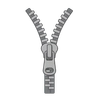
My true potential was unlocked by a brilliant Swedish-American engineer named Gideon Sundback. He worked for a company that was trying to perfect me, and he saw what I could become. Around 1913, he gave me a complete transformation. He was like a skilled surgeon, redesigning my very core. He replaced my clunky hooks and eyes with two rows of small, interlocking teeth, what he called 'scoops'. He increased the number of teeth per inch, making my grip incredibly strong. Most importantly, he invented the slider that we all know today—the little device that glides up and down, seamlessly weaving my two sides into one. He called this new, improved version the 'Hookless Fastener No. 2'. It was a masterpiece of engineering. This wasn't just a minor tweak; it was a reinvention. In 1917, he secured the patent for this design, and I finally felt whole, strong, and ready for whatever the world had in store for me. I was no longer an awkward prototype; I was a reliable and elegant solution.
Even with my new design, I still needed a name that captured my spirit. 'Hookless Fastener' was accurate, but it didn't exactly roll off the tongue. My big break came in the 1920s when the B.F. Goodrich company decided to use me on their new line of rubber galoshes. They saw how quickly and easily I could secure the boots, keeping feet warm and dry. The story goes that one day, an executive was admiring the new boots. He pulled my slider up and down and, delighted by the sound and speed, exclaimed, 'Zip 'er up!'. The sound I made—that quick, crisp zzzzip—gave me my name. It was perfect. Suddenly, I wasn't just a fastener; I was a 'Zipper'. The name was catchy, fun, and perfectly described what I did. I finally had an identity and a job where I truly excelled, sealing boots against the rain and snow with a satisfying zip.
My journey from rubber boots to the runway was swift and exciting. During the 1930s, designers in the fashion capital of Paris, France, began to see me as more than just a practical tool. They saw me as a sleek, modern, and even decorative element. The famous designer Elsa Schiaparelli was one of the first to put me on high-fashion garments, making me a visible and celebrated part of her designs. Soon, I was appearing on the fly of men's trousers, replacing the old, cumbersome button-fly. This was a huge step, making clothing more convenient and streamlined. I zipped up jackets, fastened skirts, and added a modern edge to dresses. I was no longer hidden away; I was a feature. I had officially arrived, changing not just how clothes were made, but how quickly people could live their lives.
Looking back, it's amazing to see how far I've come. From a clumsy clasp for boots to a global superstar of fastening, my journey has been one of constant improvement and adaptation. Today, you can find me almost everywhere you look. I hold your pencils in their cases, secure your belongings in backpacks, and seal tents against the elements. I've even traveled to space on astronauts' suits, proving my reliability in the most extreme environments. My story is a reminder that a simple idea, when nurtured with persistence and ingenuity, can truly connect the world. It shows that even if you don't succeed at first, a little refinement can help you bring everything together with a perfect zip.
Activities
Take a Quiz
Test what you learned with a fun quiz!
Get creative with colors!
Print a coloring book page of this topic.








 Free for Educators