

 English

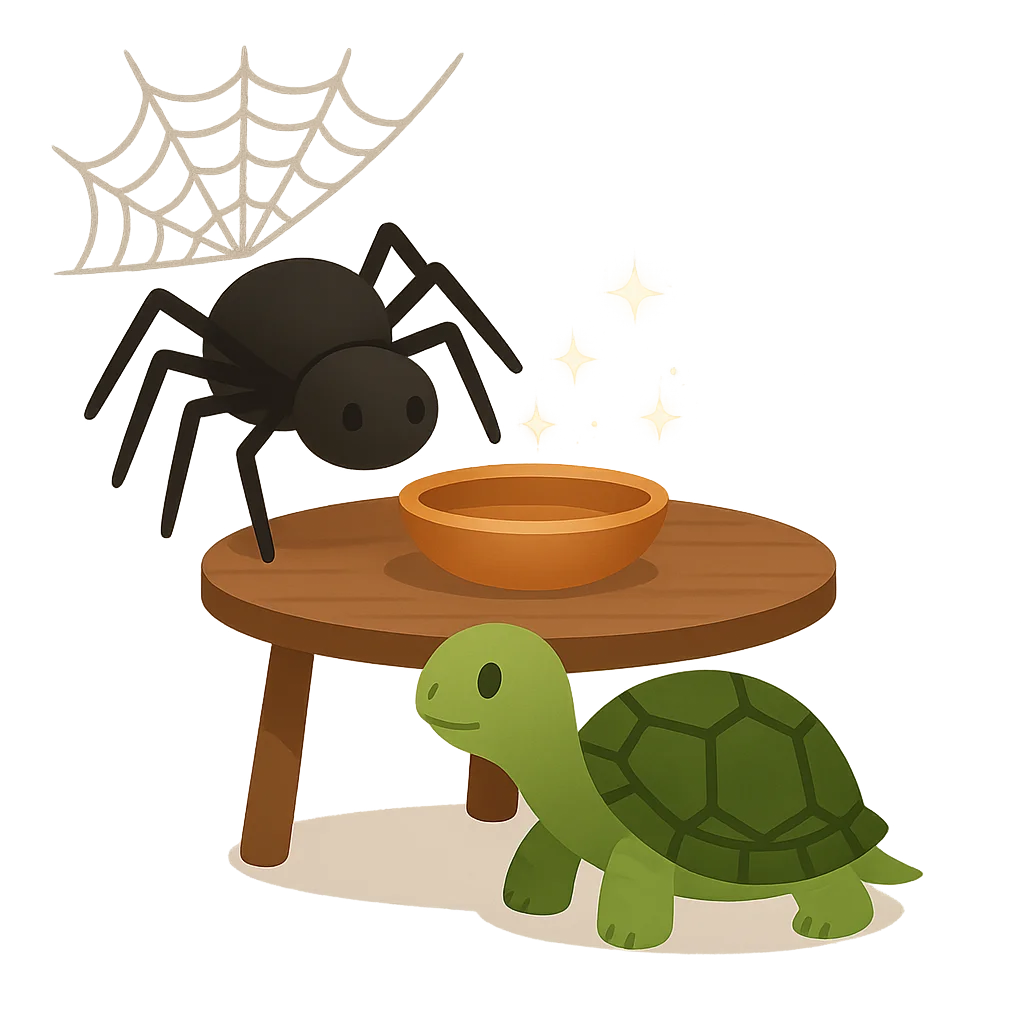
Anansi and the Turtle
My name is Turtle, and I am not what you would call fast. I move through the world slowly and deliberately, which gives me a wonderful amount of time to think. I live near a village where the sweet, earthy scent of yams often drifts on the breeze, and I have a friend who is the complete opposite of slow: Kwaku Anansi, the spider. Anansi is famous for his cleverness, but his cleverness is often a tangled web of mischief and a rumbling, insatiable appetite. Can you imagine having a friend who is always playing tricks? One day, during a time when food was scarce and bellies were empty, he invited me to his home for a meal. I was so excited, but I would soon learn that a dinner invitation from Anansi could be the trickiest trap of all. This is the story of Kwaku Anansi and the Turtle, and it shows how a little bit of patience can be far more powerful than any fleeting trick.
When I finally arrived at Anansi’s house, my stomach was flip-flopping with excitement. A magnificent stew, bubbling with yams and spices, sat in a large bowl on the table. Its aroma was so delicious it practically pulled me inside. “Welcome, my dear friend!” Anansi exclaimed with a grin that stretched across his face. “But my, oh my, your hands are quite dusty from your long, slow journey. You must go to the stream and wash them before we can possibly eat.” He was right, of course. My feet, being so close to the ground, had kicked up a lot of dust. So, I turned around and slowly made my way to the stream, scrubbed my hands until they were sparkling clean, and returned. But the path was dry, and by the time I got back, a fine layer of dust coated my hands once more. Anansi just shook his head and pointed me back to the stream. This happened again and again. Each time I returned, the bowl of stew was a little emptier. Anansi would just shrug and say, “Hurry back, friend! It’s getting cold!” Finally, after my last trip from the stream, I returned to find the bowl completely empty, scraped clean. My stomach was still empty, but my mind was full of a new plan. A few weeks later, on October 5th, I found Anansi. “Anansi,” I said cheerfully, “I’m making a wonderful feast. Please come to my home at the bottom of the river for dinner tonight.” Anansi, who was always hungry, eagerly agreed. When he arrived at the riverbank, he saw the most spectacular feast laid out on the riverbed below. He tried to dive down, but he was too light and just bobbed on the surface like a leaf. “Oh dear,” I called up. “Perhaps you need some weight. Why don’t you fill the pockets of your coat with stones?” Anansi thought this was a brilliant idea. He stuffed his pockets with heavy river stones and sank perfectly to the bottom. But just as he reached for a sweet berry, I cleared my throat. “Anansi, my friend,” I said calmly, “in my home, it is not polite to wear your coat at the table.” Anansi, wanting to show good manners, quickly shrugged off his coat. Whoosh! Without the heavy stones, he shot right back up to the surface, watching with wide eyes as I enjoyed every last bite of my delicious dinner.
Anansi went home that day with a soaking wet coat, a very empty stomach, and hopefully, a valuable lesson. My plan was not to be cruel, but to show him that how you treat others matters more than simply filling your own belly. This story has been shared for countless generations by the Akan people in West Africa. Imagine sitting under the vast, shady branches of a baobab tree, listening to a storyteller, called a griot, spin tales of Anansi's adventures. It’s a story that serves as a powerful reminder that everyone, no matter how small or slow they might seem, possesses their own unique kind of cleverness. The tale of Anansi and his tricks teaches a timeless lesson: greed can make you foolish, but fairness and thoughtful patience will always make you wise. Even now, Anansi's stories are found in books and cartoons all over the world, a testament to how these ancient myths continue to teach us important lessons about friendship, respect, and imagination.
Activities
Take a Quiz
Test what you learned with a fun quiz!
Get creative with colors!
Print a coloring book page of this topic.
















 Free for Educators