

 English

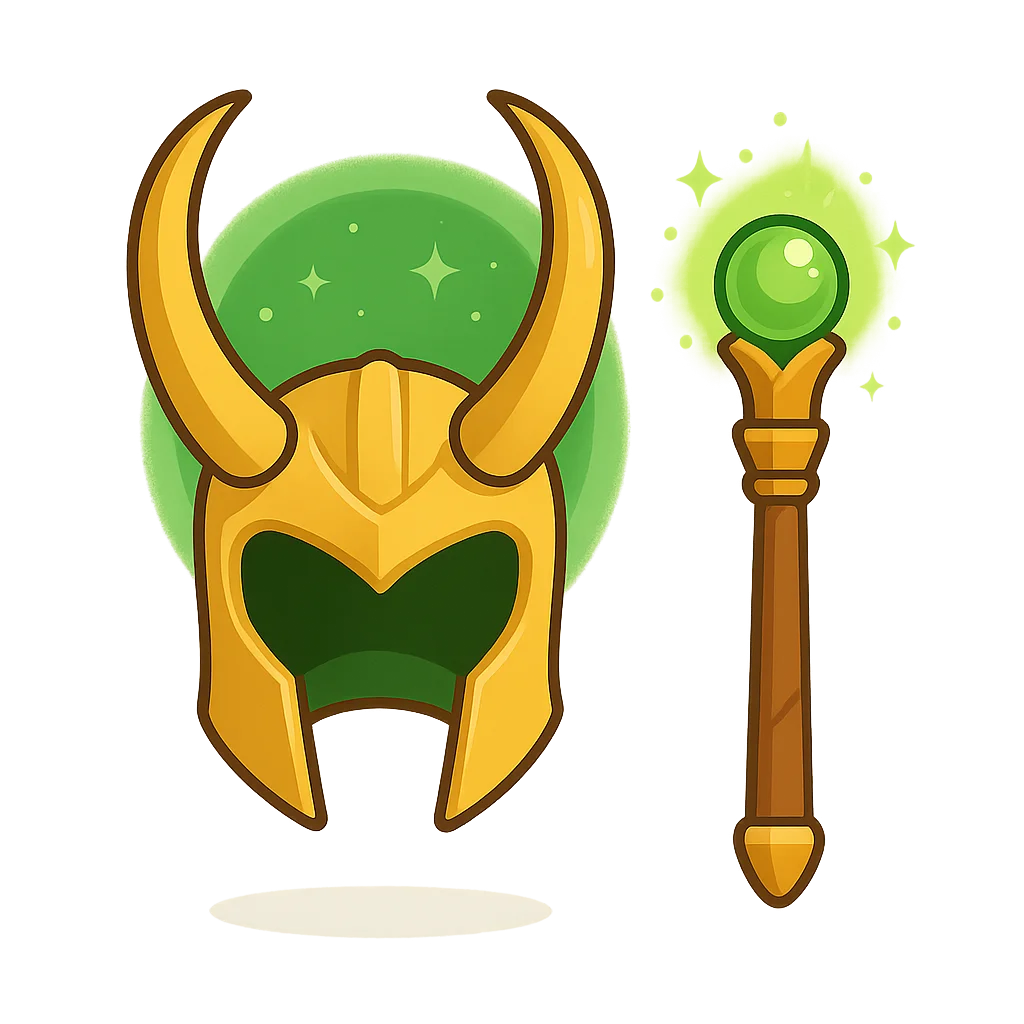
Loki's Wager and the Forging of Mjolnir
You can call me Loki. Some call me the Sky-Traveler, others the Father of Lies, but I prefer to think of myself as the spark that makes things interesting. Here in Asgard, the realm of the gods, everything gleams with gold and predictability. The Bifrost Bridge shimmers, Odin broods on his high throne, and Thor polishes his hammer, Mjolnir—oh, wait, he doesn't have it yet. That's where I come in. Life needs a little chaos to keep it from getting dull, a bit of cleverness to shake up the certainty of fate. I am the god of mischief, after all, and my greatest trick was about to provide the Aesir with their most legendary treasures. This is the story of how a very bad haircut led to the creation of the greatest weapons and wonders our world has ever known, a tale the Norse people would later call 'Loki's Wager and the Forging of Mjolnir.'
The whole affair began on a quiet afternoon. Thor's wife, Sif, was famous for her magnificent golden hair, which flowed like a field of ripe wheat. It was, I admit, a bit too perfect. So, in the dead of night, I crept into her chambers with a pair of shears and snipped it all off. Thor’s roar of fury the next morning could be heard across all Nine Realms. To save my skin, I promised him I would get Sif new hair, even better than the old—hair made of real gold that would actually grow. My journey took me deep beneath the mountains to Svartalfheim, the realm of the dwarves, the greatest smiths in existence. I found the Sons of Ivaldi and, with a bit of flattery, convinced them to craft not only a head of fine golden hair but also two other masterpieces: a ship called Skidbladnir that could fold to fit in a pocket, and a spear named Gungnir that never missed its mark. Feeling quite proud, I boasted that no other dwarves could match their skill. That's when two brothers, Brokkr and Eitri, overheard me. Brokkr, stubborn and proud, declared they could do better. I laughed and wagered my own head that they couldn't. The challenge was set.
Brokkr and Eitri's forge was a cavern of fire and ringing steel. Eitri placed a pig's skin in the fire and told Brokkr to work the bellows without stopping, no matter what. My head was on the line, so I couldn't let them succeed. I transformed into a pesky fly and stung Brokkr's hand. He flinched but kept pumping. Out came Gullinbursti, a boar with bristles of pure gold that could run through air and water. Next, Eitri placed gold in the forge. Again, I buzzed around Brokkr, this time biting his neck, harder. He grunted in pain but never stopped. From the flames, he pulled Draupnir, a golden ring that would create eight more identical rings every ninth night. For the final treasure, Eitri placed a block of iron in the roaring furnace. He warned his brother that this one required perfect, unbroken rhythm. Knowing this was my last chance, I stung Brokkr on the eyelid. Blood streamed into his eye, blinding him. For just a single moment, he let go of the bellows to wipe it away. It was enough. Eitri pulled out a mighty hammer, powerful and perfectly balanced, but its handle was shorter than planned. They called it Mjolnir, the Crusher.
We returned to Asgard to present our treasures to the gods. I gave Odin the spear Gungnir and Freyr the ship Skidbladnir. Sif placed the golden hair upon her head, and it immediately took root and began to grow. Then Brokkr presented his gifts. He gave Odin the ring Draupnir and Freyr the golden boar. Finally, he gave the hammer, Mjolnir, to Thor. He explained that it would never miss its target and would always return to his hand. Despite its short handle, the gods agreed it was the greatest treasure of all, for it would be their primary defense against the giants. I had lost the wager. Brokkr came forward to claim my head, but I am not called a trickster for nothing. 'You may have my head,' I said with a sly grin, 'but you have no claim on my neck. You cannot take one without the other.' The gods agreed I was right. Furious at being outsmarted, Brokkr took an awl and thread and sewed my lips shut so I could no longer boast. It was painful, I assure you, but the silence didn't last forever. And in the end, Asgard was stronger for it.
A Myth Forged in Mischief
For centuries, Viking skalds would tell this story in longhouses during the cold, dark winters. It wasn't just a story about my cleverness, though I do appreciate that part. It explained the origins of the gods' most cherished possessions and taught a valuable lesson: that even from mischief, chaos, and a terrible mistake, great and powerful things can be created. It showed them that cleverness could be just as mighty as brute force. Today, my stories live on. You see me in books, you watch my adventures in movies, and you play as me in video games. I am the flash of inspiration, the unexpected twist in the tale, the reminder that breaking the rules can sometimes lead to the most wonderful inventions. My myth continues to spark imagination, encouraging people to think outside the box and to see that even in the trickiest situations, there is always a clever way out.
Activities
Take a Quiz
Test what you learned with a fun quiz!
Get creative with colors!
Print a coloring book page of this topic.











 Free for Educators