

 English

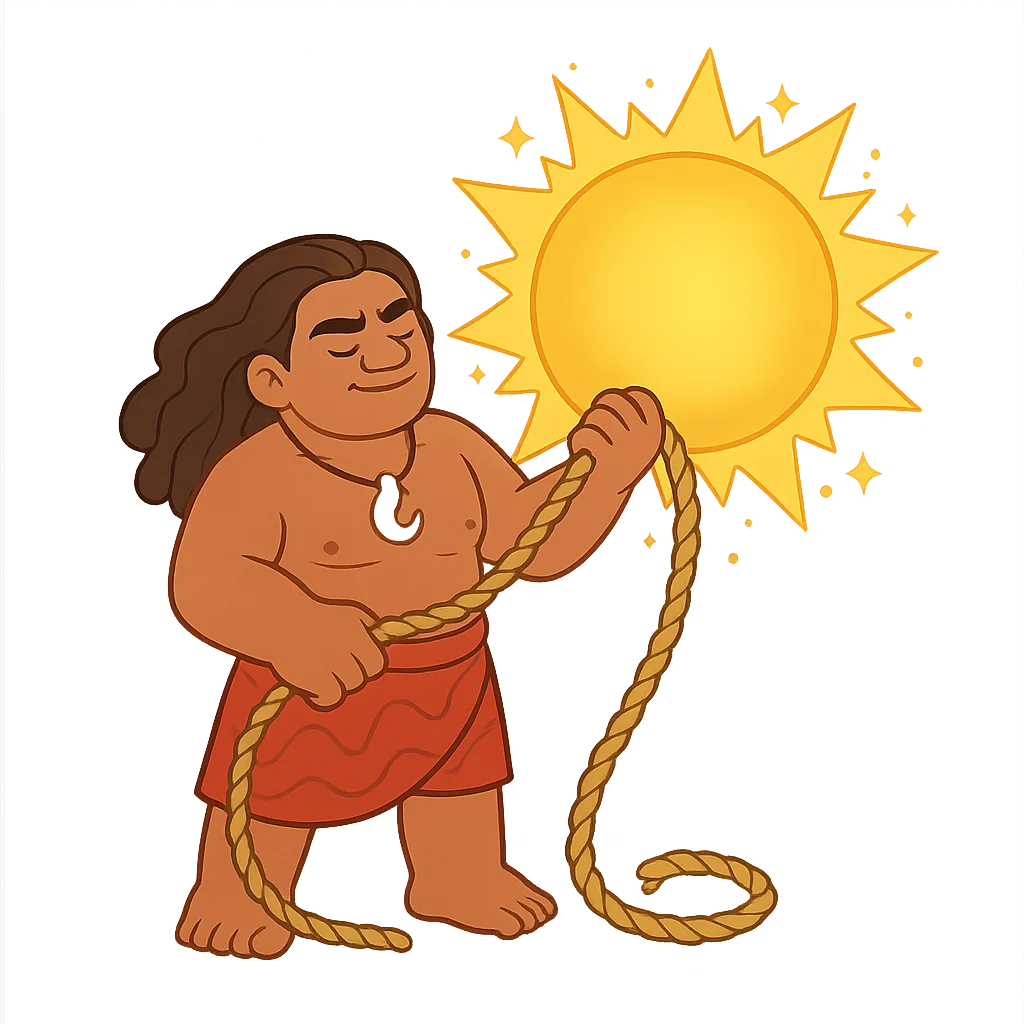
Māui: How I Tamed the Sun
You might have heard of me. My name is Māui, and back in my day, I was known for getting into—and out of—trouble. But this time, the trouble wasn't my fault. It was the sun's. In those days, the world was a frantic, hurried place because the sun, Tama-nui-te-rā, was a sprinter. He would leap from the eastern horizon, race across the sky like a frightened bird, and dive below the western waves before anyone could get a full day's work done. I remember the fishermen returning with empty nets, grumbling that the light failed just as the fish began to bite. I saw our farmers' crops wither, deprived of the warmth they needed to grow strong. Most of all, I heard my own mother, Hina, sigh in frustration that her beautiful kapa cloth never had enough time to dry in the fleeting daylight. A seed of an idea, a bold and audacious one, began to form in my mind. Someone had to stand up to the speedy sun, and I decided that someone would be me. This is the story of how I did it, the myth of Māui and the Sun.
My plan was simple in concept but monumental in execution: I was going to capture the sun. When I gathered my four older brothers and told them, they roared with laughter. 'Catch the sun? Māui, you're a clever trickster, but even you can't lasso a ball of fire!' one of them scoffed. But I wasn't joking. I explained that this wasn't about a prank; it was for our people, for our mother, for the very rhythm of the world. My conviction eventually swayed them, and they agreed to help. The next step was creating a trap worthy of a star. We couldn't use ordinary ropes; they would turn to ash in an instant. So, I gathered the strongest, most magical materials I could find. We collected resilient coconut fibers and tough flax from the marshes. For the final, crucial ingredient, I went to my sister, Hina-of-the-night. I asked for strands of her sacred hair, which shimmered with an inner, otherworldly strength. For many long nights, my brothers and I sat braiding these elements together, chanting powerful spells into every knot to make the ropes unbreakable. Once our great snare was complete, we began our long and arduous journey. We traveled to the very edge of the world, climbing the great volcano Haleakalā, a name that means 'The House of the Sun.' The wind was sharp and cold, the volcanic rock tore at our feet, but our determination was a fire within us. We finally reached the enormous crater where the sun slept before beginning its daily race, and there we prepared our trap.
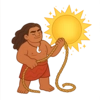
As the world lay in pre-dawn darkness, the air was thick with tension. My brothers and I hid behind great stone walls we had built along the crater's rim, clutching our mighty ropes. Our hearts pounded like drums against our ribs. Then, we saw it. The first rays of light pierced the darkness, not as a gentle orb, but as a magnificent, terrifying being. The sun began to climb over the edge of the crater on long, fiery legs, one by one. I held my breath, waiting for the perfect moment. 'Wait,' I whispered to my brothers. 'We wait until all its legs are over the crater's edge.' The heat was already becoming intense, but we held our ground. Once the sun was fully inside the crater, I gave the signal with a shout that shook the mountain itself. We leaped from our hiding places, and the whir of our enchanted ropes filled the air as we cast our net. The snare landed perfectly, trapping the sun's fiery legs. Its fury was immediate and terrifying. It roared and thrashed, filling the crater with a blinding light and a scorching heat that buckled the very rock around us. My brothers strained to hold the ropes, their feet digging into the earth. Armed with my grandfather's enchanted jawbone club, I strode forward to face the captured star. I didn't just attack; I negotiated. 'You are powerful, Tama-nui-te-rā,' I called out, 'but you are also selfish! Our world needs more of your light.' I struck a bargain with the sun: for half the year, it would have to travel slowly across the sky, giving us long, warm days. For the other half, it could travel more quickly. Defeated, and perhaps a little impressed by our courage, the sun finally agreed to the terms.
We released the ropes, and for the first time in history, the sun began a slow, steady, and gentle journey across the sky. My brothers and I watched in triumph as the day stretched on, long and golden. When we returned to our village, the joy was overwhelming. The fishermen had time to fill their nets, the farmers' crops soaked in the generous light, and my mother Hina's kapa cloth dried bone-white under the warm, reliable gaze of the new sun. My act established the rhythm of the seasons, creating the long, lazy days of summer and the shorter, brisker days of winter. This is why my story has been passed down for generations across the Pacific islands, told through chants, songs, and the movements of the hula. It is not just a story about slowing down the sun; it is a timeless reminder that even the most daunting, impossible challenges can be overcome with cleverness, courage, and a deep desire to help others. So next time you enjoy a long, sunny summer afternoon, think of me. My story lives on, not just in the sky above, but in the art, the culture, and the spirit of anyone who dares to dream up a bold plan to make the world a better place.
Activities
Take a Quiz
Test what you learned with a fun quiz!
Get creative with colors!
Print a coloring book page of this topic.











 Free for Educators