

 English

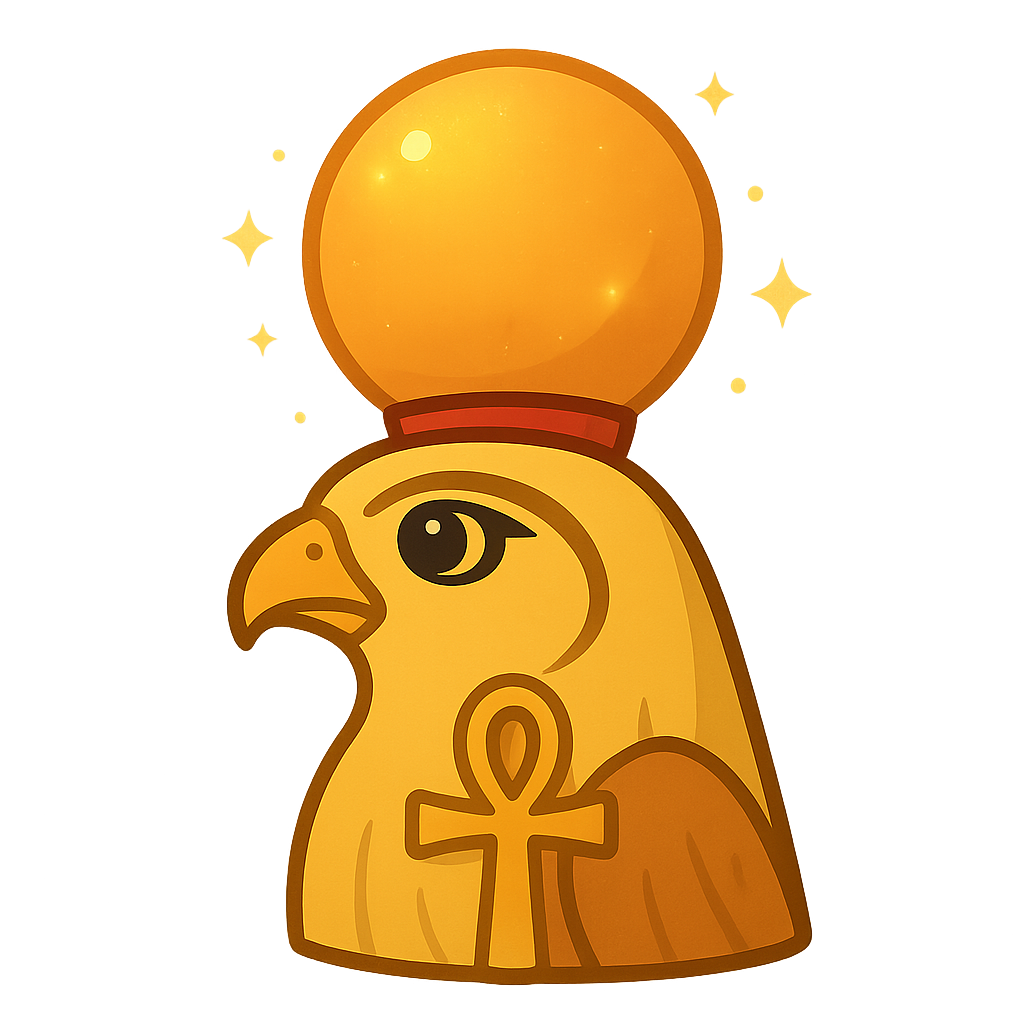
The Eternal Journey of Ra
I am Ra, and this is my domain. From the deck of my golden barge, the Mandjet, the universe unfolds beneath me. The world is a slumbering jewel, cradled in the deep velvet of night. Below, the land of Egypt lies still, its great river, the Nile, a ribbon of obsidian reflecting the last stubborn stars. I can smell the cool, damp earth and the sweet scent of lotus flowers closing against the dark. It is in this profound silence, just before the world stirs, that my work begins. I am the artist of the dawn, the one who first painted light upon the canvas of creation. Before me, there was only the endless, watery chaos of Nun. I brought forth myself, and with my light, I gave birth to the world, the gods, and humanity. The colossal pyramids, their limestone peaks gleaming even in the faint pre-dawn light, seem to reach for me, monuments of stone built by those who call me father. Their temples are aligned to catch my first rays, their prayers rising to me on the morning air like fragrant incense. The people of the Nile Valley, from the mightiest pharaoh to the humblest farmer, place their faith in my return. They trust that I will chase away the shadows, warm the soil for their crops, and bring life-giving energy to their world. Their faith is a heavy, yet precious, burden. What they do not comprehend, however, is the perilous journey I must undertake each night to ensure that dawn arrives. They see my glorious ascent, but they are blind to the harrowing descent that precedes it. This is the story of my eternal journey, a tale of light's ceaseless battle against the encroaching darkness, a myth known for all time as the Eternal Journey of Ra. My daily voyage is more than a simple trip across the sky; it is a cosmic war fought to maintain the very balance of existence.
As the first ray of my light touches the eastern horizon, I begin my magnificent sail across the vast, cerulean expanse of the sky. In my falcon-headed form, with the sun disc blazing above me like a crown, I watch over my creation. The world below awakens to my warmth. I see the farmers guiding their plows through the fertile black soil, their chants of gratitude reaching my ears. Children, their laughter like tiny bells, splash in the shallow waters of the Nile, while merchants lay out their wares in bustling marketplaces. In his grand palace, the pharaoh, my descendant on Earth, dispenses justice and maintains Ma'at, the sacred order of the universe. My journey is steady and predictable, a comforting rhythm that gives structure to the lives of mortals. I am the great clock of the heavens. But as my golden Mandjet barge nears the western edge of the world, the sky bleeds into breathtaking shades of orange, crimson, and violet. This beautiful spectacle marks the end of my peaceful voyage and the beginning of my true test. My duty to the living is done for the day; now, my duty to the dead begins. I leave my day barge and step aboard the Mesektet, the Night Barge. As I do, my form shifts. The head of the falcon gives way to the head of a ram, a form I take to navigate the treacherous realm of the Duat—the underworld. The Duat is not a place of punishment, but a shadowy, mysterious world of trials and transformations. It is divided into twelve regions, representing the twelve hours of the night. Each hour is a gate, guarded by serpents with terrifying names and gods with knives of flint. My passage through these gates is essential, for I bring a spark of my light and a moment of life to the souls of the righteous dead, allowing them to exist until my return the following night. However, this journey is fraught with unimaginable peril. My greatest adversary, the very embodiment of chaos, lurks in the deepest, darkest waters of the Duat. His name is Apep, the great serpent of Isfet. He is a colossal beast of pure darkness, his coils vast enough to encircle the world, his roar the sound of earthquakes. Apep’s sole desire is to devour me and my light, to swallow the sun and plunge all of creation into an eternal, lifeless night. Every single night, he attacks. His monstrous form rises from the depths, and the battle for existence begins. I am not alone in this fight. On the prow of my barge stand my divine protectors. The powerful god Set, with his immense strength, wields a celestial spear, striking at the serpent with thunderous force. Other gods and goddesses use their magic and might to repel Apep’s minions and cut through his suffocating darkness. This epic struggle is the hidden reason the sun must set. It is my descent into darkness to confront the chaos that forever threatens to unravel the beautiful, orderly world I have so carefully crafted.
The battle with Apep rages through the darkest hours, a cataclysmic clash of light and shadow. Set’s spear flashes like lightning, and the spells of my protectors form a shield of divine energy around the Mesektet. With a final, unified surge of power, we strike a decisive blow. Apep, wounded and defeated for now, lets out a final, earth-shaking hiss and sinks back into the abyssal waters of the Duat, his chaos subdued until the next night. My path through the final gates is now clear. Having passed through all twelve hours and revitalized the spirits of the underworld, I prepare for my glorious rebirth. At the very edge of the eastern horizon, where the Duat meets the world of the living, I undergo my final transformation of the night. I become Khepri, the sacred scarab beetle, the ultimate symbol of renewal and creation. In this humble yet powerful form, I take hold of the sun disc itself. Just as a scarab rolls a ball of dung across the sand, I begin to roll the sun up and over the horizon’s edge. Slowly, then with growing strength, the light returns. The world awakens, completely unaware of the cosmic war that was just fought on its behalf. This daily cycle of death and rebirth was the cornerstone of belief for the ancient Egyptians. It was the ultimate visual representation of Ma'at—cosmic order, balance, and truth—triumphing over the forces of Isfet, or chaos. My journey gave them hope for their own afterlife, a belief that they too could be reborn after passing through the trials of the Duat. My story is not just painted on the walls of ancient tombs; it is etched into the very soul of their civilization. So when you see the sun rise, remember my journey. It's a timeless myth about resilience, about having the courage to face the darkness within and without, and about the unwavering promise that after every night, no matter how long or difficult, a new day will always dawn. It is a reminder that even when things seem their darkest, light and hope are already on their way, being pushed over the horizon.
Activities
Take a Quiz
Test what you learned with a fun quiz!
Get creative with colors!
Print a coloring book page of this topic.













 Free for Educators