

 English

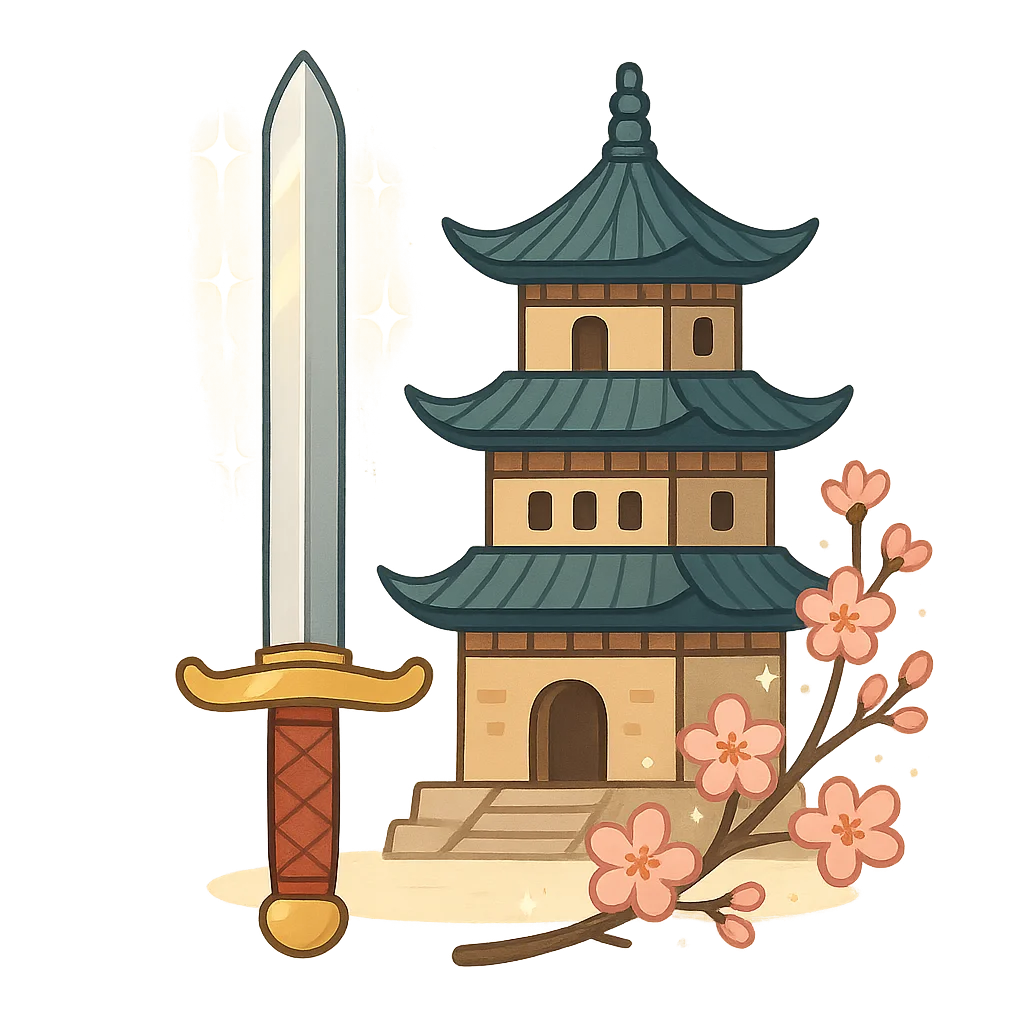
The Legend of Mulan
My name is Mulan, and long ago, the sound that filled my days was the gentle clack-clack of my loom, weaving threads into patterns under the quiet sky of our village. I loved my family more than anything—my wise father, my caring mother, and my little brother, who was still too young to understand the worries of the world. But one day, a different sound shattered our peace: the sharp clip-clop of the Emperor’s horses carrying a conscription scroll. My heart sank as I heard the decree; one man from every family must join the army to fight the invaders from the north. I saw the fear in my mother's eyes and the way my father, a respected but aging warrior, tried to stand tall despite his frail health. My brother was just a child. That night, as I sat in the moonlight, a decision took root in my heart, as fierce and unstoppable as a river. This is the story of how that decision changed everything, a tale that would one day be known as The Legend of Mulan.
Before the rooster crowed the next morning, I made my choice. With a heavy heart and steady hands, I took my father’s sword from the wall. I cut my long, black hair, a symbol of my girlhood, and traded my silk robes for my father's old, cold armor. It felt heavy on my shoulders, not just with its weight, but with the weight of the secret I now carried. I bought a strong horse from the market and rode out of my sleeping village, not daring to look back, the tears freezing on my cheeks in the chilly dawn air. The journey to the army camp at the Yellow River was long and filled with doubt. Could I do this? Could I truly pass as a man, as a soldier? When I arrived, I was surrounded by hundreds of other young men, all full of nervous energy and bravado. I learned to lower my voice, to walk with a soldier’s stride, and to keep to myself. Training was grueling. We practiced archery until my arms ached, sparred with swords until my knuckles were raw, and marched for miles under a relentless sun. But with every challenge, my resolve hardened. I was no longer just Mulan, the weaver's daughter; I was Hua Jun, a soldier fighting for my family and my home.
The battlefield was my home for twelve long years. The seasons changed, marked not by festivals but by campaigns and skirmishes. I saw the harshness of war, the sorrow of loss, but also the unbreakable bonds of comradeship. Through strategy and courage, I rose through the ranks. My fellow soldiers, who knew me only as Jun, came to respect my judgment and my skill in battle. Eventually, I was promoted to the rank of general. I led my troops across a hundred battles, and my name became a symbol of hope for the Emperor's army. Finally, the war ended. We had driven back the invaders and secured peace for our land. We returned to the capital in triumph, and the Emperor himself summoned me. He was impressed by my service and offered me the highest honors—a prestigious position in his court and a chest full of gold. But my heart yearned for only one thing. I bowed deeply and said, 'I have no need for titles or riches. My only wish is for a swift horse to carry me home to my family.' The Emperor granted my request. My comrades rode with me part of the way, and when I finally told them the truth—that their trusted general was a woman—they were stunned into silence, then filled with awe and admiration. When I arrived at my village, my family rushed out to greet me, their tears of joy washing away the years of worry. I took off the heavy armor and put on my old dress, and in that moment, I was simply Mulan again.
My story did not end when I returned home. The soldiers I fought alongside spread the tale of the woman who became a general. It was first sung as a poem, the 'Ballad of Mulan,' shared in homes and teahouses across China. It was a story that showed that courage, loyalty, and love for one's family are virtues that belong to everyone, not just men. It challenged the idea of what a daughter could be and what a hero looked like. Through the centuries, my legend has been told and retold in poems, plays, operas, and films. It has inspired countless people to be brave in the face of their own challenges and to follow their hearts, even when the path is difficult. The tale of Mulan reminds us that true strength isn't about the armor you wear on the outside, but the fire you carry within. It’s a story that continues to weave its way through time, connecting us to a past filled with courage and inspiring us to imagine a future where anyone can be a hero.
Activities
Take a Quiz
Test what you learned with a fun quiz!
Get creative with colors!
Print a coloring book page of this topic.













 Free for Educators