
 English

The Ugly Duckling
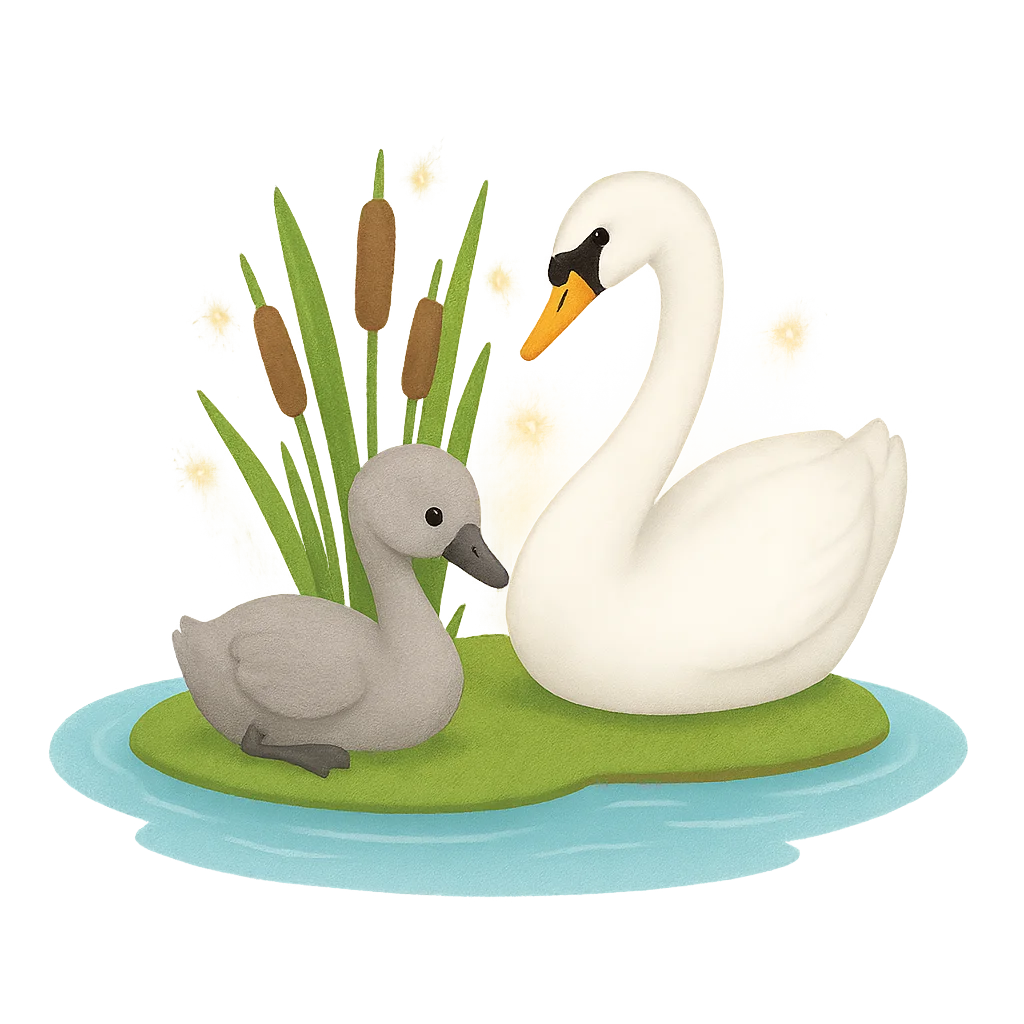
My feathers catch the sunlight now, shimmering like pearls as I glide across the cool, clear water of the lake. The reeds rustle a gentle song, and the cygnets, my own children, follow in my wake. My name is not important, for it is a name I gave myself, one of peace and belonging. But I wasn't always this creature of grace. My story begins in a noisy, dusty farmyard a long time ago, a place that smelled of hay and harsh lessons. It's a journey I hesitate to revisit, but its telling has helped others, so I will share it once more. It is the story of a lonely bird who everyone called 'The Ugly Duckling'.
From the moment I broke free of my too-large, grayish egg, I was an outsider. My feathers were a clumsy gray, my neck too long, and my honk a clumsy squawk next to the cheerful peeps of my yellow-feathered siblings. My mother, bless her, tried to protect me, but the farmyard was a cruel court. The other ducks nipped at my heels, the hens clucked in disdain, and the proud turkey-cock puffed himself up and gobbled insults whenever I passed. I spent my days hiding, feeling the ache of loneliness settle deep in my bones. One day, the hurt became too heavy to carry, and under the cover of dusk, I fled into the wide, wild marsh. There, I met wild geese who were kinder, but their freedom was cut short by the terrifying bang of a hunter's gun. Fleeing again, I found shelter in a tiny cottage with an old woman, a self-important cat, and a hen who only valued laying eggs. They couldn't understand why I yearned for the water, for the feeling of gliding under the vast sky. They insisted I learn to purr or lay eggs to be useful. Knowing I could do neither, I left once more, choosing the lonely wilderness over a home where I didn't fit. The winter that followed was the longest of my life. The wind cut through my thin feathers, the water turned to ice, and I nearly froze, trapped and alone. I felt my hope flicker and die, believing I was truly as worthless as everyone had said.
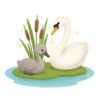
But winter, however harsh, must always give way to spring. As the sun warmed the earth and the ice melted into shimmering water, I felt a new strength in my wings. One morning, I saw three magnificent white birds descend upon the lake. Their necks were long and elegant, their feathers pure as snow. I had never seen such beauty. A strange feeling surged through me—a deep, undeniable pull to be near them. I swam towards them, my heart pounding with fear. I expected them to mock me, to chase me away as all the others had. I bowed my head toward the water, ready for the final rejection. But in the still surface, I saw a reflection that was not the clumsy, gray bird I remembered. Looking back at me was another swan, slender and graceful. The other swans circled me, welcoming me with gentle strokes of their beaks. At that moment, children playing by the shore pointed and shouted, 'Look! A new one! And he is the most beautiful of all!' A joy I had never known filled my chest. I wasn't a duck, a goose, or a failed hen. I was a swan. I had found my family, and in doing so, I had found myself.
A story of my hardship and transformation was eventually written down on November 11th, 1843, by a thoughtful Danish man named Hans Christian Andersen, who understood what it felt like to be different. He saw that my journey was more than just a tale about a bird; it was a story about the pain of not belonging and the quiet strength it takes to endure. It teaches that our true worth isn't determined by the opinions of others, but by the beauty that grows within us. Today, my story continues to inspire people all over the world. It lives on in ballets, films, and books, reminding everyone who feels like an outsider that their journey is not over. It is a promise that even the longest, coldest winter eventually leads to a spring where you can finally spread your wings and show the world who you were always meant to be.
Activities
Take a Quiz
Test what you learned with a fun quiz!
Get creative with colors!
Print a coloring book page of this topic.



 Free for Educators