

 English

A Story from the Golden Sands
Imagine a land where the sun feels like a warm, golden blanket on your skin. All around you is sand, stretching out like a wavy, yellow ocean. But slicing right through the middle of this desert is a shimmering ribbon of blue and green water, a long, winding river that brings life wherever it flows. For thousands of years, my people have watched this river. They learned its rhythm, knowing when it would gently flood its banks to leave behind rich, dark soil perfect for growing food. Their entire world was built around this gift of water in a dry land. They planted seeds, built homes from mud bricks, and created a great community. I am Ancient Egypt, a kingdom that bloomed from the desert dust, all thanks to the magic of the Nile River.
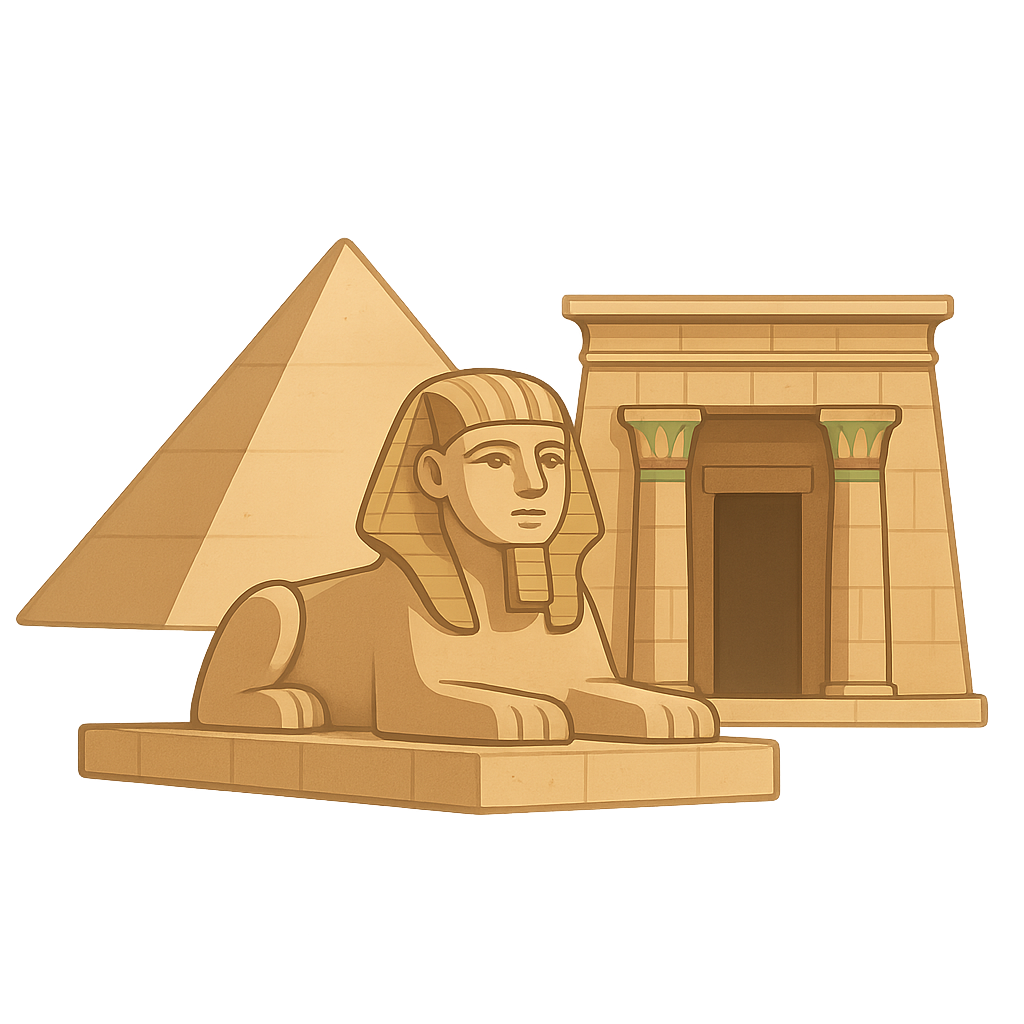
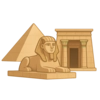
My people believed that life was a journey, and that the journey didn't end when you closed your eyes for the last time. They believed in an afterlife, a beautiful place where your spirit could live forever. To prepare for this eternal adventure, my greatest kings, the pharaohs, built magnificent stone houses for their spirits to rest in. You know them as the pyramids. Imagine thousands of skilled workers, quarrying giant blocks of stone and pulling them across the sand. They worked together under the hot sun, year after year, with incredible skill and determination. The largest of all was built for a pharaoh named Khufu around 2560 B.C. It was a mountain made by human hands. To guard these special tombs, my people carved a huge statue with the body of a lion and the head of a human. This mysterious guardian is the Sphinx, and it has watched over my sands for centuries. On the walls of their temples and tombs, they carved beautiful picture-writing called hieroglyphs, ensuring their stories of gods, kings, and daily life would last for eternity.
Life along the Nile was full of important jobs and powerful leaders. My rulers were called pharaohs, and they were seen as both kings and gods. Some were brave generals, while others were brilliant builders. There was even a powerful queen named Hatshepsut who ruled as pharaoh for over twenty years, bringing peace and building incredible temples. Centuries later, a young boy named Tutankhamun became the most famous pharaoh of all, not for what he did in his short life, but for the treasures he left behind. Beyond the pharaohs, everyone had a role. Farmers carefully watched the sky and the river, using a 365-day calendar they invented to know exactly when to plant their crops. Scribes were highly respected because they were the few who could read and write the complicated hieroglyphs. They spent their days recording laws, history, and letters on a special kind of paper called papyrus, which they cleverly made from reeds that grew by the river.
For a long, long time, many of my secrets lay sleeping under the sand. Tombs were hidden, and the stories written on temple walls were forgotten. But my story was not over. People from all over the world came to explore my ruins, hoping to rediscover my past. On November 4th, 1922, an archaeologist named Howard Carter made the most amazing discovery of all. After years of searching, he found the hidden, untouched tomb of the boy-king, Tutankhamun. The world was dazzled by the golden masks, sparkling jewels, and everyday objects that had been sealed away for over three thousand years. Because of discoveries like this, my story is now shared in museums all over the globe. I am no longer just a kingdom of sand and stone. I am a story of creativity, teamwork, and the dream of living forever. I hope my tale inspires you to build wonderful things and share your own story with the world.
Activities
Take a Quiz
Test what you learned with a fun quiz!
Get creative with colors!
Print a coloring book page of this topic.












 Free for Educators