

 English

The Whispers of Ancient Greece
Feel the warm sun on stones that have seen thousands of years pass. Breathe in the scent of olive groves and the salty air carried on a Mediterranean breeze. Look out at the brilliant blue water dotted with rocky islands, each holding a secret. Listen closely, and you can hear the whispers of old stories, of grand ideas and epic adventures, of questions that changed the world. These whispers are my memories, because I am the land where Western civilization was born. I am Ancient Greece.
I was not one single kingdom but a family of proud and different children called city-states, or poleis. Two of my most famous children were as different as day and night. There was Athens, my curious artist and thinker. She was always asking questions, debating in the marketplace, and creating beautiful art and buildings. She loved knowledge and believed that all citizens should have a voice. Then there was Sparta, my disciplined warrior. He was strong, brave, and believed in duty and order above all else. His people were trained from childhood to be the toughest soldiers in the world. This diversity made me a fascinating place, full of clashing ideas and vibrant energy. It was in my curious city of Athens, around the 5th century BCE, that a revolutionary idea was born: democracy. For the first time, citizens could gather to make decisions for their city, a concept so powerful it would echo for thousands of years.
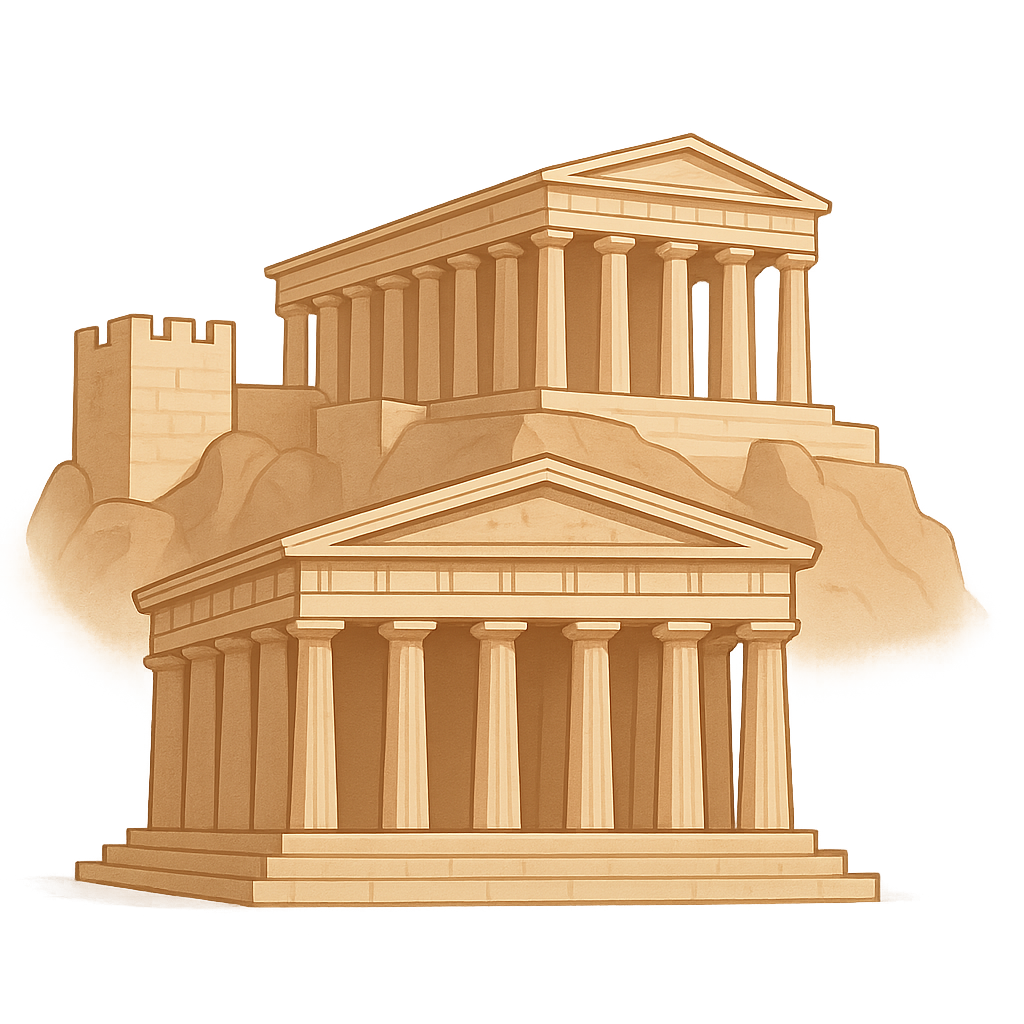
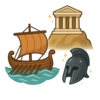
My heart truly soared during what people now call my Classical Period, a Golden Age of wonder. My streets were filled with brilliant thinkers called philosophers. Men like Socrates would walk through the bustling marketplace, the agora, asking questions that made everyone think deeply about life, justice, and truth. His student, Plato, and Plato’s student, Aristotle, wrote down these ideas, creating the very foundations of Western philosophy. During this time, my people’s creativity blossomed. They built magnificent temples to honor their gods, like the Parthenon that still stands on a hill above Athens, a perfect tribute to the goddess Athena. They also invented theater, gathering in stone amphitheaters to watch tragedies that explored powerful emotions and comedies that made them laugh. And to honor Zeus, they created a festival of peace and competition. The first Olympic Games began on the 1st of July, 776 BCE, where my city-states would set aside their rivalries to celebrate human strength and spirit.
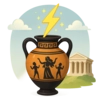
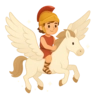
My people’s imagination was as vast as the sea. They wove incredible tales of gods, goddesses, and heroes to explain the world around them. They believed that powerful gods, led by the mighty Zeus, lived atop Mount Olympus, watching over and meddling in the lives of mortals. Athena, the goddess of wisdom and warfare, was the special protector of her namesake city, Athens. These stories were not just entertainment; they were lessons. A blind poet named Homer gathered the greatest of these tales into two epic poems, the Iliad and the Odyssey. These stories of the Trojan War and the long journey home of the hero Odysseus taught my people about courage in the face of fear, the importance of cleverness, and the complex journey of what it means to be human. These myths became the bedrock of my culture, shaping art, literature, and how my people saw their place in the universe.
My life was not always peaceful. My own children, the city-states, often fought one another in devastating wars. But even in conflict, my ideas endured. After a time of struggle, a brilliant young king from the north, Alexander the Great, came to power. He had been taught by my own philosopher, Aristotle, and he deeply admired my culture, my art, and my way of thinking. As he built one of the largest empires the world had ever seen, stretching from my shores all the way to India, he carried my spirit with him. He founded new cities designed like my own and spread my language and knowledge across the known world. This began a new era called the Hellenistic period, a time when my ideas blended with the cultures of the East, creating something new and exciting. My voice was no longer confined to my rocky shores; it was speaking to the whole world.
Though my ancient cities have crumbled, my voice has never faded. It echoes in your world every day. The idea of democracy, born in Athens, is the model for many of your governments. The questions my philosophers asked are still debated in your schools and universities. My language forms the roots of countless words in science and medicine. The balanced and beautiful columns of my temples inspire the design of important buildings in your own cities. But my greatest legacy is not stone or words; it is a way of being. It is the spirit of relentless curiosity, the courage to ask 'why?', and the belief that human beings can achieve greatness through reason and creativity. That spirit lives on in every scientist who makes a discovery, every artist who creates something beautiful, and every person who dreams of building a better, fairer world.
Activities
Take a Quiz
Test what you learned with a fun quiz!
Get creative with colors!
Print a coloring book page of this topic.








 Free for Educators