

 English

The River of Life
It begins with a feeling, a single, shivering moment of freedom. High in the majestic Himalayas, where the peaks touch the sky and the air is thin and pure, a single drop of water breaks free from the ancient ice of the Gangotri Glacier. I am that drop. I am born from silence and stone, cold and clear, a tiny jewel reflecting the vast, blue sky. I feel the sun’s warmth for the first time, and I begin to move. I join with other drops, a thousand, then a million more, all whispering secrets of the ice. We become a trickle, a playful thread of silver weaving through the gray rock. We tumble and turn, laughing over pebbles and leaping down small ledges. Our journey has just begun, but already I feel a great purpose pulling me forward, down from the roof of the world. With every new stream that joins us, our song grows louder, our energy stronger. We are leaving the quiet solitude of the mountains and rushing toward the world of people, carrying the purity of the glaciers with us.
As I descend onto the great plains, my voice becomes a roar, my body a powerful, flowing current. I am the Ganges, but to the millions who know and love me, who live by my side and look to me for life, I am Mother Ganga. My story is as old as the stars. It is said that I once flowed only in the heavens, a celestial river of light. But on Earth, a noble king named Bhagiratha prayed for me. His ancestors’ souls were trapped, and only my purifying waters could grant them peace. Hearing his devoted prayers, the gods allowed me to descend. The great god Shiva stood on the highest peak, catching my powerful torrent in his hair so that my fall would not shatter the world. From there, I flowed gently onto the land, bringing life and hope where there was once sorrow. This is why people see me not just as water, but as a connection to the divine, a mother who has nurtured them for thousands of years.
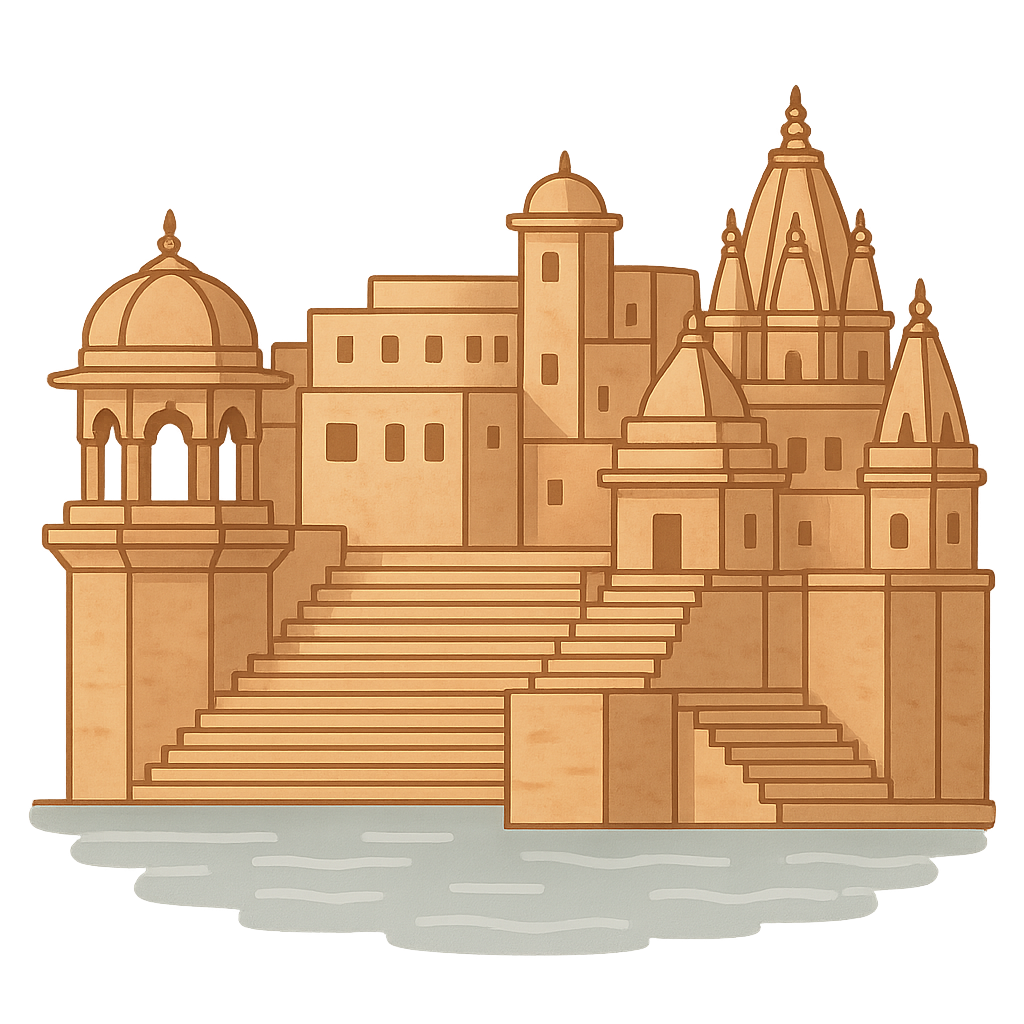
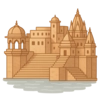
My journey across the vast plains of northern India is a journey through time itself. For millennia, I have watched empires rise and fall along my banks. Long ago, around the 3rd century BCE, the great Mauryan Empire flourished here, its capital, Pataliputra, a bustling center of trade and knowledge. Later, during the Gupta Empire, which began in the 4th century CE, art and science blossomed in the cities I nourished. I became a vital artery, a liquid road carrying goods like silk, spices, and cotton from one end of the land to the other. On my banks, civilizations were built. I watered the fields, giving birth to golden harvests of wheat and rice that fed millions. I watched as cities like Varanasi grew beside me, becoming one of the oldest living cities in the world. For thousands of years, its stone steps, the ghats, have been alive with the sounds of prayers, the bright colors of festivals, the clamor of markets, and the quiet rhythm of daily life. I have carried the boats of merchants, kings, and pilgrims, witnessing the endless, vibrant story of India unfold.
But I am more than a witness to human history; I am a world of life within myself. My currents are a sanctuary for countless creatures who call me home. Deep within my waters swims the Ganges river dolphin, a unique and intelligent being with a long snout, navigating my murky depths by sound. They are my special children, found almost nowhere else on Earth. Schools of fish shimmer like scattered jewels beneath my surface, from the mighty mahseer to the small, darting minnows. Turtles bask on my sunny banks, and crocodiles glide silently through my slower-moving stretches. Above, birds circle and dive, their calls echoing across the water as they hunt for their next meal. From the smallest insect to the largest mammal, every living thing depends on my flow. I am a living, breathing ecosystem, a complex web of life where every strand is connected, a reminder that the world’s health is tied to the health of its rivers.
Lately, I have felt weary. The burdens people place upon me have grown heavy, and my waters sometimes ache with the pollution of the modern world. But my story is one of resilience, and a hopeful current is beginning to flow stronger. Today, many people have remembered their connection to me. Scientists, community volunteers, and young people just like you are working with great love to heal me. Programs like the Namami Gange, which began in 2014, are bringing new life to my waters, cleaning my banks and promising a healthier future. Their efforts are a prayer in action, just like King Bhagiratha’s so long ago. I am Mother Ganga, and a mother never gives up hope. I will continue to flow, to nurture, and to connect the past with the future, carrying the promise of life for all generations to come. My spirit, like my current, will always move forward.
Activities
Take a Quiz
Test what you learned with a fun quiz!
Get creative with colors!
Print a coloring book page of this topic.












 Free for Educators