

 English

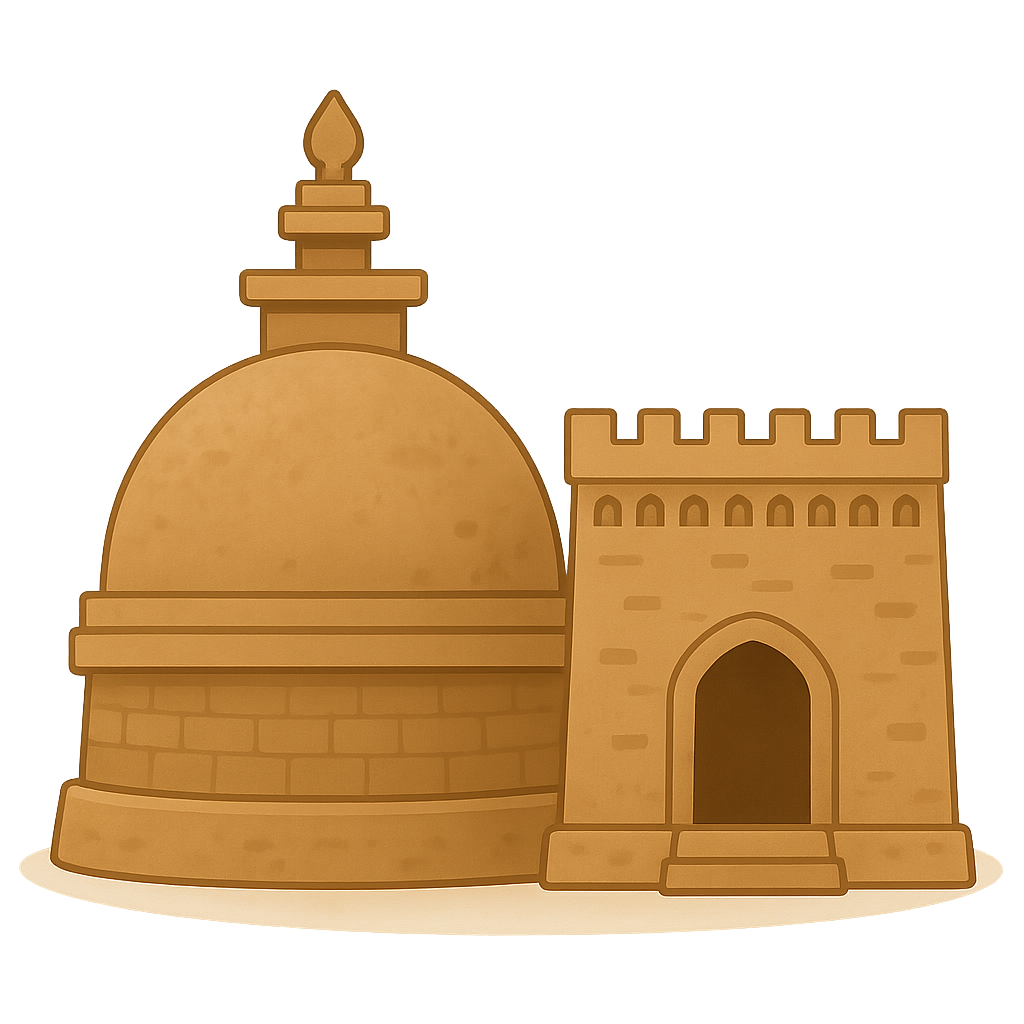
The Gobi Desert's Whispering Story
Most people think of a desert and imagine endless waves of hot, golden sand. But that’s not my whole story. I am a place of surprising cold, where the wind whispers secrets across vast, rocky plains. In some places, my dunes don’t just sit there; they sing when the wind rushes over them, creating a low, humming music that fills the air. My ground is often made of gravel and stone, not soft sand. During the day, the sun can be strong, but at night, the air grows crisp and cold, and the sky becomes a dark velvet blanket poked with millions of sparkling diamond stars, brighter than you could ever imagine in a city. I am a land of extremes, of quiet strength and hidden wonders. I have watched the world change for thousands of years, holding stories in my stones and dust. I am the Gobi Desert, a place of secrets and stories.
For centuries, I was a great pathway connecting the East and the West. A long, winding trail called the Silk Road snaked across my body. Imagine long caravans of Bactrian camels, with their two sturdy humps, patiently walking for months. They carried precious cargo—gleaming silk from China, fragrant spices from India, and wonderful new ideas that traveled from person to person. The journey was difficult and dangerous, with harsh winds and little water. But scattered across my landscape were life-saving oases, green jewels where weary travelers could find water from underground springs, rest in the shade of trees, and share tales of their journeys. In the 13th century, my plains echoed with the thunder of hooves. I became the heartland of the great Mongol Empire, and a powerful leader named Genghis Khan knew my paths and secrets better than anyone. He built an empire that stretched across continents. A little later, a famous explorer from Italy named Marco Polo journeyed across my expanse, writing down everything he saw with wide-eyed wonder, telling the world about the incredible sights he witnessed while crossing my terrain.
My story isn't just about what happened on my surface; it's also about the treasures I hold deep within. As time passed, the caravans and armies faded, but new explorers came looking for different kinds of riches. In the 1920s, a brave American adventurer named Roy Chapman Andrews arrived not on a camel, but in a rumbling motorcar. He wasn't looking for silk or spices; he was searching for clues about a world that existed millions of years ago. On July 13th, 1923, his team was exploring a place of stunning red-orange cliffs, which they called the Flaming Cliffs. There, they made a discovery that amazed the entire world. They found the very first dinosaur eggs ever discovered by humans. It was as if I had decided to finally share one of my oldest secrets. They found the fossils of dinosaurs like the Protoceratops and the fierce Velociraptor, proving that I was once a very different, greener world, home to incredible ancient creatures.
Even today, my heart beats on. I am not an empty, forgotten place. Nomadic families still live here, moving with their herds of goats and camels just as their ancestors did for generations. They live in cozy, round homes called gers, which can be packed up and moved to find new pastures for their animals. These people understand my moods. They know how to survive my cold winters and find water where it seems there is none. They are a part of my living story. Looking back, I see that I have always been a teacher. I have taught people about trade and empire, about ancient life hidden in stone, and about the strength it takes to adapt and thrive. My winds still whisper tales for anyone who is willing to listen.
Activities
Take a Quiz
Test what you learned with a fun quiz!
Get creative with colors!
Print a coloring book page of this topic.











 Free for Educators