

 English


The Whispering Sands of Gobi
Listen closely. Can you hear the wind? It howls across my plains, a lonely song that has echoed for thousands of years. In the blazing light of day, my ground can become hot enough to cook an egg, but when the sun vanishes, a deep, freezing cold settles in. Above, the sky is a blanket of black velvet, punctured by the light of a million brilliant stars, so clear and close you feel you could reach out and touch them. Most people imagine me as an endless sea of rolling sand dunes, and while I have those, my true face is far more varied. I am a patchwork of vast gravel plains that stretch to the horizon, rugged, rocky mountains that jut into the sky, and hidden oases, where life-giving water springs from the earth, surrounded by green reeds and stubborn trees. I am a place of extremes, of harsh beauty, and of ancient, sleeping secrets. I have watched empires rise and fall and have held the keys to forgotten worlds. I am the Gobi Desert.
For centuries, I was a great highway, though I had no pavement or painted lines. I was a crucial part of the legendary Silk Road, a network of trade routes connecting the East and the West. Imagine long, winding lines of Bactrian camels, their double humps swaying with each steady step, laden with treasures. They carried fragrant spices that tickled the nose, brilliant silks that shimmered like water, and precious stones that held the light of the sun. The journey across my expanse was perilous. Merchants and travelers faced scorching heat, biting winds, and the constant threat of running out of water. My oases were not just resting spots; they were lifelines, bustling little islands of civilization where stories were exchanged, goods were traded, and weary travelers found the strength to continue their journey. In the 13th century, a young Venetian merchant named Marco Polo passed this way. He traveled with his father and uncle, heading to the grand court of Kublai Khan. He later wrote about me, describing my immense size and the long, challenging days it took to cross my domain, a journey that filled him with both awe and respect for my power.
Long before Marco Polo's journey, I was the heartland, the very cradle of one of the most powerful empires the world has ever known. It was here, upon my steppes and within my challenging embrace, that the Mongol Empire was born. In the early 13th century, a brilliant and fearsome leader named Temüjin united the nomadic tribes and became the great Genghis Khan. The people who lived here were masters of survival. They were skilled horsemen, practically born in the saddle, and they moved with the seasons, living in circular, felt-covered homes called gers. From a distance, their camps looked like scattered white dots on my vast, open plains. They learned to read my moods, to find water where none seemed to exist, and to draw strength from my harshness. From this heartland, I watched in silence as Genghis Khan and his descendants built an empire that stretched from the shores of the Pacific Ocean all the way to the heart of Europe. My winds carried the sounds of their thundering hooves as they rode out to change the course of history.
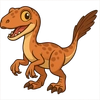
But my oldest and most astonishing secrets are not about empires or trade. They are written in stone and buried deep beneath my sands. Millions of years ago, I was not the dry, windswept land I am today. I was a place of rivers, lakes, and lush vegetation, home to creatures of unbelievable size and shape. For eons, their stories remained hidden, until the 1920s when a daring American explorer named Roy Chapman Andrews led a series of expeditions into my deepest corners. He was a real-life adventurer, searching for fossils that could unlock the history of life on Earth. His team faced sandstorms and immense challenges, but their persistence paid off spectacularly. On July 13th, 1923, at a place he named the Flaming Cliffs for its brilliant red-orange rock, a member of his team found something extraordinary: the very first scientifically recognized dinosaur eggs. This discovery was world-changing. It proved, for the first time, that giant dinosaurs laid eggs, just like modern reptiles and birds. It was as if I had finally shared my deepest secret. Nearby, they also unearthed the fossilized skeletons of the creatures who laid them, the gentle plant-eating Protoceratops, and even the fierce predator that hunted them, the famous Velociraptor.
Today, my story continues. I am not an empty, forgotten wasteland. I am a living, breathing landscape, a library of history where every grain of sand holds a memory. Nomadic herders, descendants of the great empire-builders, still roam my plains, their traditions connecting the present to a deep and resilient past. Scientists from all over the world still come, not just to search for more dinosaur bones, but to study my climate, learning how our planet has changed over millions of years. They see in my layers of rock and sand a record of time itself. My spirit is one of endurance, of connection between ancient worlds and modern lives, and of the endless thrill of discovery. I am a testament to the fact that even in the harshest of places, life finds a way, history is made, and incredible wonders wait just beneath the surface, ready for the next curious mind to uncover them.
Activities
Take a Quiz
Test what you learned with a fun quiz!
Get creative with colors!
Print a coloring book page of this topic.











 Free for Educators