

 English

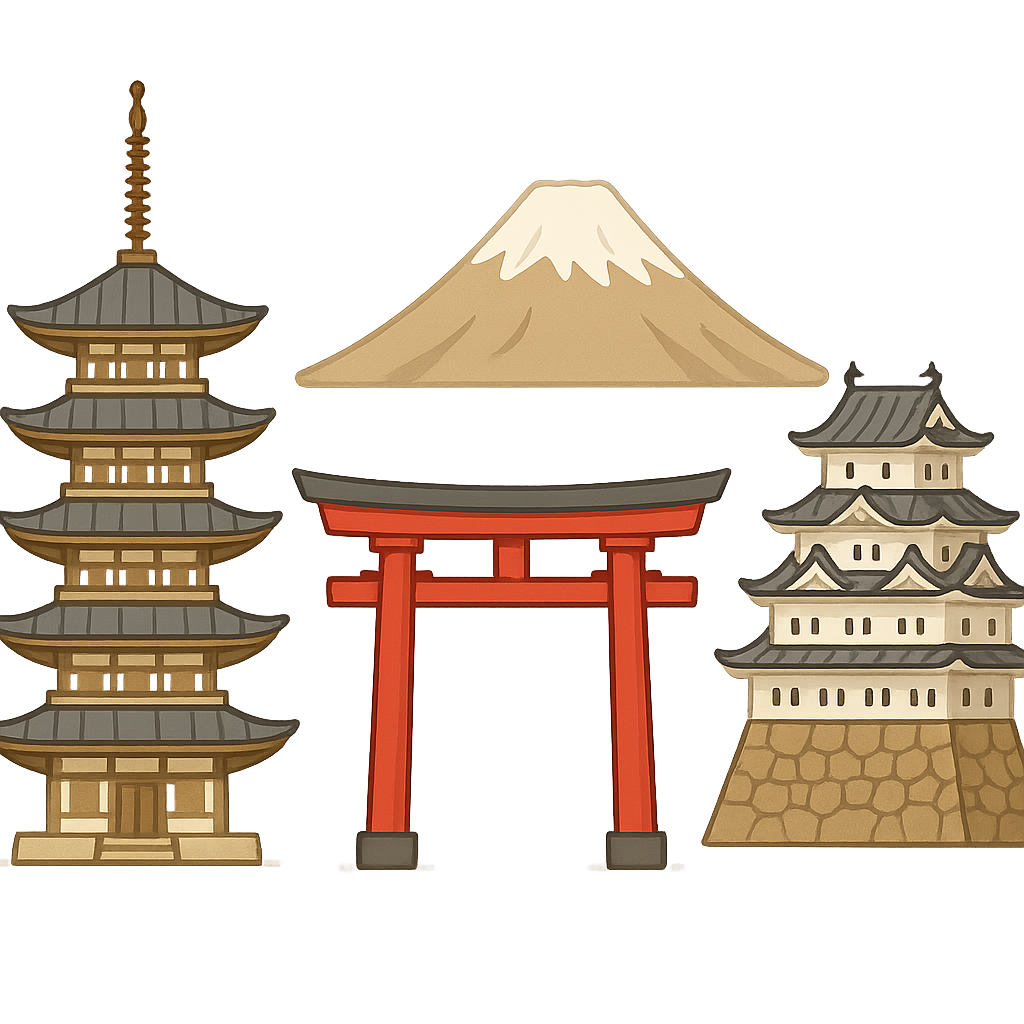
The Land of the Rising Sun
Imagine a long chain of islands stretching across the ocean, where volcanic mountains sleep under blankets of green and cities pulse with a vibrant, electric energy. Here, you can wander through a quiet bamboo forest in the morning, listening to the wind whisper secrets, and by evening, stand in a street ablaze with neon lights. You might feel the soft petals of cherry blossoms falling like snow in the spring or see the fiery colors of maple leaves paint the hillsides in autumn. My story is one of ancient traditions and futuristic dreams, of silent gardens and roaring bullet trains. I am a place of beautiful contrasts. I am Japan, the Land of the Rising Sun.
My story begins thousands of years ago, with the whispers of my earliest people, the Jomon. They lived in deep harmony with my forests and seas, crafting beautiful clay pots with distinctive rope patterns, some of the oldest pottery in the world. For millennia, they followed the rhythms of nature. Then, new people arrived, bringing with them a revolutionary idea: the cultivation of rice. This changed everything. With a steady supply of food, small settlements grew into villages, and villages grew into powerful clans, each led by strong chieftains. I began to look toward my neighbors, the great civilizations of China and Korea. From them, I learned so much. I adopted their complex writing systems, welcomed the peaceful teachings of a new religion called Buddhism, and studied their ideas about government. But I never just copied. I carefully wove these new threads into my own unique cultural tapestry, making them distinctly my own.
As centuries passed, a new era began: the age of the samurai. These were my skilled and honorable warriors, who lived by a strict code of loyalty and discipline called bushido. While I always had an emperor, who was revered as a spiritual leader, the true power for nearly 700 years rested in the hands of military commanders known as shoguns. This long period of military rule began in the 12th century with a powerful warrior named Minamoto no Yoritomo. The shoguns and their samurai lords, the daimyo, built magnificent castles with towering walls and elegant sloping roofs, which still stand today as silent reminders of their time. During these centuries, a rich and refined culture flourished. People enjoyed intricate theater like Noh and Kabuki, wrote delicate poetry called haiku, and practiced the graceful art of the tea ceremony. For over 200 years, from the 17th to the 19th century, my shoguns decided to close my doors to most of the outside world. This period of isolation allowed my culture to develop in its own special way, deepening traditions without outside influence.
My long, quiet isolation came to a sudden end on a summer day. On July 8th, 1853, four massive, steam-powered warships appeared in my bay, their black hulls and smoking chimneys unlike anything my people had ever seen. They were the “Black Ships” from America, led by Commodore Matthew Perry, and they carried a message urging me to open to the world. This moment was a shock, and it sparked a revolution. Beginning in 1868, I entered a period of incredible change known as the Meiji Restoration. I realized that to remain strong and independent, I had to learn from the West. I sent my brightest minds abroad to study everything from science and engineering to politics and education. In just a few decades, I built railways that connected my cities, opened factories that hummed with new machines, and established a modern school system for all my children. It was a dizzying transformation, but I was careful to never lose sight of my soul. I worked hard to blend these new ideas with my cherished ancient traditions.
Today, I am a living bridge between the past and the future. In my cities, you can see an ancient, peaceful shrine standing gracefully in the shadow of a soaring skyscraper. You can experience the quiet, mindful art of a traditional tea ceremony in one moment, and in the next, marvel at the advanced technology of humanoid robots. My Shinkansen, or bullet trains, glide across the country at incredible speeds, connecting people and places with futuristic efficiency. I have faced great challenges, including devastating wars and natural disasters, but each time, my people have rebuilt with incredible resilience and determination. My story and culture now travel across the globe—through anime and video games, delicious food like sushi and ramen, and the peaceful philosophy of my gardens. My greatest hope is to inspire the world, to show everyone that tradition and innovation are not enemies, but partners in creating a beautiful, exciting, and connected future.
Activities
Take a Quiz
Test what you learned with a fun quiz!
Get creative with colors!
Print a coloring book page of this topic.











 Free for Educators