English
 For Schools
 For Homeschool

The Story of the American Midwest
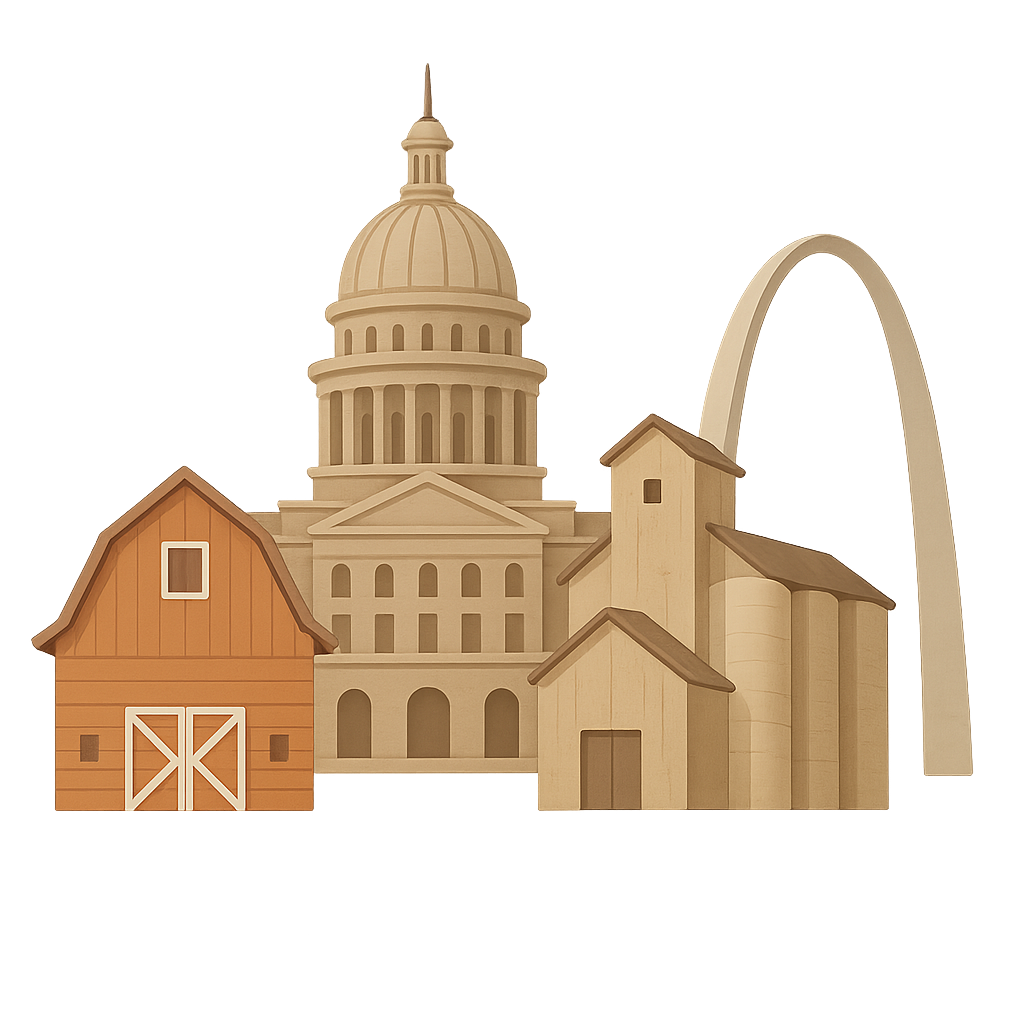
Feel the whisper of the wind as it rustles through endless fields of corn, making the stalks dance in golden waves. Feel the cool, fresh spray from a vast lake that seems as wide as an ocean. Hear the distant hum of a city, a place where towers of steel and glass reach for the clouds. I am a great patchwork quilt of amber farmland and shimmering cities, a place of four distinct seasons. My winters bring blankets of quiet snow, my springs burst with green life, my summers are drenched in warm sunlight, and my autumns paint the trees in fiery colors. I am not a single state, but a collection of them, a wide and welcoming expanse in the center of a great nation. My rivers are like arteries, carrying stories and goods from one end of the country to the other. I am the heart of a country. I am the American Midwest.
My memories are long and deep, stretching back centuries before the United States was even a dream. Long ago, around the year 1050, a great city called Cahokia rose near the mighty Mississippi River. Its people built enormous earthen mounds that looked like flat-topped pyramids, with the largest reaching one hundred feet into the sky. It was a bustling center of trade and culture, the largest city of its time north of Mexico. Even before then, the ancient Hopewell people shaped the land, creating vast ceremonial earthworks in the patterns of circles, squares, and animal shapes that you can still see today. For thousands of years, I was home to many Native nations. The Sioux hunted bison on my western plains, the Ojibwe fished in my northern lakes, and the Shawnee farmed in my fertile valleys. They understood my rhythms, the turning of the seasons, and the spirits of the land. They were the first to call me home.
Then, new sounds echoed across my waters. In 1673, French explorers named Jacques Marquette and Louis Jolliet paddled their canoes down my winding rivers, mapping my waterways and meeting the people who lived here. Over the next century, more newcomers arrived. After the American Revolution, I was officially organized by the United States government through a plan called the Northwest Ordinance of 1787. This was a remarkable document for its time; it promised that my lands would eventually become new states, equal to the original thirteen, and it outlawed slavery within my borders forever. My edge became a jumping-off point for discovery. In 1804, Meriwether Lewis and William Clark began their famous expedition near St. Louis, heading west to explore the continent. Soon, thousands of pioneers in covered wagons followed, drawn by the promise of rich farmland and a new life. This great movement of people brought immense change, creating new towns and farms, but it also brought great hardship and conflict for the Native peoples who had called me home for generations, as they were forced from their ancestral lands.
As the 19th century unfolded, I was transformed into the engine of a growing nation. My deep, dark soil was some of the richest on Earth, and farmers soon learned to cultivate it. They planted seas of corn and wheat, so much that I became known as the 'Breadbasket of America,' feeding the country and the world. But my tough prairie sod was difficult to break. That changed in 1837 when a blacksmith in Illinois named John Deere invented a strong, polished steel plow that could slice through the earth with ease. This invention opened up my prairies to farming on a massive scale. At the same time, my cities began to boom. Chicago, on the shore of Lake Michigan, grew into a hub of railroads and skyscrapers. In Detroit, an innovator named Henry Ford began mass-producing automobiles in 1908, putting the entire world on wheels. Cleveland and Pittsburgh became giants of steel production, their foundries glowing day and night. Millions of immigrants from Germany, Ireland, Poland, Italy, and beyond came seeking work and opportunity, adding their languages, foods, and traditions to my growing identity.
Today, my heartbeat is as strong as ever. I am still a place of sprawling farms and powerful factories, but I am also a place of art, music, and new ideas. I gave the world the unforgettable stories of Mark Twain, who grew up along the Mississippi River. I am where Orville and Wilbur Wright first dreamed of flight in their Ohio bicycle shop. From the city of Detroit came the soulful, world-changing music of Motown, and from Cleveland, the raw energy of rock and roll found a home. I am a crossroads of America, where different paths and people meet. My story is written in the rich soil, in the steel skeletons of my skyscrapers, and in the spirit of the hard-working, down-to-earth people who live here. I am a place of open skies and welcoming communities, and my story is still unfolding, written new each and every day.
Activities
Take a Quiz
Test what you learned with a fun quiz!
Get creative with colors!
Print a coloring book page of this topic.