

 English

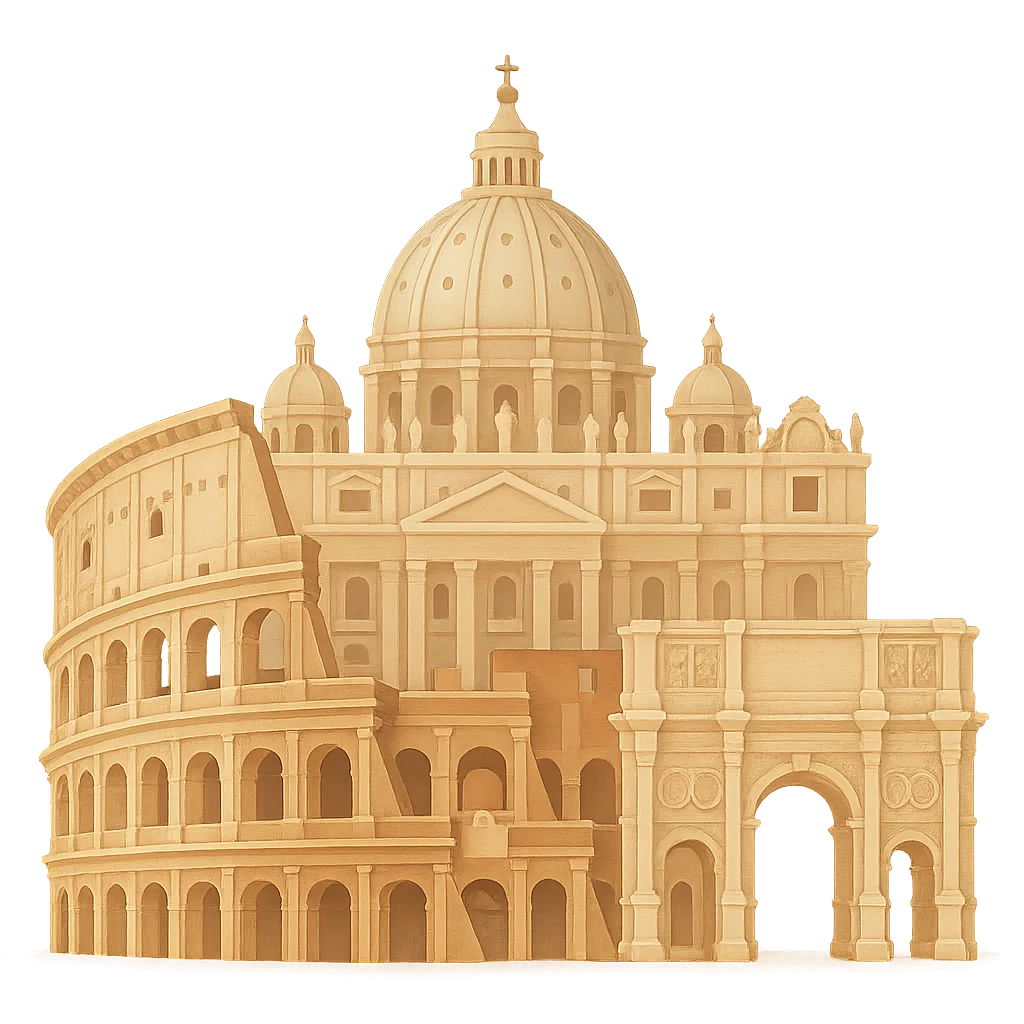
The Story of Rome, the Eternal City
Imagine walking on cobblestone streets, where ancient stones whisper secrets to the bustling cafes beside them. The air smells of pine trees and fresh pasta, and all around you, towering, honey-colored ruins stand against a brilliant blue sky. A thousand stories murmur on the wind, tales of emperors, artists, and ordinary people who walked these same paths. I am a place where you can touch history with your own hands, a city that has seen empires rise from dust and crumble back into it. I have cradled the world’s greatest artists and thinkers within my walls. For nearly three thousand years, I have watched the world change. I am called the Eternal City. I am Rome.
My story begins not with a historical record, but with a legend whispered through the ages. It’s a tale of twin baby boys, Romulus and Remus, who were left to the wild but were saved by a she-wolf who cared for them as her own cubs. A kind shepherd later found and raised them. When the twins grew into strong young men, they decided to build a city right here, on my seven hills overlooking the winding Tiber River. But they quarreled fiercely over who should be its king and where its center should be. The argument ended in a terrible fight, and Romulus tragically struck down his brother. On April 21st, 753 BCE, with a heavy heart, Romulus traced my first boundaries in the earth with a plow. He named me after himself, and from that small village of mud-and-wattle huts, I began my long, incredible journey, welcoming people from all over to build a new life and a powerful future.
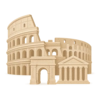
For hundreds of years, I grew not as a kingdom, but as a Republic, a city governed by its citizens through elected senators. It was a time of lawmaking, debate, and expansion. Then, ambitious generals like Julius Caesar led my powerful legions to conquer vast territories, stretching my influence across Europe, North Africa, and the Middle East. After Caesar’s time, his adopted son, Octavian, became my first emperor on January 16th, 27 BCE, taking the name Augustus. He famously boasted that he “found me a city of brick and left me a city of marble.” During his peaceful reign, and for centuries after, my engineers and architects performed wonders. They built thousands of miles of straight, strong roads that connected my empire, and incredible aqueducts—bridges for water—that supplied my public baths and fountains. They constructed the bustling Roman Forum, my downtown heart, filled with temples and government buildings. And they created the magnificent Colosseum, a massive stone arena for spectacular gladiator games and public shows, which opened around the year 80 CE. For centuries, I was the undeniable capital of the known world, a beacon of power, culture, and innovation.
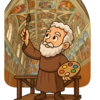
But empires, no matter how mighty, do not last forever. After years of internal conflict and external threats, my western half, the Western Roman Empire, finally fell in 476 CE. I became quieter then, and my grand marble buildings began to crumble. My population shrank, and my glorious past seemed like a distant dream. Yet, my spirit never faded. A new purpose was stirring within my ancient walls as I became the heart of the Christian world, the home of the Pope. Centuries passed, and then, during an astonishing period of creativity called the Renaissance, I awoke again. Popes and wealthy families became patrons of the arts, inviting the most brilliant minds to beautify me once more. A genius named Michelangelo lay on his back for four years to paint the heavens on the ceiling of the Sistine Chapel and later designed the majestic dome of St. Peter's Basilica. Artists like Raphael filled my palaces with breathtaking paintings that seemed to breathe with life. I was reborn, not as a city of emperors and legions, but as a global treasure chest of faith and unimaginable art.
Today, my streets are alive with a new kind of energy, a vibrant mix of the past and the present. People from every corner of the globe come to walk where caesars and senators once walked. They marvel at the art that shaped Western civilization and toss a coin into my Trevi Fountain, making a wish to return one day. In a single glance, you can see my entire story layered together: an ancient Roman temple standing beside a Renaissance church, a modern tram rumbling past the mighty Colosseum. I am a city that lives comfortably with its ghosts, where every stone has a story. I teach everyone who visits that greatness can be built, lost, and built again, sometimes even more beautifully than before. My legacy is one of resilience and endless inspiration, and I am still here, waiting to share my eternal story with you.
Activities
Take a Quiz
Test what you learned with a fun quiz!
Get creative with colors!
Print a coloring book page of this topic.









 Free for Educators