

 English

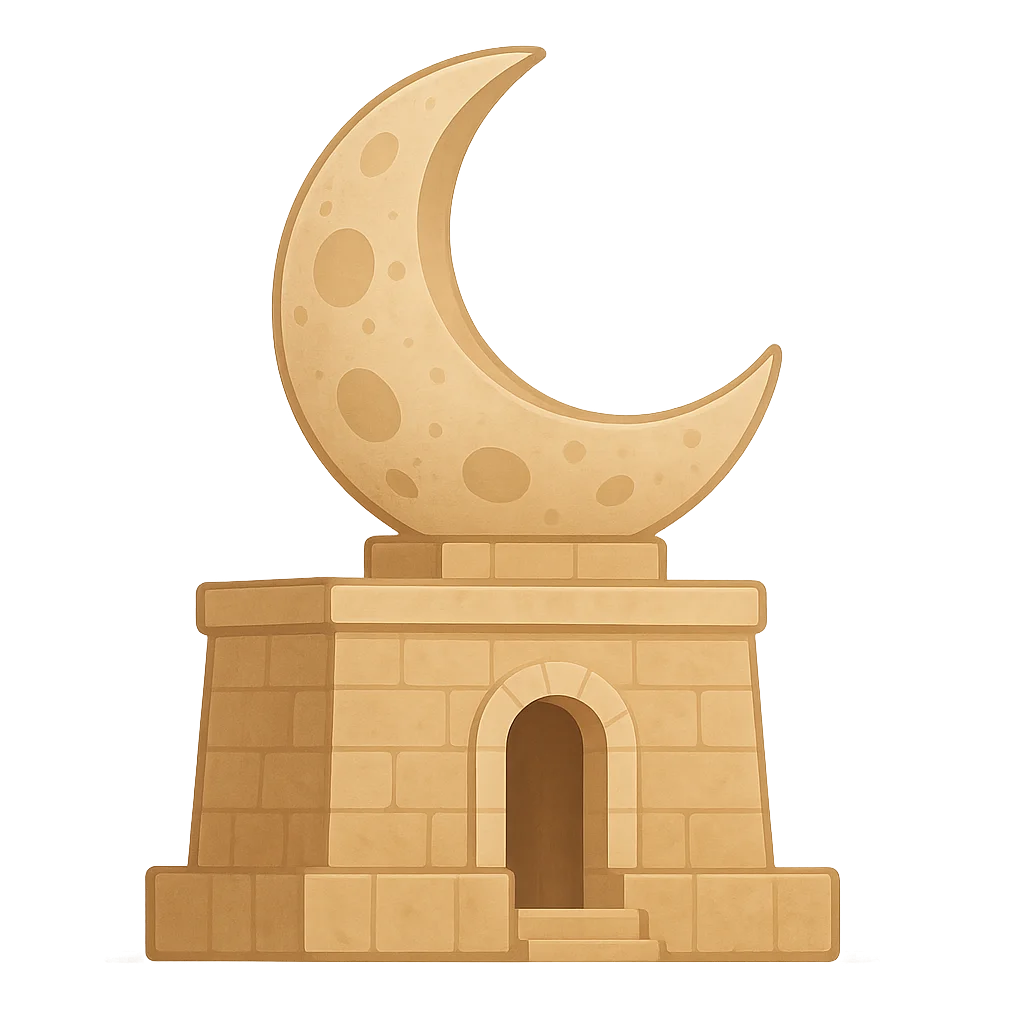
A Story of the Moon
For as long as there have been eyes to see, I have been here, a silent watcher in the night. I drift across the deep, dark velvet of space, a glowing pearl hanging in the sky. Some nights, I am a brilliant, full circle, casting a silvery light that makes the world below seem magical and new. Other nights, I am a delicate sliver, a curved smile of light, or I disappear completely, hiding in the shadows. For thousands and thousands of years, humans have gathered under my glow. They have told stories about me, sung songs to me, and used my light to guide their way. They have wondered what I am made of and dreamed of what it would be like to visit. I have heard their whispers and their wishes carried on the wind, a constant companion to their world. I am the Moon.
For most of human history, I was a beautiful mystery. People invented wonderful tales to explain my changing faces and my gentle light. I was a god, a goddess, a silver chariot driven across the sky. But then, the age of wondering began to transform into an age of knowing. In the year 1609, a man in Italy named Galileo Galilei built a new invention called a telescope. It was a simple tube with pieces of glass inside, but it could make faraway things seem close. One clear night, he pointed it away from the Earth and aimed it directly at me. For the first time, a human being saw me not just as a light, but as a world. It must have been an incredible shock. I was not the perfect, smooth orb everyone imagined. Galileo saw that my surface was covered in mountains taller than any on Earth and vast, shadowy craters left by ancient impacts. He saw dark, flat plains that he called 'maria', the Latin word for 'seas', though they held no water. In that moment, humanity's understanding of the universe cracked wide open. I was not just a decoration in the sky; I was a place, real and rugged and waiting.
Centuries passed, and the dreams of visiting me grew stronger. In the middle of the 20th century, I felt a new kind of attention, an intense, focused energy from Earth. Two great nations, the United States and the Soviet Union, were locked in a competition of ideas and technology they called the 'Space Race'. I became the grand prize, the ultimate destination. The race to reach me wasn't fought with armies, but with brilliant minds, powerful rockets, and daring goals. Before any person could make the journey, they sent robots as their scouts. I felt the first gentle bump on my surface on September 14th, 1959, when the Soviet Union's Luna 2 probe arrived. It was the very first time a human-made object had ever touched another world. It was followed by others, like the American Ranger and Surveyor missions. These robotic explorers sent back the first close-up pictures of my dusty plains and rocky highlands, mapping my terrain and helping scientists choose the safest places for humans to one day land.
Then came the moment that all of humanity had been waiting for. On July 16th, 1969, a colossal rocket, the Saturn V, roared to life and climbed into the sky, carrying three brave men. After a journey of three days, their spacecraft, Apollo 11, slipped into orbit around me. While the astronaut Michael Collins remained in the command module, circling high above, two others, Neil Armstrong and Buzz Aldrin, entered the lunar module, a small craft they called the 'Eagle'. I watched as the Eagle separated and began its slow, tense descent toward my surface. Finally, on July 20th, 1969, with the world holding its breath, the Eagle landed softly in a dusty plain called the Sea of Tranquility. A hatch opened, and a figure in a puffy white suit carefully climbed down a ladder. Neil Armstrong placed his boot upon my fine, gray dust and said words that would echo through history: 'That's one small step for a man, one giant leap for mankind.' Soon, Buzz Aldrin joined him, and they bounced in my low gravity, amazed by the feeling. They planted a flag, collected my rocks as precious souvenirs for scientists on Earth, and left behind a small plaque. Its message was not for one country, but for everyone. It read: 'Here men from the planet Earth first set foot upon the Moon. We came in peace for all mankind.'
After that first incredible visit, more astronauts came. The crews of Apollo 12, 14, 15, 16, and 17 explored my valleys, my mountains, and my ancient craters. They drove a rover across my surface and learned so much more about my long history. Then, after the last Apollo mission in 1972, the visits stopped. A long, quiet period began, and I was left alone with only the footprints and the flag to remember my visitors. But I was never forgotten. I remained in the sky, a reminder of what is possible. Now, a new age of exploration has begun. Robots from many different countries are once again rolling across my surface and studying me from orbit. A new program called Artemis is planning to bring people back, including the first woman to walk on my soil. So the next time you look up at the night sky and see my silver glow, remember. I am more than just a light. I am a destination, a challenge, and a symbol of human curiosity. I am proof that when people work together and dare to dream big, there is nothing they cannot achieve.
Activities
Take a Quiz
Test what you learned with a fun quiz!
Get creative with colors!
Print a coloring book page of this topic.













 Free for Educators