

 English

The Story of Yosemite National Park
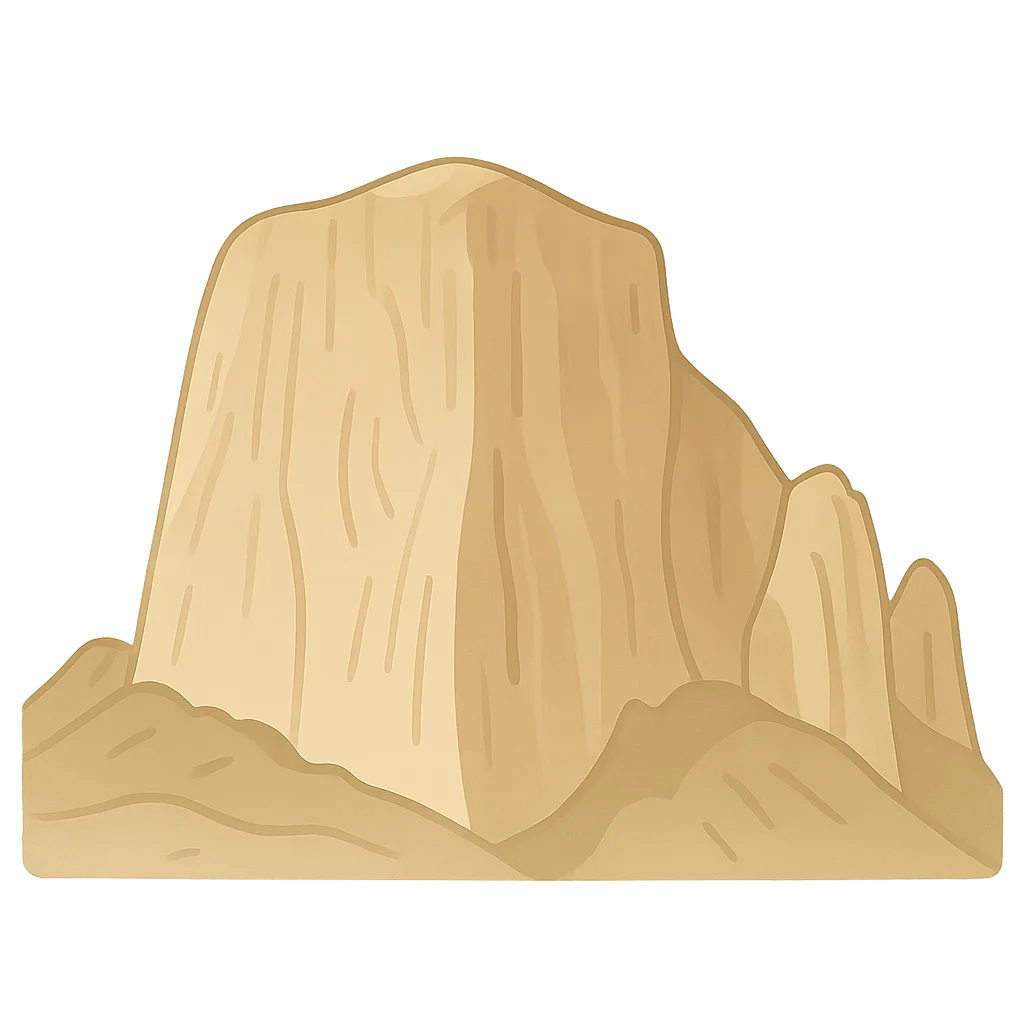
Feel the cool, steady strength of granite beneath your hands, a foundation that has stood for ages. Listen to the roar of water as it tumbles from cliffs so high they seem to touch the clouds, showering the air with a fine, cool mist. Breathe in the clean, sharp scent of pine needles and the ancient, earthy smell of giant sequoia trees, whose reddish bark rises like pillars of a great outdoor temple. I am a place of giants, where domes of stone glow in the afternoon sun and sheer rock faces challenge the sky. Waterfalls carve their paths down my sides, and a gentle river winds through my floor, reflecting the deep blue above. For thousands of years, I have watched the sun rise and set, listened to the whisper of the wind through my forests, and felt the weight of winter snows. I am a valley of giants, a cathedral of stone, a wild heart beating in the mountains of California. I am Yosemite National Park.
My story began long before any human set foot in my valley. Millions of years ago, rivers began their patient work, slicing deep canyons into the solid rock of the Sierra Nevada mountains. But my most dramatic transformation came during the Ice Age. Massive glaciers, like slow-moving rivers of ice, flowed down these canyons, grinding and polishing the stone. They were powerful sculptors, widening my valley and carving my cliffs into the smooth, steep walls you see today. When the climate warmed and the last of these great glaciers melted away about 10,000 years ago, they left behind this U-shaped valley, a masterpiece of natural art. For thousands of years after the ice retreated, I was home to the Ahwahneechee people. They lived in harmony with my seasons, gathering acorns from my oaks, fishing in my Merced River, and celebrating the rhythm of life that pulsed through me. To them, I was not a park but a home, a sacred place they called ‘Ahwahnee,’ which is thought to mean ‘place of a gaping mouth,’ perhaps describing the shape of my valley walls. Their lives were woven into my landscape, and their stories are still carried on my winds.
For centuries, the Ahwahneechee were my only human companions. But that changed in the middle of the 19th century. On March 27th, 1851, a group of soldiers called the Mariposa Battalion entered my valley, becoming the first European-Americans to see my wonders. They were pursuing the Ahwahneechee people during a time of conflict. A doctor traveling with them, Lafayette Bunnell, was so moved by my grandeur that he suggested a name. He called me ‘Yosemite,’ mistakenly believing it was the tribe’s name for the valley. It was actually based on the Miwok word for the Ahwahneechee people, which meant ‘they are killers.’ It was a name born from misunderstanding, but it was the name that would be known around the world. Soon, word of my beauty began to spread. In 1855, an artist named Thomas Ayres created the first sketches of my waterfalls and cliffs, giving people their first glimpse of my majesty. Then, in 1861, a photographer named Carleton Watkins arrived with his huge camera. His breathtaking photographs captured my scale and spirit in a way no one had seen before. These images traveled all the way to Washington, D.C., landing on the desks of politicians and even the president himself.
Those powerful photographs did more than just show my beauty; they sparked a revolutionary idea. When President Abraham Lincoln saw Carleton Watkins’ pictures, he understood that I was a national treasure that needed to be protected. In the midst of the Civil War, he did something unprecedented. On June 30th, 1864, Lincoln signed the Yosemite Grant, an act that set aside my valley and the nearby Mariposa Grove of Giant Sequoias for public use, resort, and recreation for all time. This was the first time the United States government had protected a scenic natural area for the people. A few years later, in 1868, a man arrived who would become my greatest friend and most passionate champion: John Muir. He lived with me, explored my highest peaks and deepest canyons, and wrote about my soul with a poet’s heart. He saw that the grant only protected a small part of me and worried about the damage being done to the surrounding high country. Muir’s tireless advocacy led to the creation of the much larger Yosemite National Park on October 1st, 1890. The original grant area was officially joined with the national park in 1906, and on August 25th, 1916, the National Park Service was created to care for me and all the other special places that would follow.
Today, my purpose remains the same as it was on that day in 1864: to be a place of wonder and renewal for all people. In 1984, my importance was recognized by the entire world when I was named a UNESCO World Heritage Site. Every year, millions of visitors walk my trails, gaze up at my giant sequoias, and stand in the mist of my waterfalls. They are climbers testing their courage on the face of El Capitan, families sharing a meal by the Merced River, and artists trying to capture my light on canvas. I am more than just a collection of rocks and trees; I am an idea. I am the promise that some places are so precious they must be preserved, a reminder of the wildness and beauty that exists in the world. I am a living piece of history, shaped by ice and cherished by generations. My invitation is everlasting. Come listen to the stories I have to tell. Feel the strength of my granite, and help ensure that wild places like me will continue to inspire people forever.
Activities
Take a Quiz
Test what you learned with a fun quiz!
Get creative with colors!
Print a coloring book page of this topic.















 Free for Educators