
 বাংলা
বাংলা
 স্কুলের জন্য
 হোমস্কুলের জন্য

A Meerkat's Tale: My Life in the Kalahari
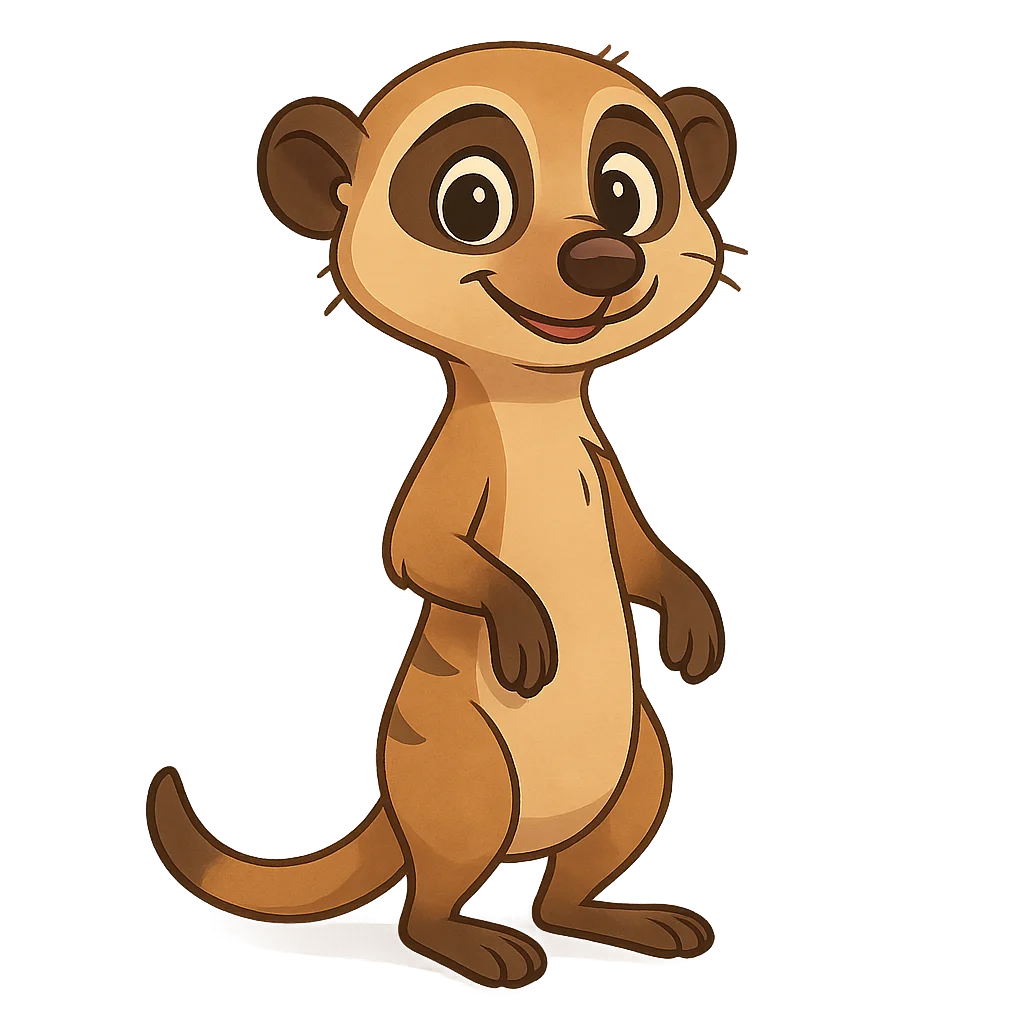
Hello there. My name is Kendi, and I am a meerkat. My home is the vast, sun-drenched Kalahari Desert in southern Africa, a land of red sand and hardy acacia trees. I live with my entire family in a group we call a “mob.” In our mob, everyone has a job, and we all work together to survive. I was born deep underground in a cool, dark burrow, nestled safely with my brothers and sisters. For the first few weeks, our world was only the scent of soil and the warmth of our family. But I’ll never forget the day I first poked my head out of the burrow entrance and saw the sky. The African sun was so bright it made me blink, and the world seemed enormous and full of possibilities. My life is part of a very long story. Scientists who study animals like me gave my species the formal name Suricata suricatta and first described us in their books way back in 1776. For centuries, my ancestors have lived this same life, working together under the watchful sun.
Each day in the Kalahari follows a familiar rhythm, one that keeps my mob safe and well-fed. As soon as the sun’s rays begin to warm the sand, we all emerge from our burrow. The desert nights can be quite cold, so our first task is to stand on our hind legs, face the sun, and let its warmth seep into our dark bellies. This morning ritual of sunbathing helps us gather the energy we need for the busy day ahead. Once we are warm, the foraging begins. We spread out, but never too far from one another, using our sharp claws to dig in the sand. I rely on my incredible sense of smell to find our food, which usually consists of juicy beetles, larvae, and other insects. My absolute favorite snack is a scorpion. You might think that’s dangerous, but we meerkats are immune to their venomous stings. The older, more experienced members of my mob are excellent teachers. They show us young pups how to carefully bite off the scorpion’s stinger before we eat it. This teamwork is how we all learn to hunt safely. But our lives are not without danger. One afternoon, while I was digging, a sharp, frantic bark echoed across the plains. It was our sentry, the lookout who was perched on a high termite mound. I looked up and saw its tail pointing straight up at the sky—a signal for an aerial predator. The sentry had spotted a martial eagle circling high above. The specific alarm call sent a jolt of panic through all of us, and without a second’s hesitation, we all sprinted for the safety of our burrow, disappearing underground just as the shadow of the eagle passed over.
Our burrow is much more than just a hole in the ground; it’s the heart of our community. I like to think of it as our own underground city. This complex network of tunnels and chambers, which we are constantly expanding, has many different rooms for sleeping and raising our young. It also has multiple entrances, so we always have a quick escape route if a predator approaches. This incredible home is a testament to our teamwork. Our social structure is built on a principle scientists call cooperative breeding. This means that everyone in the mob helps to raise the pups, even if they aren’t their own parents. While some of us are out foraging for food, others stay behind to act as babysitters, protecting the little ones and teaching them the ways of our world. This system ensures that our youngest and most vulnerable members are always cared for. Around the year 1993, a group of human scientists began what is now called the Kalahari Meerkat Project. They have been studying my family and other mobs for decades. They are very respectful and watch us from a distance, learning about our complex lives. They’ve even managed to understand our ‘language’ of different alarm calls, recognizing which sounds mean an eagle is near and which mean a snake is slithering through the grass.
My life as a meerkat is about more than just my own survival; it’s about the health of my home. We may be small, but we are what scientists call “ecosystem engineers.” This means our actions directly shape the environment around us. Our constant digging isn't just for finding food or expanding our burrows; it plays a vital role in the desert. By turning over the soil, we aerate it, which helps water sink in and allows seeds to sprout. This helps keep the plant life healthy and strong. Furthermore, by eating thousands of insects and other small creatures, we help keep their populations in balance, preventing any one species from becoming too numerous. My family and I have a vital job to do, and we take it very seriously. We will continue to stand tall on our hind legs, watching over the vast plains of the Kalahari, a small but essential part of this beautiful, wild place for many years to come.
কার্যকলাপ
একটি কুইজ নিন
আপনি যা শিখেছেন তা একটি মজার কুইজের মাধ্যমে পরীক্ষা করুন!
রঙের সাথে সৃজনশীল হন!
এই বিষয়ের একটি রঙিন বইয়ের পৃষ্ঠা প্রিন্ট করুন।